
When it comes to purchasing or appraising diamonds, accuracy is key. A diamond tester is a valuable tool that helps identify whether a stone is a genuine diamond or a simulant, like cubic zirconia. While these devices can be straightforward to use, mastering the technique will ensure that you get the most reliable results. Here’s a step-by-step guide on how to use a professional diamond tester like a pro.
1. Understand Your Diamond Tester
Before using a diamond tester, it’s essential to familiarize yourself with its features. Most professional diamond testers operate on thermal conductivity principles. Diamonds conduct heat much better than simulants, so the tester measures how quickly heat travels through the stone. Some testers also have a visual display that indicates the results, usually with different colors or sounds corresponding to the type of stone being tested.
2. Prepare the Tester
To get accurate results, the tester must be properly calibrated. Start by turning the device on and allowing it to warm up, which usually takes a few minutes. Many testers come with a calibration check, so it’s a good idea to test it on a known diamond or simulant to ensure the readings are accurate before proceeding.
3. Clean the Stone
For the best results, make sure the stone you’re testing is clean. Dirt, oils, or residue on the stone’s surface can interfere with the test. Use a soft cloth or a gentle cleaning solution to wipe down the stone before testing. This will help ensure the heat is transferred evenly, and the reading is as accurate as possible.
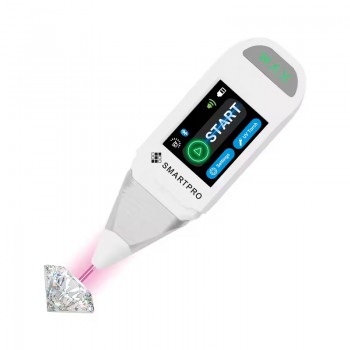
4. Test the Stone
Once the tester is ready and the stone is clean, it’s time to begin the test. Hold the probe gently against the surface of the stone. Depending on your tester, the probe may need to be placed on the flat part of the diamond’s surface, often the table facet. Press the probe firmly, but avoid excessive force.
After a few seconds, the tester will give you a reading. If it beeps or shows a color indicating a high thermal conductivity, you’re likely dealing with a real diamond. If the tester shows a lower reading or a different color, it could be a simulant.
5. Test Multiple Points
To be thorough, it’s wise to test multiple points on the diamond, especially if the stone has multiple facets or is an irregular shape. Conducting several tests across the stone can help eliminate any false readings caused by surface irregularities or settings that may obstruct the heat flow.
6. Be Aware of Limitations
Although diamond testers are quite accurate, they are not infallible. Some simulants, such as moissanite, have a similar thermal conductivity to diamonds, which can lead to false positives. Always be aware of the limitations of your tester and consider using it alongside other testing methods if you need to be absolutely certain of a diamond’s authenticity.
7. Know When to Seek Expert Help
If your test results are inconclusive or if you’re unsure about the readings, don’t hesitate to seek professional appraisal. Certified gemologists have advanced tools and expertise to perform a more comprehensive analysis, including assessing other properties like color, cut, and clarity.
A professional diamond tester is a must-have tool for anyone involved in buying, selling, or appraising diamonds. By following these steps and becoming familiar with the operation of the tester, you can confidently assess whether a diamond is real or a simulant. With practice, you’ll be able to use the tester with precision and reliability, ensuring that you make well-informed decisions every time.
Related articles: https://carl259.pixnet.net/blog/post/195596209