For many jewelry enthusiasts, a dazzling, precisely angled gemstone seems almost magical. Yet behind that sparkle lies a sophisticated piece of equipment—the jewelry faceting machine. This tool is the heart of gemstone cutting, transforming rough stones into symmetrical, light-catching masterpieces. While the process may look complex, understanding how a faceting machine works reveals a fascinating blend of engineering, precision, and artistry.
At its core, a faceting machine is designed to control three essential factors: angle, rotation, and polish. These elements determine how light enters and exits the gemstone, ultimately defining its brilliance. The machine’s main components include the mast, quill, index gear, handpiece, and laps—each playing a specific role in shaping the stone.
The mast serves as the vertical guide for the cutting mechanism. Attached to it is the handpiece or quill, which securely holds the dop stick—the small rod that carries the gemstone. This assembly allows the cutter to adjust the angle of the stone with incredible accuracy, often down to fractions of a degree. This precision is crucial; even a slight variation can affect symmetry or diminish the stone’s clarity and brilliance.
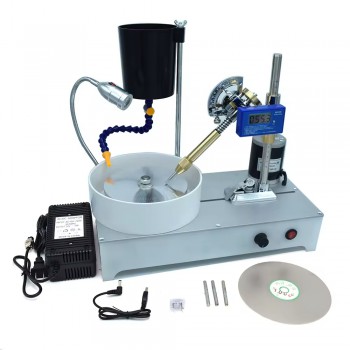
The index gear is another key part of the machine. It divides the stone’s rotation into equal segments, ensuring each facet is cut in the correct position. For example, a 96-index gear allows stones to be rotated in increments that match common faceting patterns. This standardized alignment is what enables complex cuts like the round brilliant or princess cut to have perfect symmetry.
Cutting occurs on a series of flat, rotating discs called laps. These laps are coated with abrasives—from coarse diamond grit for rough shaping to extremely fine particles for polishing. As the cutter brings the angled stone into contact with the lap, material is gradually removed, revealing clean, flat facets. The process is repeated systematically, switching between angles and index increments, until the crown, pavilion, and table are complete.
Water or lubricant is typically applied to keep the lap cool and minimize friction. This helps prevent overheating, which can crack or damage delicate gemstones. Modern machines often include speed controls, digital readouts, and dial indicators, giving cutters even more precision and consistency.
What makes faceting truly remarkable is how engineering and artistry merge. While the machine ensures accuracy, the cutter’s skill—choosing the right angles, selecting the best pattern, and knowing when a facet is “just right”—ultimately defines the beauty of the finished gemstone.
Understanding how a jewelry faceting machine works not only demystifies the cutting process but also deepens appreciation for the craftsmanship behind every sparkling stone. It’s a reminder that each facet is a deliberate act of precision, guided by both science and creativity.
Related articles: https://ameblo.jp/frank35/entry-12948111645.html