月別アーカイブ: 2026年1月

How Drill Presses Handle Jewelry Materials?

Precision is everything in jewelry making. Whether you are drilling a hole for a gemstone setting, creating a channel for a pendant, or preparing components for assembly, accuracy and control can make the difference between a flawless piece and wasted material. This is where the drill press earns its place in the jewelry workshop. Unlike handheld tools, a drill press offers stability, repeatability, and finesse—qualities that are essential when working with delicate and valuable jewelry materials.

Jewelry metals vary widely in hardness and behavior, and a jewelry making drill press adapts to these differences through speed control and tool selection. Soft metals such as gold, silver, and copper require lower drilling speeds and sharp, fine drill bits to prevent grabbing or distortion. A drill press allows the jeweler to apply consistent downward pressure, reducing the risk of bending thin sheets or warping small components. The result is cleaner holes with smoother edges, even in ultra-thin materials.

Harder metals like stainless steel, titanium, and platinum present a different challenge. These materials generate more heat and resistance during drilling. A drill press handles them more effectively by maintaining steady torque and alignment, which prevents bit breakage and uneven holes. When paired with proper lubrication and carbide or cobalt drill bits, the press can work through tough alloys without sacrificing precision or safety.
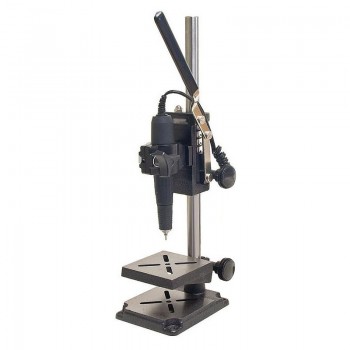
Hand Drill Stand Drill Stand Tools for Metal Gemstone Jewelry Making Tools

Beyond metals, drill presses are equally valuable for non-metal jewelry materials. When drilling gemstones, consistency and vibration control are critical. While specialized gemstone drilling systems are often preferred, a well-adjusted drill press equipped with diamond-coated bits can be used for softer stones and practice pieces. The vertical motion of the press minimizes lateral stress, lowering the chance of cracks or fractures. For materials like resin, acrylic, wood, or bone, adjustable speeds help prevent melting, chipping, or tear-out.

One of the key advantages of a drill press is control over depth. Jewelry components often require blind holes or exact depths for setting pins and posts. Depth stops ensure uniform results across multiple pieces, which is especially important in small production runs or matching sets. This level of repeatability is difficult to achieve with handheld drills.

Safety and ergonomics also play a role in how drill presses handle jewelry work. Secure clamping keeps tiny pieces from spinning dangerously, while both hands remain free to guide and stabilize the process. This not only improves accuracy but also reduces fatigue during detailed work sessions.

In essence, a drill press bridges the gap between raw material and refined jewelry. By offering stability, precision, and adaptability, it allows jewelers to work confidently across a wide range of materials. When used thoughtfully, the drill press becomes more than a machine—it becomes a trusted partner in transforming fragile materials into lasting, wearable art.

https://www.jewelerstoolsmall.com/goods-1336.html

カテゴリー: 未分類 | 投稿者wiz229 18:39 | コメントをどうぞ

The Future of Gold Melting: Why Induction Furnaces Are Leading the Way?

Gold melting has been a fundamental process in jewelry making, refining, and precious metal manufacturing for centuries. Traditionally, gold was melted using gas-fired furnaces, crucibles over open flames, or resistance heating systems. While these methods have served the industry well, they are increasingly being replaced by a more advanced and efficient technology: induction furnaces. As the demands for precision, sustainability, and efficiency grow, induction melting is clearly shaping the future of gold processing.

One of the main reasons gold melting induction furnaces are leading the way is their exceptional precision. Induction heating works by generating an electromagnetic field that directly heats the metal, rather than relying on indirect heat transfer. This allows gold to melt rapidly and evenly, reducing the risk of hot spots or localized overheating. For jewelers and refiners, this level of control is critical, as it helps maintain consistent alloy compositions and minimizes the loss of valuable material during melting.

Energy efficiency is another major advantage. Compared to traditional gas or resistance furnaces, induction furnaces convert a much higher percentage of input energy directly into heat within the metal itself. This results in faster melting times and lower overall energy consumption. In an era where energy costs are rising and environmental regulations are becoming stricter, this efficiency makes induction furnaces an increasingly attractive option for both small workshops and large-scale operations.

Environmental and workplace benefits further strengthen the case for induction technology. Induction furnaces produce no open flames and significantly fewer emissions, improving air quality in the workshop. This not only reduces the environmental footprint of gold melting but also creates a safer and more comfortable working environment for operators. Lower ambient heat, reduced fumes, and quieter operation all contribute to better working conditions and improved productivity.

Induction furnaces also support the growing trend toward automation and digital control in metalworking. Modern induction systems often feature programmable temperature settings, real-time monitoring, and precise power control. These features allow operators to repeat melting cycles with remarkable consistency, which is especially important for high-end jewelry production and gold recycling processes where quality and traceability matter.

Finally, induction melting aligns well with the future direction of the gold industry, which emphasizes sustainability, efficiency, and technological innovation. As recycled gold becomes more important and production volumes become more flexible, induction furnaces provide the adaptability needed to handle different batch sizes and alloy types with minimal setup changes.

In conclusion, induction furnaces are not just an incremental improvement over traditional gold melting methods—they represent a fundamental shift in how gold is processed. With their precision, energy efficiency, environmental advantages, and compatibility with modern digital workflows, induction furnaces are clearly leading the way toward the future of gold melting.

Related articles: https://jewelerstoolsmall.tenkomori.tv/e487492.html

カテゴリー: 未分類 | 投稿者wiz229 18:24 | コメントをどうぞ

Safety Tips When Operating a Jewelry Spot Welding Machine

Jewelry spot welding machines have become essential tools in modern workshops, allowing jewelers to join small metal components quickly and precisely without the need for solder. While these machines are efficient and convenient, they also involve high electrical currents and intense heat. Improper use can lead to injuries, damaged workpieces, or equipment failure. Following proper safety practices is crucial for anyone operating a jewelry spot welding machine.

One of the most important safety tips is to wear appropriate personal protective equipment. Eye protection is essential, as spot welding can produce bright flashes, sparks, or tiny metal particles. Safety glasses or a face shield help protect against eye strain and potential injury. In addition, wearing heat-resistant gloves can prevent burns when handling freshly welded pieces, which may appear cool but retain significant heat.

A clean and well-organized workspace is another key factor in safe operation. Jewelry spot welding requires precision, and cluttered workbenches increase the risk of accidental contact with electrodes or hot metal. Ensure that flammable materials such as paper, polishing cloths, or chemicals are kept well away from the welding area. Good lighting is also essential to clearly see small components and avoid mistakes during welding.

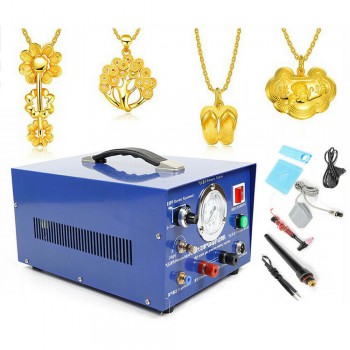
800W Jewelry Pulse Spot Welder Argon Protection Welding Jewelry Making Tools 110V/220V

Proper machine setup and inspection should never be overlooked. Before starting, check that the electrodes are clean, correctly aligned, and securely fastened. Dirty or worn electrodes can cause inconsistent welds and require higher power levels, increasing the risk of overheating. Make sure all cables and connections are intact, with no exposed wires or loose plugs that could lead to electrical hazards.

Controlling power settings is another critical safety consideration. Jewelry spot welding machines are designed to deliver short bursts of high current, and using excessive power can easily damage delicate jewelry or cause metal to splatter. Always start with the lowest effective setting and gradually increase if necessary. Testing settings on scrap metal before working on valuable pieces helps prevent accidents and costly errors.

Hand placement and body positioning also play an important role in safe operation. Keep fingers and hands well away from the electrode tips during welding. Many machines include foot pedals or hand controls—use them as intended to maintain a safe distance from the welding point. Maintaining a stable posture and steady hands reduces the chance of slipping or accidental contact during the weld.

Electrical safety should never be underestimated. Jewelry spot welding machines must be properly grounded and connected to a reliable power source. Avoid operating the machine with wet hands or in damp environments, as moisture significantly increases the risk of electric shock. If the machine behaves unusually, such as producing inconsistent sparks or strange noises, stop immediately and inspect it before continuing.

Finally, training and familiarity with the equipment are essential. Even compact jewelry spot welders require proper understanding to use safely. Reading the manufacturer’s manual, following recommended procedures, and practicing regularly all contribute to safer operation. When in doubt, seek guidance rather than experimenting.

In conclusion, a jewelry spot welding machine is a powerful and valuable tool when used responsibly. By wearing protective gear, maintaining a clean workspace, inspecting equipment, controlling power settings, and respecting electrical safety, jewelers can minimize risks and enjoy the full benefits of spot welding with confidence and precision.

Related articles: https://jewelerstoolsmall.tenkomori.tv/e487236.html

カテゴリー: 未分類 | 投稿者wiz229 18:32 | コメントをどうぞ