月別アーカイブ: 2026年3月

From Wax to Metal: The Process Behind Small Jewelry Casting Machines

Small jewelry casting machines may look compact, but they encapsulate a remarkably refined process that transforms fragile wax models into durable metal pieces with high precision. Understanding this workflow not only improves results but also helps avoid common defects that often frustrate beginners.

The process begins with wax modeling. Whether hand-carved or produced through injection into silicone molds, wax patterns define every detail of the final piece. At this stage, surface quality is critical—any imperfection in wax will be faithfully reproduced in metal. Skilled jewelers often spend more time refining wax than casting itself.

Once the models are ready, they are attached to a central wax sprue, forming what is commonly called a “tree.” The design of this sprue system is not arbitrary. Proper flow channels ensure that molten metal fills each cavity evenly, while also allowing gases to escape. Poor sprue design is one of the leading causes of incomplete casts and porosity.
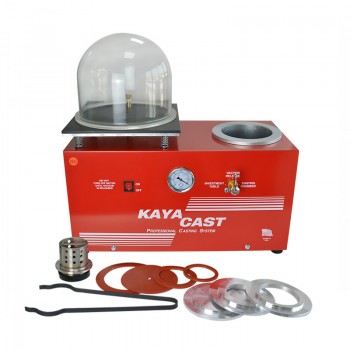
YALI 2L/ 4L Small Jewelry Making Vacuum Casting Machine Metal Gold Casting Recycling Machine

The assembled tree is then placed in a casting flask and surrounded with investment material, typically a gypsum-based compound. After mixing under vacuum to eliminate air bubbles, the investment hardens around the wax structure. The next phase, burnout, is where transformation truly begins. The flask is gradually heated in a kiln, allowing the wax to melt and burn away, leaving behind a precise cavity in the hardened mold.

Temperature control during burnout is crucial. Too rapid heating can crack the investment, while insufficient burnout leaves residue that contaminates the metal. Experienced operators often follow a staged heating schedule to ensure complete wax removal and proper mold strength.

Once burnout is complete, the flask is transferred—still hot—to the casting machine. Small jewelry casting machines typically use centrifugal force or vacuum assistance. In centrifugal systems, molten metal is flung into the mold by rotational force. Vacuum systems, on the other hand, draw metal into the cavities while simultaneously removing trapped air. Each method has its advantages: centrifugal casting excels in filling fine, while vacuum casting offers better control and reduced turbulence.

Melting the metal itself requires attention to alloy composition and temperature. Overheating can lead to oxidation and gas absorption, while underheating risks incomplete filling. Modern benchtop machines often integrate precise temperature controls or pair with induction melting units to improve consistency.

After casting, the flask is quenched in water once it has cooled to an appropriate temperature. The investment breaks away, revealing the rough metal tree. From here, the process transitions into finishing—cutting, filing, polishing, and sometimes additional treatments like plating or stone setting.

What distinguishes a high-quality casting is not just the machine, but the harmony between each step. Clean wax work, intelligent sprue design, controlled burnout, and precise casting all contribute to the final result. In small-scale jewelry production, mastering this chain of processes is far more valuable than relying solely on equipment specifications.

 

https://www.jewelerstoolsmall.com/goods-1684.html

カテゴリー: 未分類 | 投稿者wiz229 19:08 | コメントをどうぞ

Scaling Personalized Orders with Inside Ring Engraving Machines

In today’s jewelry market, personalization is no longer a luxury—it is an expectation. Customers increasingly seek meaningful, customized pieces that commemorate milestones, relationships, and personal stories. Among these, engraved rings hold a special place. To meet rising demand without sacrificing efficiency or quality, many jewelers are turning to inside ring engraving machines as a scalable solution.

Inside ring engraving presents unique technical challenges. The curved and confined surface of a ring’s interior requires precision tools capable of maintaining consistent depth, alignment, and legibility. Traditional hand engraving, while beautiful, is time-consuming and difficult to scale for high-volume orders. Modern engraving machines, particularly those equipped with CNC control or laser technology, overcome these limitations by automating the process while preserving fine detail.

One of the key advantages of inside ring engraving machines is repeatability. Once a design or font is programmed, the machine can reproduce it accurately across dozens or hundreds of rings. This is especially valuable for businesses handling bulk orders, such as wedding bands or corporate gifts. Automation reduces human error and ensures that each piece meets the same high standard, regardless of volume.

Speed is another critical factor. With increasing demand for fast turnaround times, manual engraving can quickly become a bottleneck. Advanced engraving machines significantly reduce production time per piece, allowing workshops to process more orders in less time. Some systems also support batch processing, where multiple rings can be engraved sequentially with minimal operator intervention. This efficiency directly translates into higher throughput and improved customer satisfaction.

Customization flexibility is equally important. Modern engraving machines support a wide range of fonts, symbols, and even complex graphics. Jewelers can easily switch between designs, adjust text size, or incorporate customer-specific elements such as handwriting or fingerprints. This adaptability enables businesses to offer highly personalized services without disrupting workflow.

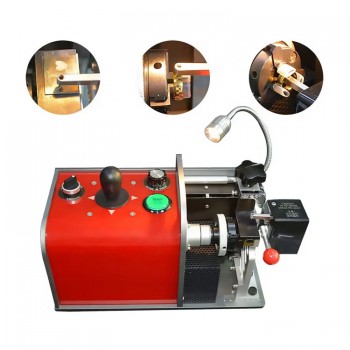
Jewelry Engraving Machine for Rings Pin Engraving and Stamping Machine for Jewelry Marking

Integration with digital design tools further enhances scalability. Orders can be managed through software platforms where customers input their engraving preferences online. These specifications can then be directly imported into the engraving machine, reducing manual data entry and minimizing errors. This seamless digital workflow is particularly beneficial for e-commerce jewelry brands handling large volumes of personalized orders.

However, scaling personalized engraving is not just about technology—it also requires thoughtful process management. Proper ring positioning, material compatibility, and tool maintenance are essential to ensure consistent results. Operators must be trained to handle different metals, such as gold, platinum, or titanium, each of which responds differently to engraving. Regular calibration and maintenance of the machine are also crucial to avoid deviations in quality over time.

Cost considerations should not be overlooked. While the initial investment in an inside ring engraving machine can be significant, the long-term benefits often outweigh the expense. Reduced labor costs, increased production capacity, and the ability to capture a growing market for personalized jewelry make it a worthwhile investment for many businesses.

In conclusion, inside ring engraving machines play a pivotal role in scaling personalized jewelry orders. By combining precision, efficiency, and flexibility, they enable jewelers to meet modern consumer expectations while maintaining profitability. As personalization continues to drive the industry forward, adopting advanced engraving technology is not just an option—it is a strategic necessity.

https://www.jewelerstoolsmall.com/goods-1960.html

カテゴリー: 未分類 | 投稿者wiz229 19:03 | コメントをどうぞ

Troubleshooting Weak Suction in Jewelry Polishing Dust Collectors

In jewelry workshops, polishing dust collectors play a crucial role in maintaining a clean and safe working environment. During polishing, grinding, or buffing processes, large amounts of fine metal particles and polishing compounds are released into the air. A properly functioning dust collector removes these particles efficiently. However, many jewelers eventually encounter a common problem: weak suction. When suction power decreases, dust begins to accumulate on work surfaces, tools, and even in the air, which can affect both health and product quality. Understanding the possible causes of weak suction can help resolve the issue quickly.

One of the most common reasons for reduced suction is a clogged filter. Dust collectors rely on filters to capture fine particles before the air is released back into the workshop. Over time, polishing compound residues, metal dust, and lint can build up inside the filter material. When this happens, airflow becomes restricted, and suction power drops noticeably. Regular filter cleaning or replacement is therefore essential. In many workshops, simply removing the filter and cleaning it with compressed air or installing a new one can restore the system’s performance.

Another possible cause is blocked airflow within the ducting or intake area. Jewelry polishing dust collectors often include hoses, ducts, or intake slots that guide dust into the system. If polishing debris accumulates inside these pathways, airflow can be restricted. Even small obstructions can significantly reduce suction efficiency. Inspecting the intake ports and ducts for blockages and removing accumulated dust can often solve the problem.

Motor performance can also influence suction strength. Dust collector motors run for long hours in busy jewelry workshops, and over time they may experience wear or reduced efficiency. If the motor is overheating, producing unusual noises, or failing to maintain consistent airflow, it may require maintenance or replacement. Ensuring that the motor ventilation openings remain clean and unobstructed can also help maintain optimal performance.


Improper sealing is another frequently overlooked issue. Dust collectors rely on airtight systems to generate strong airflow. If there are gaps, loose panels, or worn-out gaskets in the housing or duct connections, air may leak into the system, reducing suction at the intake point. Checking seals, tightening screws, and replacing damaged gaskets can greatly improve the system’s efficiency.

Finally, dust bag capacity should not be ignored. When the collection bag or container becomes too full, airflow is restricted and suction decreases. Regularly emptying the dust container prevents buildup and allows the system to maintain proper airflow.

In conclusion, weak suction in jewelry polishing dust collectors is usually caused by clogged filters, airflow blockages, motor issues, air leaks, or full dust containers. Regular inspection and preventive maintenance can keep the equipment operating at peak efficiency. By addressing these common issues early, jewelry workshops can maintain cleaner air, protect worker health, and ensure smoother polishing operations.

https://www.jewelerstoolsmall.com/goods-1112.html

カテゴリー: 未分類 | 投稿者wiz229 18:44 | コメントをどうぞ