Steam cleaning has become an essential technique in modern jewelry care, prized for its ability to restore brilliance without harsh chemicals. While it may look simple on the surface—hot vapor directed at a ring or gemstone—the process is rooted in a combination of physics, chemistry, and material science. Understanding the science behind steam cleaning helps explain why it is so effective, and why it must be used with care on precious metals and gems.
At its core, steam cleaning relies on the unique properties of water when it transitions from liquid to vapor. When water is heated under pressure, it becomes steam that carries a large amount of thermal energy. As this steam exits the nozzle and contacts a cooler jewelry surface, it rapidly condenses back into liquid. This phase change releases energy in the form of heat, which helps loosen oils, waxes, polishing compounds, and everyday grime that cling to metal surfaces and gemstone facets.
Pressure plays an equally important role. Jewelry steam cleaning machines used in jewelry workshops typically operate at several bars of pressure, producing a focused jet of vapor. This mechanical force allows steam to penetrate tiny crevices, pavé settings, and undercut areas that are nearly impossible to reach with brushes or cloths. Dirt particles are dislodged not by abrasion, but by a combination of heat-softened residues and the kinetic energy of the steam itself. This is why steam cleaning can be both powerful and gentle at the same time.
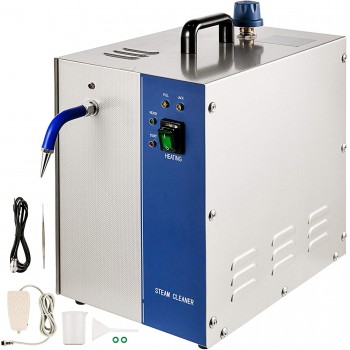
From a chemical perspective, steam cleaning works without detergents because heat reduces the viscosity of oils and fats. Many contaminants found on jewelry—skin oils, lotions, or polishing residues—are hydrophobic at room temperature, meaning they resist plain water. When exposed to high heat, their molecular structure becomes more fluid, allowing water to surround and carry them away. This makes steam an effective solvent substitute, especially valuable for high-end jewelry where chemical exposure is undesirable.
Precious metals respond particularly well to steam. Gold, platinum, and silver have high thermal conductivity, allowing heat to spread evenly across the surface. This minimizes localized thermal stress and helps contaminants release uniformly. Steam also leaves no residue, which is crucial for achieving a flawless, showroom-level finish after polishing or repair.
Gemstones, however, introduce additional scientific considerations. Hard, non-porous stones like diamonds, sapphires, and rubies tolerate steam well due to their strong crystal structures and resistance to thermal shock. In contrast, gems with internal fractures, inclusions, or porous structures—such as emeralds, opals, or turquoise—can be damaged by rapid temperature changes or moisture penetration. In these cases, the same physics that make steam effective can also pose risks.
In essence, steam cleaning is a controlled application of heat, pressure, and phase change. When used with proper knowledge of materials, it offers a fast, eco-friendly, and highly efficient method to clean precious metals and gems. The brilliance revealed after steam cleaning is not just visual—it is a testament to science working quietly behind the scenes.
https://www.jewelerstoolsmall.com/goods-1349.html