カテゴリー別アーカイブ: 未分類

Troubleshooting Weak Suction in Jewelry Polishing Dust Collectors

In jewelry workshops, polishing dust collectors play a crucial role in maintaining a clean and safe working environment. During polishing, grinding, or buffing processes, large amounts of fine metal particles and polishing compounds are released into the air. A properly functioning dust collector removes these particles efficiently. However, many jewelers eventually encounter a common problem: weak suction. When suction power decreases, dust begins to accumulate on work surfaces, tools, and even in the air, which can affect both health and product quality. Understanding the possible causes of weak suction can help resolve the issue quickly.

One of the most common reasons for reduced suction is a clogged filter. Dust collectors rely on filters to capture fine particles before the air is released back into the workshop. Over time, polishing compound residues, metal dust, and lint can build up inside the filter material. When this happens, airflow becomes restricted, and suction power drops noticeably. Regular filter cleaning or replacement is therefore essential. In many workshops, simply removing the filter and cleaning it with compressed air or installing a new one can restore the system’s performance.

Another possible cause is blocked airflow within the ducting or intake area. Jewelry polishing dust collectors often include hoses, ducts, or intake slots that guide dust into the system. If polishing debris accumulates inside these pathways, airflow can be restricted. Even small obstructions can significantly reduce suction efficiency. Inspecting the intake ports and ducts for blockages and removing accumulated dust can often solve the problem.

Motor performance can also influence suction strength. Dust collector motors run for long hours in busy jewelry workshops, and over time they may experience wear or reduced efficiency. If the motor is overheating, producing unusual noises, or failing to maintain consistent airflow, it may require maintenance or replacement. Ensuring that the motor ventilation openings remain clean and unobstructed can also help maintain optimal performance.


Improper sealing is another frequently overlooked issue. Dust collectors rely on airtight systems to generate strong airflow. If there are gaps, loose panels, or worn-out gaskets in the housing or duct connections, air may leak into the system, reducing suction at the intake point. Checking seals, tightening screws, and replacing damaged gaskets can greatly improve the system’s efficiency.

Finally, dust bag capacity should not be ignored. When the collection bag or container becomes too full, airflow is restricted and suction decreases. Regularly emptying the dust container prevents buildup and allows the system to maintain proper airflow.

In conclusion, weak suction in jewelry polishing dust collectors is usually caused by clogged filters, airflow blockages, motor issues, air leaks, or full dust containers. Regular inspection and preventive maintenance can keep the equipment operating at peak efficiency. By addressing these common issues early, jewelry workshops can maintain cleaner air, protect worker health, and ensure smoother polishing operations.

https://www.jewelerstoolsmall.com/goods-1112.html

カテゴリー: 未分類 | 投稿者wiz229 18:44 | コメントをどうぞ

Getting a Professional Shine with a Jewelry Buffer Polisher

A mirror-like finish is often the final touch that transforms a handmade piece of jewelry from attractive to truly professional. While hand polishing with cloth and compound can produce decent results, nothing compares to the depth and brilliance achieved with a jewelry buffer polisher. Mastering this tool not only enhances appearance but also elevates the overall perceived value of your work.

A jewelry buffer polisher operates using a motor-driven spindle that spins polishing wheels at high speeds. These wheels, typically made from cotton, muslin, or felt, are paired with specialized polishing compounds. The key to achieving a professional shine lies in understanding the relationship between wheel type, compound selection, and the metal being polished. For example, a firmer stitched muslin wheel combined with a cutting compound is ideal for removing fine scratches, while a softer loose cotton wheel with a finishing compound produces the final high-gloss sheen.

Preparation is critical before turning on the machine. The surface of the jewelry must be properly sanded and pre-finished. Buffing cannot effectively remove deep scratches or tool marks; it refines and enhances an already smooth surface. Progressing through fine grits of sandpaper ensures that the buffer can do its job efficiently. Skipping preparation often leads to uneven shine and visible imperfections.

When using the buffer, technique matters as much as equipment. Hold the piece firmly but gently, allowing the wheel to do the work. Excessive pressure can generate heat, distort delicate components, or even cause the piece to be pulled from your hands. Always polish on the lower half of the wheel’s rotation so that if the item slips, it is directed downward rather than toward you. Consistent, smooth movements prevent over-polishing in one spot and maintain uniform brilliance.

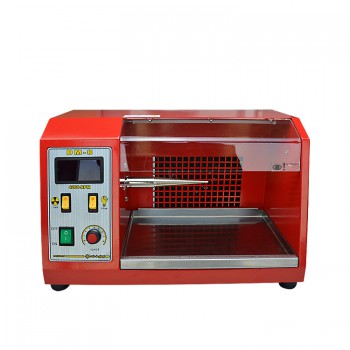
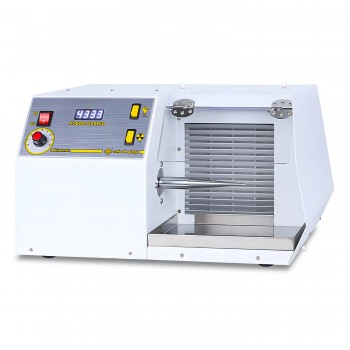
4200RPM Jewelry Polishing Buffing Machine Cloth Wheel Polisher DM-8 with Dust Collector Brench

Choosing the correct polishing compound also makes a significant difference. Tripoli is commonly used for initial cutting, while rouge compounds are preferred for final finishing. For softer metals like silver or gold, lighter compounds preserve detail while enhancing luster. Harder metals such as stainless steel may require more aggressive compounds and longer polishing times. Matching compound to material ensures efficient polishing without unnecessary wear.

Cleanliness between polishing stages is often overlooked but essential. Residual compound from a previous step can contaminate the next wheel, reducing clarity and shine. Many professionals dedicate specific wheels to individual compounds and clearly label them. This disciplined approach maintains consistent results and extends the lifespan of the polishing wheels.

Safety should never be ignored. Wearing eye protection, securing loose clothing, and tying back long hair are simple but vital precautions. A dust collection system or proper ventilation minimizes exposure to fine metal particles and compound residue, contributing to a healthier workspace.

Ultimately, achieving a professional shine with a jewelry buffer polisher is a combination of preparation, proper materials, refined technique, and attention to detail. With practice and patience, even small workshops can produce finishes comparable to high-end studios. The brilliance of a perfectly polished piece not only reflects light—it reflects craftsmanship, care, and dedication to excellence.

Related articles: https://carl259.pixnet.net/blog/posts/866972037500063734

カテゴリー: 未分類 | 投稿者wiz229 15:36 | コメントをどうぞ

The Science Behind Steam Cleaning Precious Metals and Gems

Steam cleaning has become an essential technique in modern jewelry care, prized for its ability to restore brilliance without harsh chemicals. While it may look simple on the surface—hot vapor directed at a ring or gemstone—the process is rooted in a combination of physics, chemistry, and material science. Understanding the science behind steam cleaning helps explain why it is so effective, and why it must be used with care on precious metals and gems.

At its core, steam cleaning relies on the unique properties of water when it transitions from liquid to vapor. When water is heated under pressure, it becomes steam that carries a large amount of thermal energy. As this steam exits the nozzle and contacts a cooler jewelry surface, it rapidly condenses back into liquid. This phase change releases energy in the form of heat, which helps loosen oils, waxes, polishing compounds, and everyday grime that cling to metal surfaces and gemstone facets.

Pressure plays an equally important role. Jewelry steam cleaning machines used in jewelry workshops typically operate at several bars of pressure, producing a focused jet of vapor. This mechanical force allows steam to penetrate tiny crevices, pavé settings, and undercut areas that are nearly impossible to reach with brushes or cloths. Dirt particles are dislodged not by abrasion, but by a combination of heat-softened residues and the kinetic energy of the steam itself. This is why steam cleaning can be both powerful and gentle at the same time.

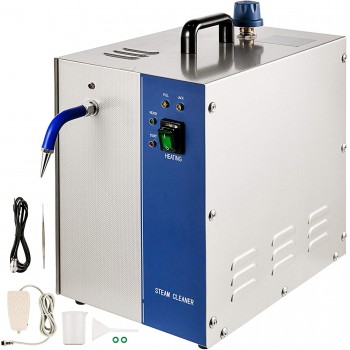
4L Stainless Steel Jewelry Steam Cleaner Gem Washer Gold & Silver Jewellery Steam Cleaning Machine Goldsmith Tools 2200W

From a chemical perspective, steam cleaning works without detergents because heat reduces the viscosity of oils and fats. Many contaminants found on jewelry—skin oils, lotions, or polishing residues—are hydrophobic at room temperature, meaning they resist plain water. When exposed to high heat, their molecular structure becomes more fluid, allowing water to surround and carry them away. This makes steam an effective solvent substitute, especially valuable for high-end jewelry where chemical exposure is undesirable.

Precious metals respond particularly well to steam. Gold, platinum, and silver have high thermal conductivity, allowing heat to spread evenly across the surface. This minimizes localized thermal stress and helps contaminants release uniformly. Steam also leaves no residue, which is crucial for achieving a flawless, showroom-level finish after polishing or repair.

Gemstones, however, introduce additional scientific considerations. Hard, non-porous stones like diamonds, sapphires, and rubies tolerate steam well due to their strong crystal structures and resistance to thermal shock. In contrast, gems with internal fractures, inclusions, or porous structures—such as emeralds, opals, or turquoise—can be damaged by rapid temperature changes or moisture penetration. In these cases, the same physics that make steam effective can also pose risks.

In essence, steam cleaning is a controlled application of heat, pressure, and phase change. When used with proper knowledge of materials, it offers a fast, eco-friendly, and highly efficient method to clean precious metals and gems. The brilliance revealed after steam cleaning is not just visual—it is a testament to science working quietly behind the scenes.

https://www.jewelerstoolsmall.com/goods-1349.html

カテゴリー: 未分類 | 投稿者wiz229 18:56 | コメントをどうぞ

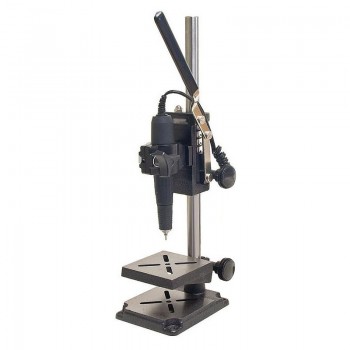
How Drill Presses Handle Jewelry Materials?

Precision is everything in jewelry making. Whether you are drilling a hole for a gemstone setting, creating a channel for a pendant, or preparing components for assembly, accuracy and control can make the difference between a flawless piece and wasted material. This is where the drill press earns its place in the jewelry workshop. Unlike handheld tools, a drill press offers stability, repeatability, and finesse—qualities that are essential when working with delicate and valuable jewelry materials.

Jewelry metals vary widely in hardness and behavior, and a jewelry making drill press adapts to these differences through speed control and tool selection. Soft metals such as gold, silver, and copper require lower drilling speeds and sharp, fine drill bits to prevent grabbing or distortion. A drill press allows the jeweler to apply consistent downward pressure, reducing the risk of bending thin sheets or warping small components. The result is cleaner holes with smoother edges, even in ultra-thin materials.

Harder metals like stainless steel, titanium, and platinum present a different challenge. These materials generate more heat and resistance during drilling. A drill press handles them more effectively by maintaining steady torque and alignment, which prevents bit breakage and uneven holes. When paired with proper lubrication and carbide or cobalt drill bits, the press can work through tough alloys without sacrificing precision or safety.

Hand Drill Stand Drill Stand Tools for Metal Gemstone Jewelry Making Tools

Beyond metals, drill presses are equally valuable for non-metal jewelry materials. When drilling gemstones, consistency and vibration control are critical. While specialized gemstone drilling systems are often preferred, a well-adjusted drill press equipped with diamond-coated bits can be used for softer stones and practice pieces. The vertical motion of the press minimizes lateral stress, lowering the chance of cracks or fractures. For materials like resin, acrylic, wood, or bone, adjustable speeds help prevent melting, chipping, or tear-out.

One of the key advantages of a drill press is control over depth. Jewelry components often require blind holes or exact depths for setting pins and posts. Depth stops ensure uniform results across multiple pieces, which is especially important in small production runs or matching sets. This level of repeatability is difficult to achieve with handheld drills.

Safety and ergonomics also play a role in how drill presses handle jewelry work. Secure clamping keeps tiny pieces from spinning dangerously, while both hands remain free to guide and stabilize the process. This not only improves accuracy but also reduces fatigue during detailed work sessions.

In essence, a drill press bridges the gap between raw material and refined jewelry. By offering stability, precision, and adaptability, it allows jewelers to work confidently across a wide range of materials. When used thoughtfully, the drill press becomes more than a machine—it becomes a trusted partner in transforming fragile materials into lasting, wearable art.

https://www.jewelerstoolsmall.com/goods-1336.html

カテゴリー: 未分類 | 投稿者wiz229 18:39 | コメントをどうぞ

The Future of Gold Melting: Why Induction Furnaces Are Leading the Way?

Gold melting has been a fundamental process in jewelry making, refining, and precious metal manufacturing for centuries. Traditionally, gold was melted using gas-fired furnaces, crucibles over open flames, or resistance heating systems. While these methods have served the industry well, they are increasingly being replaced by a more advanced and efficient technology: induction furnaces. As the demands for precision, sustainability, and efficiency grow, induction melting is clearly shaping the future of gold processing.

One of the main reasons gold melting induction furnaces are leading the way is their exceptional precision. Induction heating works by generating an electromagnetic field that directly heats the metal, rather than relying on indirect heat transfer. This allows gold to melt rapidly and evenly, reducing the risk of hot spots or localized overheating. For jewelers and refiners, this level of control is critical, as it helps maintain consistent alloy compositions and minimizes the loss of valuable material during melting.

Energy efficiency is another major advantage. Compared to traditional gas or resistance furnaces, induction furnaces convert a much higher percentage of input energy directly into heat within the metal itself. This results in faster melting times and lower overall energy consumption. In an era where energy costs are rising and environmental regulations are becoming stricter, this efficiency makes induction furnaces an increasingly attractive option for both small workshops and large-scale operations.

Environmental and workplace benefits further strengthen the case for induction technology. Induction furnaces produce no open flames and significantly fewer emissions, improving air quality in the workshop. This not only reduces the environmental footprint of gold melting but also creates a safer and more comfortable working environment for operators. Lower ambient heat, reduced fumes, and quieter operation all contribute to better working conditions and improved productivity.

Induction furnaces also support the growing trend toward automation and digital control in metalworking. Modern induction systems often feature programmable temperature settings, real-time monitoring, and precise power control. These features allow operators to repeat melting cycles with remarkable consistency, which is especially important for high-end jewelry production and gold recycling processes where quality and traceability matter.

Finally, induction melting aligns well with the future direction of the gold industry, which emphasizes sustainability, efficiency, and technological innovation. As recycled gold becomes more important and production volumes become more flexible, induction furnaces provide the adaptability needed to handle different batch sizes and alloy types with minimal setup changes.

In conclusion, induction furnaces are not just an incremental improvement over traditional gold melting methods—they represent a fundamental shift in how gold is processed. With their precision, energy efficiency, environmental advantages, and compatibility with modern digital workflows, induction furnaces are clearly leading the way toward the future of gold melting.

Related articles: https://jewelerstoolsmall.tenkomori.tv/e487492.html

カテゴリー: 未分類 | 投稿者wiz229 18:24 | コメントをどうぞ

Safety Tips When Operating a Jewelry Spot Welding Machine

Jewelry spot welding machines have become essential tools in modern workshops, allowing jewelers to join small metal components quickly and precisely without the need for solder. While these machines are efficient and convenient, they also involve high electrical currents and intense heat. Improper use can lead to injuries, damaged workpieces, or equipment failure. Following proper safety practices is crucial for anyone operating a jewelry spot welding machine.

One of the most important safety tips is to wear appropriate personal protective equipment. Eye protection is essential, as spot welding can produce bright flashes, sparks, or tiny metal particles. Safety glasses or a face shield help protect against eye strain and potential injury. In addition, wearing heat-resistant gloves can prevent burns when handling freshly welded pieces, which may appear cool but retain significant heat.

A clean and well-organized workspace is another key factor in safe operation. Jewelry spot welding requires precision, and cluttered workbenches increase the risk of accidental contact with electrodes or hot metal. Ensure that flammable materials such as paper, polishing cloths, or chemicals are kept well away from the welding area. Good lighting is also essential to clearly see small components and avoid mistakes during welding.

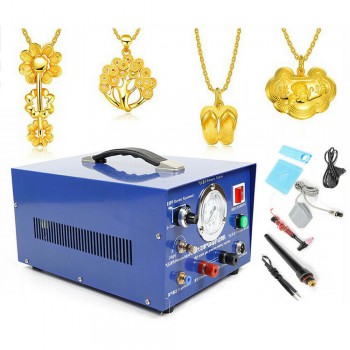
800W Jewelry Pulse Spot Welder Argon Protection Welding Jewelry Making Tools 110V/220V

Proper machine setup and inspection should never be overlooked. Before starting, check that the electrodes are clean, correctly aligned, and securely fastened. Dirty or worn electrodes can cause inconsistent welds and require higher power levels, increasing the risk of overheating. Make sure all cables and connections are intact, with no exposed wires or loose plugs that could lead to electrical hazards.

Controlling power settings is another critical safety consideration. Jewelry spot welding machines are designed to deliver short bursts of high current, and using excessive power can easily damage delicate jewelry or cause metal to splatter. Always start with the lowest effective setting and gradually increase if necessary. Testing settings on scrap metal before working on valuable pieces helps prevent accidents and costly errors.

Hand placement and body positioning also play an important role in safe operation. Keep fingers and hands well away from the electrode tips during welding. Many machines include foot pedals or hand controls—use them as intended to maintain a safe distance from the welding point. Maintaining a stable posture and steady hands reduces the chance of slipping or accidental contact during the weld.

Electrical safety should never be underestimated. Jewelry spot welding machines must be properly grounded and connected to a reliable power source. Avoid operating the machine with wet hands or in damp environments, as moisture significantly increases the risk of electric shock. If the machine behaves unusually, such as producing inconsistent sparks or strange noises, stop immediately and inspect it before continuing.

Finally, training and familiarity with the equipment are essential. Even compact jewelry spot welders require proper understanding to use safely. Reading the manufacturer’s manual, following recommended procedures, and practicing regularly all contribute to safer operation. When in doubt, seek guidance rather than experimenting.

In conclusion, a jewelry spot welding machine is a powerful and valuable tool when used responsibly. By wearing protective gear, maintaining a clean workspace, inspecting equipment, controlling power settings, and respecting electrical safety, jewelers can minimize risks and enjoy the full benefits of spot welding with confidence and precision.

Related articles: https://jewelerstoolsmall.tenkomori.tv/e487236.html

カテゴリー: 未分類 | 投稿者wiz229 18:32 | コメントをどうぞ

Why Your Jewelry Deserves a Professional Buffer Polisher?

In the world of jewelry making and finishing, details matter more than anything else. A perfectly designed ring or pendant can lose much of its appeal if the surface finish is dull, scratched, or uneven. This is where a professional buffer polisher proves its true value. While hand polishing and improvised tools may seem sufficient at first, investing in a dedicated buffer polisher can elevate both the quality of your jewelry and the efficiency of your workflow.

One of the main advantages of a professional jewelry buffer polisher is the level of consistency it delivers. Hand polishing often depends on pressure, angle, and endurance, which can vary from piece to piece. A buffer polisher, on the other hand, operates at a stable speed and torque, ensuring an even finish across the entire surface. This consistency is especially important for jewelers who produce multiple pieces or work with collections, where uniform appearance is essential for a professional presentation.

Another key benefit lies in surface quality. Professional buffer polishers are designed to work with a wide range of polishing wheels and compounds, allowing you to move seamlessly from pre-polishing to high-gloss finishing. They can remove fine scratches, tool marks, and oxidation far more effectively than manual methods. The result is a deeper shine that enhances the brilliance of metals like gold, silver, platinum, and stainless steel, making gemstones appear brighter and more vibrant by contrast.

K3600 4300RPM Jewelry Buffing Polisher Polishing Machine With Dust Collector Variable Frequency Speed

Efficiency is also a major reason your jewelry deserves a professional buffer polisher. What might take 20 or 30 minutes by hand can often be completed in just a few minutes with the right machine setup. Over time, this saved effort adds up significantly, especially for small workshops or jewelry businesses. Faster finishing not only boosts productivity but also reduces physical strain on hands, wrists, and shoulders, helping jewelers work more comfortably over long periods.

Safety and control are often overlooked but equally important factors. Professional buffer polishers are built with stable bases, proper motor ventilation, and compatibility with safety accessories. Compared to makeshift solutions, they offer better control over the polishing process, reducing the risk of grabbing, uneven pressure, or accidental damage to delicate pieces. This is particularly valuable when working on fine details, thin settings, or high-value jewelry.

Finally, using a professional buffer polisher sends a clear message about craftsmanship. Customers may not always know how jewelry is finished, but they can instantly recognize quality when they see and feel it. A smooth, mirror-like surface communicates care, precision, and professionalism. Over time, this attention to finishing can strengthen your reputation, justify premium pricing, and set your work apart in a competitive market.

In short, a professional buffer polisher is not just a convenience—it is an essential tool for anyone serious about jewelry quality. By improving consistency, surface finish, efficiency, safety, and overall presentation, it ensures that every piece of jewelry truly looks as valuable as it deserves to be.

Related articles: http://jewelerstoolsmallus.hupont.hu/6/waste-heat-recovery-in-gold-melting

カテゴリー: 未分類 | 投稿者wiz229 18:40 | コメントをどうぞ

Melting Aluminum at Home? Why You Need a Clay Graphite Crucible

Melting aluminum at home has become increasingly popular among DIY enthusiasts, hobbyist metal casters, and small workshop owners. Whether you want to recycle scrap aluminum, create custom parts, or experiment with metal casting, having the right equipment is essential for both safety and quality results. One tool that often gets overlooked by beginners is the crucible. Among the available options, a clay graphite crucible stands out as one of the best choices for home aluminum melting.

Aluminum melts at around 660°C (1220°F), which is relatively low compared to many other metals. This might give the impression that almost any container can handle the job. In reality, using improper materials can lead to cracking, contamination of the molten metal, or even dangerous failures. Clay graphite crucibles are specifically designed to withstand high temperatures while maintaining structural integrity, making them ideal for repeated aluminum melts.

One of the key advantages of a clay graphite crucible is its excellent thermal shock resistance. When heating metal, temperature changes can be sudden and extreme. Cheap steel containers or ceramic pots may crack or warp under these conditions. Clay graphite crucibles, however, combine clay’s strength with graphite’s flexibility and heat conductivity. This combination allows the crucible to heat evenly and resist cracking, even during rapid temperature changes.

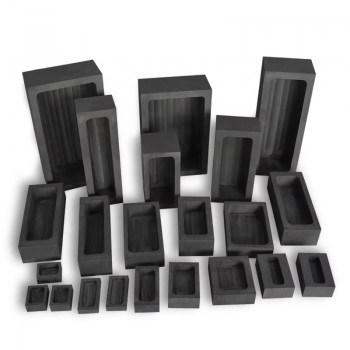
Graphite Crucible Ingot Mould for Gold, Silver, and Copper Melting & Casting

Another important benefit is chemical stability. Molten aluminum can react with certain metals and materials, leading to impurities in the final casting. Clay graphite crucibles are largely non-reactive with aluminum, helping to keep the melt clean. This results in smoother pours, fewer inclusions, and higher-quality finished parts—especially important if you are making functional components or decorative items.

Durability is also a major factor for home casters. A well-maintained clay graphite crucible can last for dozens of melting cycles. Unlike improvised containers, it does not thin out quickly or develop weak spots that could cause leaks. This reliability not only saves money in the long run but also significantly reduces the risk of accidents caused by crucible failure.

Finally, safety should never be underestimated when working with molten metal at home. A clay graphite crucible offers predictable performance, stable handling, and compatibility with common tongs and furnaces. When paired with proper protective gear and safe working practices, it provides peace of mind for beginners and experienced casters alike.

In conclusion, if you are serious about melting aluminum at home, investing in a clay graphite crucible is not optional—it is essential. It improves safety, enhances metal quality, and ensures consistent results, making your home casting projects more enjoyable and successful.

Related articles: https://raovat49.com/s/air-compressors-in-jewelry-casting-a-hidden-essential-tool-6369030


カテゴリー: 未分類 | 投稿者wiz229 18:24 | コメントをどうぞ

Advanced Cabbing Techniques on a Small Lapidary Machine

Working with a small lapidary cabbing machine doesn’t mean you’re limited to basic shapes or beginner-level results. In fact, many skilled lapidaries achieve competition-grade stones using compact equipment—it’s all about technique, control, and understanding your machine’s capabilities. Here are some advanced cabbing techniques that can elevate your work, even on a modest setup.

1. Precision Preforming for Better Symmetry

Advanced cabbing starts long before the polishing stage. With a small cabbing machine, mastering your preform is key. Use fine, deliberate movements on the coarse wheel to achieve clean outlines and well-defined shoulders. To maintain symmetry, rotate the stone frequently and check your shape under good lighting. Don’t rush this step—any inconsistency now will multiply as you move through finer grits.

2. Dome Control Through Micro-Angling

Creating a perfectly balanced dome is one of the hallmarks of high-level cabbing. On smaller machines, where wheel width may be limited, micro-angling your stone becomes essential. Instead of holding the cab flat against the wheel, gradually raise and lower your wrist to create smooth curvature. Work from the girdle upward, overlapping each pass to eliminate flats. This technique is especially effective on compact machines where you feel the wheel feedback more directly.

3. Managing Heat on a Small Setup

Small lapidary cabbing machines tend to generate heat faster due to narrower wheels and compact splash guards. To avoid thermal fractures—especially in stones like opal, labradorite, or fluorite—develop a rhythm of brief contact and quick dips in water. For hard stones such as agate or jasper, maintaining coolness also improves polish quality. If your machine allows, adjust water flow to provide a consistent film across the wheel.

180W Lapidary Cabbing Machine Stone Gemstone Grinding Machine Jewelry Making Cabochon Machine

4. Edge Refinement Using Light Touches

Refining the girdle and edge transitions is where a cab can go from “good” to “exceptional.” With a small machine, apply feather-light pressure as you refine edges on 600 and 1200 grit wheels. Small cabbing units are surprisingly responsive to pressure changes, allowing you to sculpt clean, crisp lines that don’t appear over-ground. A final pass on the pre-polish wheel, using almost no pressure, will keep edges sharp without flattening the dome.

5. Advanced Polishes with Add-On Pads

Though limited in wheel size, small machines can still achieve mirror finishes when paired with polishing pads or discs. Cerium oxide, diamond paste, or alumina compounds can be used on felt or leather pads to bring out rich luster. For stones with unique structures—like star sapphires or sunstone—switching to a resin-backed pad lets you fine-tune the angle to enhance optical effects.

6. Maximizing Output Through Workflow Efficiency

Advanced cabbing isn’t only about the stone—it’s also about how you work. Arrange your workspace so that dop wax, water, and polishing compounds are within easy reach. Because small machines operate closer to your hands, maintaining focus and consistency becomes easier when your workflow is clean and uninterrupted.

A small lapidary machine is far more capable than many assume. With refined techniques and deliberate control, you can craft beautifully domed, high-symmetry cabs that rival those made on professional-grade equipment. The machine size may be small, but your cabbing results don’t have to be.

Related articles: https://truongyen2442y.wixsite.com/jewelerstoolsmall/post/can-a-magnetic-tumbler-replace-hand-polishing

カテゴリー: 未分類 | 投稿者wiz229 18:24 | コメントをどうぞ

Inside the Jewelry Faceting Machine: How It Really Works?

For many jewelry enthusiasts, a dazzling, precisely angled gemstone seems almost magical. Yet behind that sparkle lies a sophisticated piece of equipment—the jewelry faceting machine. This tool is the heart of gemstone cutting, transforming rough stones into symmetrical, light-catching masterpieces. While the process may look complex, understanding how a faceting machine works reveals a fascinating blend of engineering, precision, and artistry.

At its core, a faceting machine is designed to control three essential factors: angle, rotation, and polish. These elements determine how light enters and exits the gemstone, ultimately defining its brilliance. The machine’s main components include the mast, quill, index gear, handpiece, and laps—each playing a specific role in shaping the stone.

The mast serves as the vertical guide for the cutting mechanism. Attached to it is the handpiece or quill, which securely holds the dop stick—the small rod that carries the gemstone. This assembly allows the cutter to adjust the angle of the stone with incredible accuracy, often down to fractions of a degree. This precision is crucial; even a slight variation can affect symmetry or diminish the stone’s clarity and brilliance.

120W Gemstone Faceting Machine Digital Display for Gem Jade Jade Stone Crystal Grinding Polishing

The index gear is another key part of the machine. It divides the stone’s rotation into equal segments, ensuring each facet is cut in the correct position. For example, a 96-index gear allows stones to be rotated in increments that match common faceting patterns. This standardized alignment is what enables complex cuts like the round brilliant or princess cut to have perfect symmetry.

Cutting occurs on a series of flat, rotating discs called laps. These laps are coated with abrasives—from coarse diamond grit for rough shaping to extremely fine particles for polishing. As the cutter brings the angled stone into contact with the lap, material is gradually removed, revealing clean, flat facets. The process is repeated systematically, switching between angles and index increments, until the crown, pavilion, and table are complete.

Water or lubricant is typically applied to keep the lap cool and minimize friction. This helps prevent overheating, which can crack or damage delicate gemstones. Modern machines often include speed controls, digital readouts, and dial indicators, giving cutters even more precision and consistency.

What makes faceting truly remarkable is how engineering and artistry merge. While the machine ensures accuracy, the cutter’s skill—choosing the right angles, selecting the best pattern, and knowing when a facet is “just right”—ultimately defines the beauty of the finished gemstone.

Understanding how a jewelry faceting machine works not only demystifies the cutting process but also deepens appreciation for the craftsmanship behind every sparkling stone. It’s a reminder that each facet is a deliberate act of precision, guided by both science and creativity.

Related articles: https://ameblo.jp/frank35/entry-12948111645.html

カテゴリー: 未分類 | 投稿者wiz229 18:31 | コメントをどうぞ