Advanced Cabbing Techniques on a Small Lapidary Machine

Working with a small lapidary cabbing machine doesn’t mean you’re limited to basic shapes or beginner-level results. In fact, many skilled lapidaries achieve competition-grade stones using compact equipment—it’s all about technique, control, and understanding your machine’s capabilities. Here are some advanced cabbing techniques that can elevate your work, even on a modest setup.

1. Precision Preforming for Better Symmetry

Advanced cabbing starts long before the polishing stage. With a small cabbing machine, mastering your preform is key. Use fine, deliberate movements on the coarse wheel to achieve clean outlines and well-defined shoulders. To maintain symmetry, rotate the stone frequently and check your shape under good lighting. Don’t rush this step—any inconsistency now will multiply as you move through finer grits.

2. Dome Control Through Micro-Angling

Creating a perfectly balanced dome is one of the hallmarks of high-level cabbing. On smaller machines, where wheel width may be limited, micro-angling your stone becomes essential. Instead of holding the cab flat against the wheel, gradually raise and lower your wrist to create smooth curvature. Work from the girdle upward, overlapping each pass to eliminate flats. This technique is especially effective on compact machines where you feel the wheel feedback more directly.

3. Managing Heat on a Small Setup

Small lapidary cabbing machines tend to generate heat faster due to narrower wheels and compact splash guards. To avoid thermal fractures—especially in stones like opal, labradorite, or fluorite—develop a rhythm of brief contact and quick dips in water. For hard stones such as agate or jasper, maintaining coolness also improves polish quality. If your machine allows, adjust water flow to provide a consistent film across the wheel.
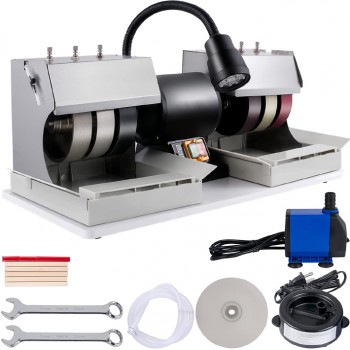
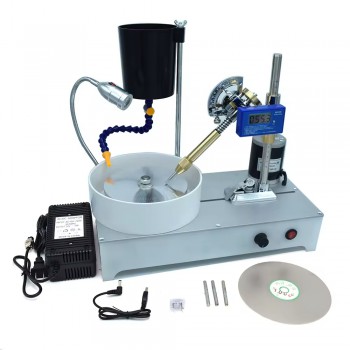
180W Lapidary Cabbing Machine Stone Gemstone Grinding Machine Jewelry Making Cabochon Machine

4. Edge Refinement Using Light Touches

Refining the girdle and edge transitions is where a cab can go from “good” to “exceptional.” With a small machine, apply feather-light pressure as you refine edges on 600 and 1200 grit wheels. Small cabbing units are surprisingly responsive to pressure changes, allowing you to sculpt clean, crisp lines that don’t appear over-ground. A final pass on the pre-polish wheel, using almost no pressure, will keep edges sharp without flattening the dome.

5. Advanced Polishes with Add-On Pads

Though limited in wheel size, small machines can still achieve mirror finishes when paired with polishing pads or discs. Cerium oxide, diamond paste, or alumina compounds can be used on felt or leather pads to bring out rich luster. For stones with unique structures—like star sapphires or sunstone—switching to a resin-backed pad lets you fine-tune the angle to enhance optical effects.

6. Maximizing Output Through Workflow Efficiency

Advanced cabbing isn’t only about the stone—it’s also about how you work. Arrange your workspace so that dop wax, water, and polishing compounds are within easy reach. Because small machines operate closer to your hands, maintaining focus and consistency becomes easier when your workflow is clean and uninterrupted.

A small lapidary machine is far more capable than many assume. With refined techniques and deliberate control, you can craft beautifully domed, high-symmetry cabs that rival those made on professional-grade equipment. The machine size may be small, but your cabbing results don’t have to be.

Related articles: https://truongyen2442y.wixsite.com/jewelerstoolsmall/post/can-a-magnetic-tumbler-replace-hand-polishing

カテゴリー: 未分類 | 投稿者wiz229 18:24 | コメントをどうぞ

Inside the Jewelry Faceting Machine: How It Really Works?

For many jewelry enthusiasts, a dazzling, precisely angled gemstone seems almost magical. Yet behind that sparkle lies a sophisticated piece of equipment—the jewelry faceting machine. This tool is the heart of gemstone cutting, transforming rough stones into symmetrical, light-catching masterpieces. While the process may look complex, understanding how a faceting machine works reveals a fascinating blend of engineering, precision, and artistry.

At its core, a faceting machine is designed to control three essential factors: angle, rotation, and polish. These elements determine how light enters and exits the gemstone, ultimately defining its brilliance. The machine’s main components include the mast, quill, index gear, handpiece, and laps—each playing a specific role in shaping the stone.

The mast serves as the vertical guide for the cutting mechanism. Attached to it is the handpiece or quill, which securely holds the dop stick—the small rod that carries the gemstone. This assembly allows the cutter to adjust the angle of the stone with incredible accuracy, often down to fractions of a degree. This precision is crucial; even a slight variation can affect symmetry or diminish the stone’s clarity and brilliance.

120W Gemstone Faceting Machine Digital Display for Gem Jade Jade Stone Crystal Grinding Polishing

The index gear is another key part of the machine. It divides the stone’s rotation into equal segments, ensuring each facet is cut in the correct position. For example, a 96-index gear allows stones to be rotated in increments that match common faceting patterns. This standardized alignment is what enables complex cuts like the round brilliant or princess cut to have perfect symmetry.

Cutting occurs on a series of flat, rotating discs called laps. These laps are coated with abrasives—from coarse diamond grit for rough shaping to extremely fine particles for polishing. As the cutter brings the angled stone into contact with the lap, material is gradually removed, revealing clean, flat facets. The process is repeated systematically, switching between angles and index increments, until the crown, pavilion, and table are complete.

Water or lubricant is typically applied to keep the lap cool and minimize friction. This helps prevent overheating, which can crack or damage delicate gemstones. Modern machines often include speed controls, digital readouts, and dial indicators, giving cutters even more precision and consistency.

What makes faceting truly remarkable is how engineering and artistry merge. While the machine ensures accuracy, the cutter’s skill—choosing the right angles, selecting the best pattern, and knowing when a facet is “just right”—ultimately defines the beauty of the finished gemstone.

Understanding how a jewelry faceting machine works not only demystifies the cutting process but also deepens appreciation for the craftsmanship behind every sparkling stone. It’s a reminder that each facet is a deliberate act of precision, guided by both science and creativity.

Related articles: https://ameblo.jp/frank35/entry-12948111645.html

カテゴリー: 未分類 | 投稿者wiz229 18:31 | コメントをどうぞ

Creative Jewelry Designs Made Possible with Gold Plating Machines

In today’s jewelry-making world, creativity is no longer limited by traditional techniques or the high cost of precious metals. With the rise of gold plating machines, designers and small studios can bring a wide range of imaginative concepts to life with greater efficiency and far lower material costs. These machines not only speed up production but also unlock new artistic possibilities, turning metal surface finishing into a versatile medium for expression.

One of the greatest advantages of gold plating machines for jewelry is the high level of control they provide. Designers can choose from various plating thicknesses, from ultra-thin decorative layers to thicker, more durable coatings. This flexibility allows jewelry pieces to maintain both aesthetic appeal and practical wear resistance. For brands that embrace affordable luxury, gold plating provides an accessible way to achieve the look of yellow gold, rose gold, or even antique gold finishes without the expense of solid precious metal.

Gold plating machines also make personalized and intricate designs much easier to achieve. For example, designers can experiment with multi-tone effects—such as seamless transitions between white gold and yellow gold, or subtle rose-gold highlights applied to engraved textures. These contrasts add depth, dimension, and sophistication to the piece. Many modern machines can also plate evenly across complex shapes and fine details, which is essential for miniature pendants, patterned rings, or sculptural components.

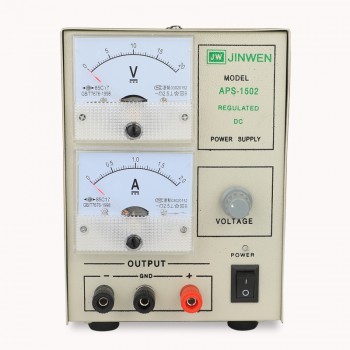
Portable Jewelry Gold Silver Gold Plating Machine Jewelry Plater Electroplating Unit

Another exciting aspect of gold plating is its compatibility with a wide range of materials. Gemstones, shells, ceramics, glass, and resin can all be enhanced with gold accents or finished with plated components that tie the design together. Some independent jewelers even use gold plating itself as a creative element—adding uneven textures, partial coverage, or intentionally aged finishes to craft truly unique, artisan-style collections.

Sustainability also plays a growing role in the popularity of gold plating. Designers can use base metals like brass or copper as the core material and apply a thin layer of gold to achieve a luxurious look. This approach reduces both material costs and precious metal consumption, aligning with modern consumers’ expectations for eco-friendly and responsible craftsmanship.

Ultimately, gold plating machines have become indispensable tools in contemporary jewelry design. They empower creators to experiment freely with color, texture, and metal aesthetics, achieving a perfect balance between artistic expression and practical affordability. Whether for bespoke wedding bands, small-batch collections, or statement accessories, gold plating technology is making innovative jewelry design more accessible than ever.

Related articles: https://www.blog2net.com/blog.php?user=hans22&note=486628

カテゴリー: 未分類 | 投稿者wiz229 18:31 | コメントをどうぞ

How to Use a Professional Diamond Tester Like a Pro?

When it comes to purchasing or appraising diamonds, accuracy is key. A diamond tester is a valuable tool that helps identify whether a stone is a genuine diamond or a simulant, like cubic zirconia. While these devices can be straightforward to use, mastering the technique will ensure that you get the most reliable results. Here’s a step-by-step guide on how to use a professional diamond tester like a pro.

1. Understand Your Diamond Tester

Before using a diamond tester, it’s essential to familiarize yourself with its features. Most professional diamond testers operate on thermal conductivity principles. Diamonds conduct heat much better than simulants, so the tester measures how quickly heat travels through the stone. Some testers also have a visual display that indicates the results, usually with different colors or sounds corresponding to the type of stone being tested.

2. Prepare the Tester

To get accurate results, the tester must be properly calibrated. Start by turning the device on and allowing it to warm up, which usually takes a few minutes. Many testers come with a calibration check, so it’s a good idea to test it on a known diamond or simulant to ensure the readings are accurate before proceeding.

3. Clean the Stone

For the best results, make sure the stone you’re testing is clean. Dirt, oils, or residue on the stone’s surface can interfere with the test. Use a soft cloth or a gentle cleaning solution to wipe down the stone before testing. This will help ensure the heat is transferred evenly, and the reading is as accurate as possible.

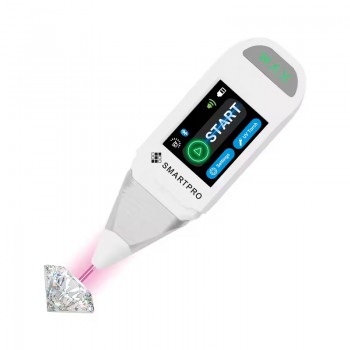
SmartPro MAX 5合1钻石测试笔,珠宝莫桑石CVD/HPHT模拟立方氧化锆钻石测试仪

4. Test the Stone

Once the tester is ready and the stone is clean, it’s time to begin the test. Hold the probe gently against the surface of the stone. Depending on your tester, the probe may need to be placed on the flat part of the diamond’s surface, often the table facet. Press the probe firmly, but avoid excessive force.

After a few seconds, the tester will give you a reading. If it beeps or shows a color indicating a high thermal conductivity, you’re likely dealing with a real diamond. If the tester shows a lower reading or a different color, it could be a simulant.

5. Test Multiple Points

To be thorough, it’s wise to test multiple points on the diamond, especially if the stone has multiple facets or is an irregular shape. Conducting several tests across the stone can help eliminate any false readings caused by surface irregularities or settings that may obstruct the heat flow.

6. Be Aware of Limitations

Although diamond testers are quite accurate, they are not infallible. Some simulants, such as moissanite, have a similar thermal conductivity to diamonds, which can lead to false positives. Always be aware of the limitations of your tester and consider using it alongside other testing methods if you need to be absolutely certain of a diamond’s authenticity.

7. Know When to Seek Expert Help

If your test results are inconclusive or if you’re unsure about the readings, don’t hesitate to seek professional appraisal. Certified gemologists have advanced tools and expertise to perform a more comprehensive analysis, including assessing other properties like color, cut, and clarity.

A professional diamond tester is a must-have tool for anyone involved in buying, selling, or appraising diamonds. By following these steps and becoming familiar with the operation of the tester, you can confidently assess whether a diamond is real or a simulant. With practice, you’ll be able to use the tester with precision and reliability, ensuring that you make well-informed decisions every time.

Related articles: https://carl259.pixnet.net/blog/post/195596209

カテゴリー: 未分類 | 投稿者wiz229 15:03 | コメントをどうぞ

Hello world!

Blog総合管理へようこそ。これは最初の投稿です。編集もしくは削除してブログを始めてください !

カテゴリー: 未分類 | 投稿者wiz229 05:47 | 1件のコメント