

Thyristor Market Summary
I. Global Thyristor Market Overview
A thyristor is a power semiconductor device featuring a PNPN four-layer structure, or an equivalent structure, with three terminals: anode, cathode, and gate. It is triggered by the gate to switch from the off state to the on state and remains conductive until the current falls below the holding value or a reverse voltage is applied. In addition to conventional unidirectional thyristors, such as SCRs, and bidirectional thyristors, such as TRIACs, this study also includes thyristor modules such as GTOs, or Gate Turn-Off Thyristors, and IGCTs, or Integrated Gate-Commutated Thyristors, which offer higher switching capability and are better suited for high-voltage, high-current applications.
Source: Secondary Sources and QYResearch, 2026
Figure00002. Global Thyristor Market Size (US$ Million), 2025 vs 2032
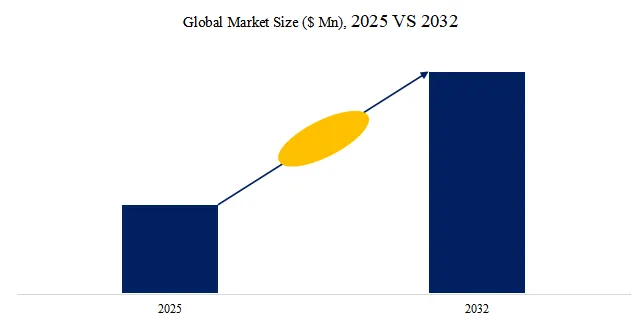
Above data is based on report from QYResearch: Global Thyristor Market Report 2026-2032 (published in 2026). If you need the latest data, plaese contact QYResearch.
The global thyristor industry, including conventional SCRs, bidirectional thyristors, and modular GTO and IGCT products, is in a stage of steady development, with its core trend reflected in the evolution of power electronic systems toward higher voltage, higher current, greater power capacity, and modularization. In terms of product structure, thyristors can be classified by device type into conventional SCRs, bidirectional thyristors such as TRIACs, and modular devices such as GTOs and IGCTs. They can also be segmented by power rating, ranging from several tens of amperes to several thousand amperes, and by voltage rating, ranging from several hundred volts to several thousand volts. By application structure, the market covers industrial control, power transmission, new energy systems, traction transportation, computing, and communications. From a regional perspective, Asia-Pacific is the largest market globally, accounting for about 61% of the total, followed by Europe and North America. In terms of competitive landscape, leading global manufacturers include STMicroelectronics, Renesas Electronics, Littelfuse, and WeEn Semiconductors, with the top four players together accounting for about 54% of the market. By application, industrial control represents the largest share at about 34%, followed by consumer electronics at 28% and computing and communications at 22%.
In terms of cost structure, the main components include power devices, accounting for about 45% to 55% of total cost, as well as packaging and structural parts, drive and control circuits, testing and certification, and manufacturing labor. Along the industry chain, the upstream mainly consists of power semiconductor chips and modules, the midstream covers thyristor packaging and complete-unit manufacturing, and the downstream includes integrators in automation equipment, power systems, new energy systems, and communications infrastructure. Overall industry gross margin remains at a favorable level, and there is still profit potential for new entrants. Looking ahead, thyristor devices are moving toward higher current capacity, higher voltage resistance, faster switching response, wider temperature tolerance, and more modular and intelligent management. At the same time, wide-bandgap materials such as SiC and GaN are beginning to be incorporated into substitution pathways and are expected to become a mainstream direction for next-generation high-end thyristor modules.
II. Analysis of Market Drivers in 2026
In 2026, demand in the thyristor market continues to be supported by a diverse range of downstream applications, covering automotive and transportation, industrial control, consumer electronics, computing and communications, as well as other power electronics scenarios. Among them, high-voltage and high-power thyristors and related devices mainly benefit from grid upgrading, renewable energy grid connection, industrial power supplies, special power supplies, and the construction of high-power control systems. Standardized devices are widely used in home appliance control, power supply protection, lighting regulation, automotive electronics, and communications support. Overall, the demand structure of the thyristor industry is characterized by the parallel development of project-driven markets and device-driven markets, with clear differences in growth pace and application logic across different product segments.
III. Development Opportunities Over the Next Five Years
Over the next five years, development opportunities in the thyristor industry are expected to be reflected mainly in three areas. First, as the construction of new-type power systems continues to advance, applications such as flexible DC transmission, grid-related equipment, energy storage conversion, and high-power industrial control will continue to drive demand for high-voltage and high-power devices. Second, the ongoing upgrading of industrial automation, automotive electronics, power management, and highly reliable control systems will provide stable incremental demand for mid- to high-end thyristor devices. Third, major domestic companies are continuing to advance the industrialization of thyristor devices and modules such as IGCT, indicating that the industry still has strong potential for technological upgrading and domestic substitution. Overall, future opportunities are expected to be concentrated more in product segments with higher reliability, higher power density, and stronger customization capabilities.
IV. Factors Restraining Development in 2026
From the perspective of industry operations, the main pressure facing the thyristor market in 2026 still comes from structural competition. On the one hand, competition in general-purpose and standardized products remains intense, and price fluctuation and pressure on profitability continue to be common across the industry. On the other hand, although demand for high-end products is relatively stable, long customer qualification cycles, the pace of project introduction, R&D intensity, and delivery capability still place high requirements on enterprises. In addition, in certain application scenarios, thyristors also face substitution or diversion pressure from other power semiconductor devices. As a result, industry growth is reflected more in structural opportunities within specific segments rather than broad-based expansion across all product categories.
V. Outlook on Industry Development Trends
Overall, the thyristor industry in 2026 is expected to continue showing the characteristics of premiumization, application differentiation, and structural upgrading. Demand certainty remains relatively strong for high-voltage, high-power, and engineering-support products, and the market focus is expected to further shift toward power grids, renewable energy, industrial control, and high-reliability application fields. Standard devices will continue to maintain broad application in consumer electronics, automotive and transportation, and computing and communications, but the key areas of competition will increasingly center on cost control, product consistency, and customer coverage capability. Over the next few years, companies with advantages in technology platforms, accumulated project experience, and downstream customer qualification capability are expected to further strengthen their competitive positions as the industry continues to differentiate.
About the Authors
About QYResearch
QYResearch founded in California, USA in 2007.It is a leading global market research and consulting company. With over 17 years’ experience and professional research team in various cities over the world QY Research focuses on management consulting, database and seminar services, IPO consulting (data is widely cited in prospectuses, annual reports and presentations), industry chain research and customized research to help our clients in providing non-linear revenue model and make them successful. We are globally recognized for our expansive portfolio of services, good corporate citizenship, and our strong commitment to sustainability. Up to now, we have cooperated with more than 60,000 clients across five continents. Let’s work closely with you and build a bold and better future.
QYResearch is a world-renowned large-scale consulting company. The industry covers various high-tech industry chain market segments, spanning the semiconductor industry chain (semiconductor equipment and parts, semiconductor materials, ICs, Foundry, packaging and testing, discrete devices, sensors, optoelectronic devices), photovoltaic industry chain (equipment, cells, modules, auxiliary material brackets, inverters, power station terminals), new energy automobile industry chain (batteries and materials, auto parts, batteries, motors, electronic control, automotive semiconductors, etc.), communication industry chain (communication system equipment, terminal equipment, electronic components, RF front-end, optical modules, 4G/5G/6G, broadband, IoT, digital economy, AI), advanced materials industry Chain (metal materials, polymer materials, ceramic materials, nano materials, etc.), machinery manufacturing industry chain (CNC machine tools, construction machinery, electrical machinery, 3C automation, industrial robots, lasers, industrial control, drones), food, beverages and pharmaceuticals, medical equipment, agriculture, etc.
About Us:
QYResearch founded in California, USA in 2007, which is a leading global market research and consulting company. Our primary business include market research reports, custom reports, commissioned research, IPO consultancy, business plans, etc. With over 18 years of experience and a dedicated research team, we are well placed to provide useful information and data for your business, and we have established offices in 7 countries (include United States, Germany, Switzerland, Japan, Korea, China and India) and business partners in over 30 countries. We have provided industrial information services to more than 60,000 companies in over the world.
Contact Us:
If you have any queries regarding this report or if you would like further information, please contact us:
QY Research Inc.
Add: 17890 Castleton Street Suite 369 City of Industry CA 91748 United States
EN: https://www.qyresearch.com
Email: global@qyresearch.com
Tel: 001-626-842-1666(US)
JP: https://www.qyresearch.co.jp










