

Silicon PIN Photodiodes Market Summary
Silicon PIN photodiodes are semiconductor photodetectors built on a silicon-based P-I-N structure that converts incoming optical signals into electrical signals quickly and reliably. Compared with conventional light-sensitive devices, they combine fast response speed, low junction capacitance, strong linearity, low dark current, mature process technology, and controllable cost, which is why they have long been used in industrial inspection, analytical instruments, optical communication receivers, medical equipment, consumer electronics, and a wide range of automation systems. Their value does not lie merely in detecting light. They serve essential functions in signal reception, position sensing, power monitoring, process control, and precision measurement in complex systems. As global manufacturing continues to digitalize, data infrastructure keeps expanding, and demand for reliable optical detection grows, silicon PIN photodiodes are evolving from basic components in the traditional discrete-device market into strategic interface devices that shape system performance, stability, and cost structure. For the optoelectronics industry, this is both the story of a mature product category continuing to scale and the story of value being repriced as applications move higher up the technology ladder.
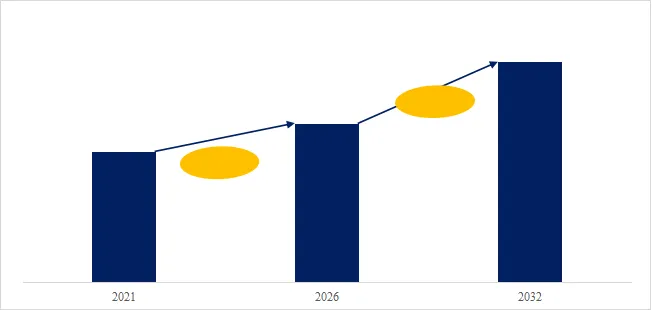
According to the new market research report “Global Silicon PIN Photodiodes Market Report 2025-2031”, published by QYResearch, the global Silicon PIN Photodiodes market size is projected to reach USD 0.45 billion by 2031, at a CAGR of 5.4% during the forecast period.
Figure00001. Global Silicon PIN Photodiodes Market Size (US$ Million), 2021-2032
Above data is based on report from QYResearch: Global Silicon PIN Photodiodes Market Report 2025-2031 (published in 2025). If you need the latest data, plaese contact QYResearch.
A Market Path of Correction, Recovery, and Upgrading Is Now Clearly Visible
From a volume perspective, the global silicon PIN photodiodes market went through a clear phase of adjustment during 2021–2025. Sales volume increased from 194,312 K pcs in 2021 to 211,013 K pcs in 2022, then declined for three consecutive years to 205,472 K pcs in 2023, 201,759 K pcs in 2024, and 200,602 K pcs in 2025. This period reflected the short-term disruptions created by inventory correction, end-market volatility, and changing capital expenditure cycles across the electronics supply chain. From 2026 onward, however, the market returns to a growth path. Volume rises to 211,923 K pcs in 2026 and continues climbing through 2032, ultimately reaching 313,936 K pcs. Annual growth during 2026–2032 remains broadly in the range of 4.78% to 8.67%, indicating that the industry has moved beyond cyclical adjustment and entered a more stable recovery and medium-term expansion phase. This pattern shows that silicon PIN photodiodes are not simply a fragile market tied to short-cycle consumer electronics, but rather a resilient component segment capable of recovering through downturns and capturing fresh demand as industrial and digital systems continue to upgrade.
Revenue Is Outpacing Volume, Showing a Shift Toward Higher-Value Applications
Sales revenue provides an even clearer picture of how value is evolving. The global market increased from USD 266.49 million in 2021 to USD 299.62 million in 2022. Although revenue fluctuated slightly in 2023 and 2024, it had already recovered to USD 294.21 million by 2025. It then accelerated to USD 323.96 million in 2026, surpassed USD 419.52 million in 2030, and reached USD 449.24 million by 2032. Over the long term, the revenue trajectory is stronger than the shipment trajectory, indicating that growth is not driven by volume alone. It is increasingly supported by application upgrading, product mix optimization, and the expansion of higher-value demand. Pricing data reinforce the same conclusion. Average selling price increased from USD 1.37 per piece in 2021 to USD 1.42 in 2022, rose again to USD 1.47 in 2023, and reached a cyclical high of USD 1.53 in 2026. Although the average price gradually eased to USD 1.43 by 2032, it remained above the 2021 level. This pricing pattern is typical of an industry moving through recovery and upgrading: the earlier phase reflects supply-demand normalization and a rising share of higher-performance products, while the later phase reflects structural balance as scale expands, technology matures, and competition intensifies. What matters most is not whether average price always rises, but whether premium products continue to account for a larger share of revenue and support a higher overall value base.
Expanding Applications Are Reshaping the Demand Logic of the Industry
The reason silicon PIN photodiodes can sustain long-term growth is that their application boundaries are broad and several core end markets are upgrading at the same time. Hamamatsu states in its silicon photodiode selection materials that these products are widely used in medical, analytical, scientific measurement, optical communications, LiDAR, and general electronic products. Its fiscal 2025 materials also note continuing demand growth for sensors and light sources used in semiconductor inspection equipment, alongside stronger orders from industrial and medical sectors. Excelitas highlights that silicon PIN photodiodes offer high quantum efficiency and fast response for photon detection in the 400 nm to 1100 nm range, while OSI Optoelectronics notes that silicon photodiodes cover the ultraviolet to near-infrared range and support applications such as position sensing, power monitoring, and radiation detection. Taken together, these signals confirm that the market is not dependent on one single end-use cycle. It is simultaneously benefiting from industrial automation, semiconductor equipment, medical diagnostics, scientific instruments, short-reach optical communications, and intelligent sensing systems. In high-precision measurement and high-speed reception scenarios in particular, customer requirements for low capacitance, low dark current, strong uniformity, and package compatibility continue to rise, pushing silicon PIN photodiodes beyond the role of conventional building-block components and toward that of performance-critical devices.
The Real Industry Barrier Lies in Process Control, Packaging, and Customer Qualification
From a value-chain perspective, silicon PIN photodiodes are a classic example of a high-requirement device built on a mature material platform. Upstream inputs include high-purity silicon wafers, epitaxy and diffusion processes, metallization materials, lead frames, ceramic or metal packaging materials, and the calibration and testing equipment needed for consistent performance. Midstream production requires not only stable manufacturing capability, but also optimization of photosensitive structures, leakage current control, the balance between bandwidth and responsivity, packaging design, and mass-production consistency. Downstream demand comes from industrial instruments, medical equipment, consumer devices, optical communication modules, security systems, and automation equipment, with different customers imposing different requirements for performance, lifetime, package type, and validation procedures. That means competitive strength is no longer determined by manufacturing scale alone. It depends on long-term process know-how and application-level coordination. Product portfolios from Hamamatsu and Excelitas show how silicon photodiodes have already diversified into fast-response, near-infrared-enhanced, array-based, and large-area formats, which means suppliers must optimize deeply across wavelength response, sensitivity, speed, noise, and package structure. OSI has similarly extended into high-speed short-reach data communication and multi-element array detection. In practice, customers care less about one isolated specification than about performance in the end system, including stability, life, consistency, and ease of integration. That is why qualification cycles are long, switching costs are high, and profit quality in this market can remain relatively solid.
Competition Is Evolving from Catalog Breadth to Platform Capability
The global silicon PIN photodiodes market is no longer defined by simple catalog-based competition in standard products. It is steadily evolving into a broader contest centered on product platforms, application understanding, and delivery capability. Hamamatsu has built deep strengths in scientific instruments, medical systems, bioscience, and industrial inspection, supported by broad expertise in high-sensitivity, low-noise, and multi-format silicon photodiodes. Excelitas, leveraging its wider photonics platform, has established strong customer reach in life sciences, advanced industrial, semiconductor, and aerospace and defense markets. OSI Optoelectronics positions itself as one of the world’s large photodiode and optical sensor manufacturers, serving aerospace and defense, medical and life sciences, test and measurement, and industrial markets. Vishay’s official materials also show that its optoelectronic solutions are increasingly integrated into automotive applications, indicating that the commercial boundary of silicon-based devices is widening through the combination of standardization and automotive-grade demand. The key competitive question going forward will not simply be who can offer the cheapest part number. It will be who can serve multiple high-value scenarios at once, including industrial inspection, high-speed transmission, medical equipment, and automotive electronics, while building stronger barriers in customization, packaging, reliability control, and global delivery. From a QYResearch perspective, the appeal of silicon PIN photodiodes lies precisely in the fact that they are not legacy devices being displaced by new technology, but proven devices being reactivated and revalued by a new generation of applications.
Stable Pricing Does Not Mean Value Has Peaked
Looking ahead to 2026–2032, the most important feature of the global silicon PIN photodiodes market is not slight price moderation, but improving growth quality. The data provided already show that both volume and revenue will continue expanding in the coming years, even as average selling prices gradually normalize after peaking in 2026. That implies the market is moving from a phase shaped by supply-demand mismatch and structural price uplift into a phase driven more by technology upgrading, product segmentation, and customer quality improvement. Higher-end industrial inspection, medical analysis, short-reach high-speed transmission, laser-related applications, and multi-element array detection will remain key engines for raising value density across the market, while lower-end standardized products are more likely to compete primarily on scale. For that reason, the future logic of the global silicon PIN photodiodes industry will not be defined by broad-based volume expansion alone, but by higher performance, deeper customization, platform-based competition, and multi-application growth. For executives, market strategists, and investors tracking the upgrading of the global optoelectronics supply chain, the attraction of this segment lies in its combination of mature industrial foundations, stable demand, and continuing room for value migration upward.
About The Authors
Ms Zhao. Senior Analyst
Beijing Hengzhou Bozhi International Information Consulting Co.,Ltd. (QYResearch CO.,LIMITED)
Room C1501,U-Center Building,No.28 Chengfu Road, Haidian District,Beijing,100083,China
Tel:+86-15600075800 (9.00am-6.00pm UTC+8), zhaopeihong@qyresearch.com
Website: www.qyresearch.com Hot Line:4006068865
Tel:+1-6262952442(US) +81-9038009273(JP) +44-8081110143(UK)
+86-1082945717(CN) +82-1075511278(KR) +91-9766478224(IN)
About QYResearch
QYResearch founded in California, USA in 2007.It is a leading global market research and consulting company. With over 17 years’ experience and professional research team in various cities over the world QY Research focuses on management consulting, database and seminar services, IPO consulting (data is widely cited in prospectuses, annual reports and presentations), industry chain research and customized research to help our clients in providing non-linear revenue model and make them successful. We are globally recognized for our expansive portfolio of services, good corporate citizenship, and our strong commitment to sustainability. Up to now, we have cooperated with more than 60,000 clients across five continents. Let’s work closely with you and build a bold and better future.
QYResearch is a world-renowned large-scale consulting company. The industry covers various high-tech industry chain market segments, spanning the semiconductor industry chain (semiconductor equipment and parts, semiconductor materials, ICs, Foundry, packaging and testing, discrete devices, sensors, optoelectronic devices), photovoltaic industry chain (equipment, cells, modules, auxiliary material brackets, inverters, power station terminals), new energy automobile industry chain (batteries and materials, auto parts, batteries, motors, electronic control, automotive semiconductors, etc.), communication industry chain (communication system equipment, terminal equipment, electronic components, RF front-end, optical modules, 4G/5G/6G, broadband, IoT, digital economy, AI), advanced materials industry Chain (metal materials, polymer materials, ceramic materials, nano materials, etc.), machinery manufacturing industry chain (CNC machine tools, construction machinery, electrical machinery, 3C automation, industrial robots, lasers, industrial control, drones), food, beverages and pharmaceuticals, medical equipment, agriculture, etc.
About Us:
QYResearch founded in California, USA in 2007, which is a leading global market research and consulting company. Our primary business include market research reports, custom reports, commissioned research, IPO consultancy, business plans, etc. With over 18 years of experience and a dedicated research team, we are well placed to provide useful information and data for your business, and we have established offices in 7 countries (include United States, Germany, Switzerland, Japan, Korea, China and India) and business partners in over 30 countries. We have provided industrial information services to more than 60,000 companies in over the world.
Contact Us:
If you have any queries regarding this report or if you would like further information, please contact us:
QY Research Inc.
Add: 17890 Castleton Street Suite 369 City of Industry CA 91748 United States
EN: https://www.qyresearch.com
Email: global@qyresearch.com
Tel: 001-626-842-1666(US)
JP: https://www.qyresearch.co.jp










