

QY Research Inc. (Global Market Report Research Publisher) announces the release of 2025 latest report “Porous Carbon for CVD Silicon-carbon Anodes- Global Market Share and Ranking, Overall Sales and Demand Forecast 2026-2032”. Based on current situation and impact historical analysis (2020-2024) and forecast calculations (2026-2032), this report provides a comprehensive analysis of the global Porous Carbon for CVD Silicon-carbon Anodes market, including market size, share, demand, industry development status, and forecasts for the next few years.
The global market for Porous Carbon for CVD Silicon-carbon Anodes was estimated to be worth US$ 52.83 million in 2025 and is projected to reach US$ 1188 million, growing at a CAGR of 39.6% from 2026 to 2032.
【Get a free sample PDF of this report (Including Full TOC, List of Tables & Figures, Chart)】
https://www.qyresearch.com/reports/6710359/porous-carbon-for-cvd-silicon-carbon-anodes
Porous Carbon for CVD Silicon-carbon Anodes Product Overview
Silicon-carbon anodes offer advantages such as high initial efficiency and low cost; however, their significant expansion force has historically impacted cycle life. Improvements have primarily focused on reducing silicon size to the nanometer scale to minimize the effects of material expansion. Currently, silicon-carbon anode synthesis mainly follows three routes: mechanical ball milling, high-temperature pyrolysis, and chemical vapor deposition (CVD).
Mechanical ball milling involves grinding a suitable silicon and carbon source mixture using a ball mill, followed by sintering. This method grinds silicon to the nanometer scale, achieving a uniform silicon-carbon mixture and mitigating cycle life issues to some extent. Mechanical ball milling significantly improves the electrochemical performance of the material, is simple, and allows for large-scale production. However, the agglomeration of silicon particles during grinding leads to poor cycle performance. Silicon-carbon anodes produced by mechanical ball milling are also called silicon-oxygen anodes, and are not considered downstream applications of porous carbon in this report.
CVD (Chemical Vapor Deposition) utilizes a porous carbon framework to store silicon, and the internal pores of the porous carbon buffer the volume expansion during silicon-lithium intercalation, resulting in low expansion rate, excellent cycle life, and high energy density due to the low density and light weight of the carbon framework itself. CVD silicon-carbon anodes paired with porous carbon substrates effectively improve expansion rate and cycle life issues, exhibiting leading performance and significant development potential, and are poised to become the mainstream next-generation silicon-carbon process.
Definition of Porous Carbon for CVD Silicon-carbon Anodes:
Porous Carbon for CVD Silicon-carbon Anodes serves as the carbon scaffold for silicon-carbon (Si-C) anodes, featuring high specific surface area, controllable microstructure, abundant pore structure, good electrical conductivity, and high stability. Its high specific surface area allows Porous Carbon for CVD Silicon-carbon Anodes to accommodate more lithium ions, providing high capacity for lithium-ion batteries. The multidimensional and complex pore network offers efficient diffusion pathways for lithium ions, resulting in excellent electrochemical performance.
The main raw materials for Porous Carbon for CVD Silicon-carbon Anodes include biomass, resin-based, and coke-based (petroleum coke) materials. Among these three routes:
Biomass-based raw materials include coconut shells, bamboo, rice husks, wood chips, starch, etc., which are renewable and low-cost.
Resin-based raw materials are primarily phenolic resins; their production process is mature, and the chemical structure is controllable, yielding more uniform pores and better batch-to-batch consistency. However, resin-based Porous Carbon for CVD Silicon-carbon Anodes has a significantly higher per-ton cost compared to biomass-based.
Coke-based (petroleum coke) materials fall in between, offering a balance of cost and structural strength.
The core production process for Porous Carbon for CVD Silicon-carbon Anodes is pore-forming activation, primarily through steam or alkali activation. Under high-temperature inert gas protection, the activator is mixed with the carbon precursor to trigger the pore-forming reaction. Typically, the carbon precursor is first carbonized at high temperature (usually above 800 °C), followed by reaction with steam or alkali to generate the porous structure.
In 2025, the global production of Porous Carbon for CVD Silicon-carbon Anodes was approximately 1,637 tons, with an average price of $32,270 per ton and a gross margin of approximately 24.57%.
The major global producers of silicon-carbon porous carbon include Kuraray, Shengquan Group, Fujian Yuanli, Henan Dachao Carbon Energy Technology Co., Ltd., Sinosteel Maanshan General Institute of Mining Research, Aemcn, KBC Corporation, Ltd., Shanghai Tanyuan New Materials Technology Co., Ltd., Zhejiang Apex, Fujian Xinsen Carbon Co., Ltd., Bengbu Gifuli New Materials, Shenzhen Solide New Materials Technology Co., Ltd., Jiangsu PURESTAR Environmental Protection Technology Co., Ltd., etc.
In 2025, the first-tier manufacturers (Shengquan Group, Fujian Yuanli, Henan Dachao Carbon Energy Technology Co., Ltd., SinoSteel Maanshan, Aemcn, Shenzhen Solide) account for approximately 92.15% of total sales volume. With the release of production capacity and the expansion of new entrants, the competitive landscape of the industry will further intensify in the future.
Market Characteristics Summary:
Explosive Market Growth: The rapid development of the new energy industry and the continued growth in demand for high-energy-density batteries are driving the rapid expansion of the global porous carbon market for silicon-carbon batteries. By 2025, the Chinese market will account for approximately 95% of the global total, and will continue to maintain rapid growth over the next three to five years.
Significant Technological Differences: Three major routes—biomass, resin-based, and coke-based—are developing in parallel. The resin-based route boasts high specific surface area, stable performance, and excellent consistency; the coke-based route has a significant cost advantage and great potential for large-scale production; the biomass route offers flexible response and low cost. The coke-based and high-porosity routes have the most prominent growth potential in the future.
Clear Competitive Landscape: The market is dominated by several medium-to-large-sized enterprises, with a moderate concentration and intense competition. Domestic leading companies have established technological barriers through self-developed and joint development, but the market is not monopolized by a few companies, and the production capacity differences among companies are limited.
Differentiated Application Scenarios: Power batteries are the core application, accounting for over 97%; consumer electronics and other applications have a smaller share, but significant growth rates (CAGR 40-50%), especially in the mid-to-high-end and wearable device sectors, where they possess potential market value.
Porous Carbon for CVD Silicon-carbon Anodes Market Summary
According to the new market research report “Global Porous Carbon for CVD Silicon-carbon Anodes Market Report 2025-2032″, published by QYResearch, In 2025, the global production of Porous Carbon for CVD Silicon-carbon Anodes was approximately 1,637 tons, with an average price of $32,270 per ton and a gross margin of approximately 24.57%.
Figure00001. Global Porous Carbon for CVD Silicon-carbon Anodes Market Size (US$ Million), 2021-2032
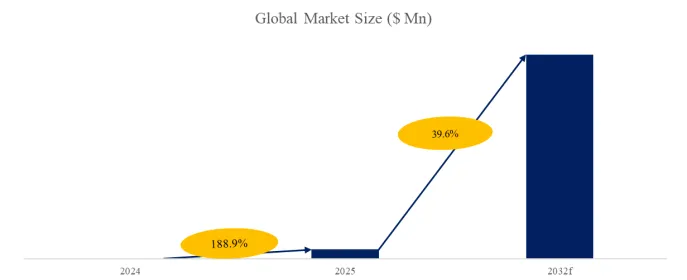
Above data is based on report from QYResearch: Global Porous Carbon for CVD Silicon-carbon Anodes Market Report 2021-2032 (published in 2025). If you need the latest data, plaese contact QYResearch.
Figure00002. Porous Carbon for CVD Silicon-carbon Anodes, Global Market Size, Split by Product Segment
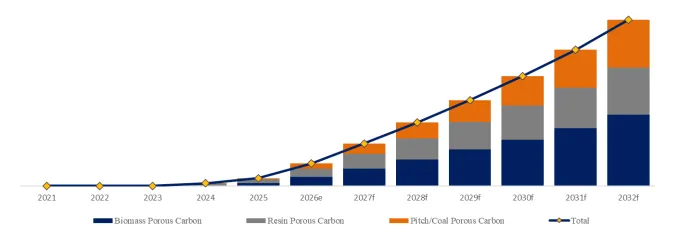
Based on or includes research from QYResearch: Global Porous Carbon for CVD Silicon-carbon Anodes Market Report 2021-2032.
In terms of product type, currently Resin Porous Carbon is the largest segment, hold a share of 52.67%.
Figure00003. Porous Carbon for CVD Silicon-carbon Anodes, Global Market Size, Split by Application Segment
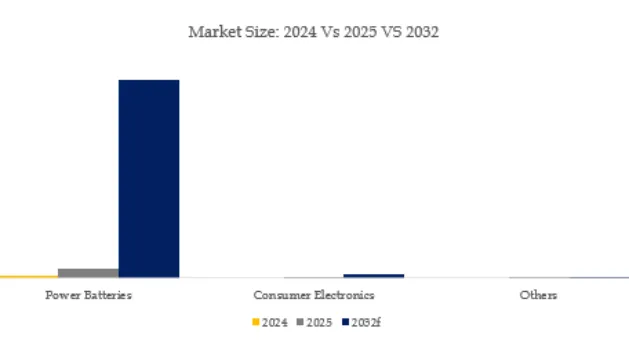
In terms of product application, currently Power Batteries is the largest segment, hold a share of 96.00%.
Figure00004. Porous Carbon for CVD Silicon-carbon Anodes, Global Market Size, Split by Region
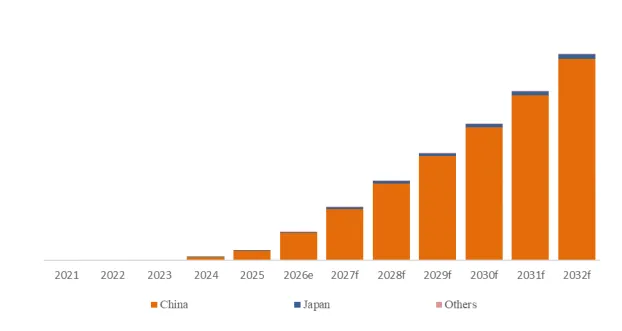
Based on or includes research from QYResearch: Global Porous Carbon for CVD Silicon-carbon Anodes Market Report 2021-2032.
The report provides a detailed analysis of the market size, growth potential, and key trends for each segment. Through detailed analysis, industry players can identify profit opportunities, develop strategies for specific customer segments, and allocate resources effectively.
The Porous Carbon for CVD Silicon-carbon Anodes market is segmented as below:
By Company
Kuraray
Haycarb
Momentum Materials
Shengquan Group
Fujian Yuanli
Henan Dachao Carbon Energy Technology Co., Ltd.
Sinosteel Maanshan General Institute of Mining Research
Aemcn
KBC Corporation, Ltd.
Shanghai Tanyuan New Materials Technology Co., Ltd.
Zhejiang Apex
Fujian Xinsen Carbon Co., Ltd.
Bengbu Gifuli New Materials
Shenzhen Solide New Materials Technology Co., Ltd.
Jiangsu PURESTAR Environmental Protection Technology Co., Ltd.
Guangdong Dowstone Technology Co., Ltd.
Shanghai Putailai New Energy Technology Co., Ltd.
Do-Fluoride New Materials Co., Ltd.
Xuancheng Silike New Materials Co., Ltd.
Jiangxi Binbin New Material Technology Co., Ltd.
Jiangxi Kete Carbon Based New Material Co., Ltd.
Hunan Zhongke Shinzoom Co., Ltd.
Shanghai XFH Technology Co., Ltd.
BTR New Material Group Co., Ltd.
Beihai Sence Carbon Materials Technology Co., Ltd.
Segment by Type
Biomass Porous Carbon
Resin Porous Carbon
Pitch/Coal Porous Carbon
Segment by Application
Power Batteries
Consumer Electronics
Others
Each chapter of the report provides detailed information for readers to further understand the Porous Carbon for CVD Silicon-carbon Anodes market:
Chapter 1: Introduces the report scope of the Porous Carbon for CVD Silicon-carbon Anodes report, global total market size (valve, volume and price). This chapter also provides the market dynamics, latest developments of the market, the driving factors and restrictive factors of the market, the challenges and risks faced by manufacturers in the industry, and the analysis of relevant policies in the industry. (2021-2032)
Chapter 2: Detailed analysis of Porous Carbon for CVD Silicon-carbon Anodes manufacturers competitive landscape, price, sales and revenue market share, latest development plan, merger, and acquisition information, etc. (2021-2026)
Chapter 3: Provides the analysis of various Porous Carbon for CVD Silicon-carbon Anodes market segments by Type, covering the market size and development potential of each market segment, to help readers find the blue ocean market in different market segments. (2021-2032)
Chapter 4: Provides the analysis of various market segments by Application, covering the market size and development potential of each market segment, to help readers find the blue ocean market in different downstream markets.(2021-2032)
Chapter 5: Sales, revenue of Porous Carbon for CVD Silicon-carbon Anodes in regional level. It provides a quantitative analysis of the market size and development potential of each region and introduces the market development, future development prospects, market space, and market size of each country in the world..(2021-2032)
Chapter 6: Sales, revenue of Porous Carbon for CVD Silicon-carbon Anodes in country level. It provides sigmate data by Type, and by Application for each country/region.(2021-2032)
Chapter 7: Provides profiles of key players, introducing the basic situation of the main companies in the market in detail, including product sales, revenue, price, gross margin, product introduction, recent development, etc. (2021-2026)
Chapter 8: Analysis of industrial chain, including the upstream and downstream of the industry.
Chapter 9: Conclusion.
Benefits of purchasing QYResearch report:
Competitive Analysis: QYResearch provides in-depth Porous Carbon for CVD Silicon-carbon Anodes competitive analysis, including information on key company profiles, new entrants, acquisitions, mergers, large market shear, opportunities, and challenges. These analyses provide clients with a comprehensive understanding of market conditions and competitive dynamics, enabling them to develop effective market strategies and maintain their competitive edge.
Industry Analysis: QYResearch provides Porous Carbon for CVD Silicon-carbon Anodes comprehensive industry data and trend analysis, including raw material analysis, market application analysis, product type analysis, market demand analysis, market supply analysis, downstream market analysis, and supply chain analysis.
and trend analysis. These analyses help clients understand the direction of industry development and make informed business decisions.
Market Size: QYResearch provides Porous Carbon for CVD Silicon-carbon Anodes market size analysis, including capacity, production, sales, production value, price, cost, and profit analysis. This data helps clients understand market size and development potential, and is an important reference for business development.
Other relevant reports of QYResearch:
Global Porous Carbon for CVD Silicon-carbon Anodes Sales Market Report, Competitive Analysis and Regional Opportunities 2026-2032
Global Porous Carbon for CVD Silicon-carbon Anodes Market Outlook, In‑Depth Analysis & Forecast to 2032
Global Porous Carbon for CVD Silicon-carbon Anodes Market Research Report 2026
About Us:
QYResearch founded in California, USA in 2007, which is a leading global market research and consulting company. Our primary business include market research reports, custom reports, commissioned research, IPO consultancy, business plans, etc. With over 19 years of experience and a dedicated research team, we are well placed to provide useful information and data for your business, and we have established offices in 7 countries (include United States, Germany, Switzerland, Japan, Korea, China and India) and business partners in over 30 countries. We have provided industrial information services to more than 60,000 companies in over the world.
Contact Us:
If you have any queries regarding this report or if you would like further information, please contact us:
QY Research Inc.
Add: 17890 Castleton Street Suite 369 City of Industry CA 91748 United States
EN: https://www.qyresearch.com
Email: global@qyresearch.com
Tel: 001-626-842-1666(US)
JP: https://www.qyresearch.co.jp










