

QY Research Inc. (Global Market Report Research Publisher) announces the release of 2025 latest report “Surface Protective Film for Electronics- Global Market Share and Ranking, Overall Sales and Demand Forecast 2026-2032”. Based on current situation and impact historical analysis (2020-2024) and forecast calculations (2026-2032), this report provides a comprehensive analysis of the global Surface Protective Film for Electronics market, including market size, share, demand, industry development status, and forecasts for the next few years.
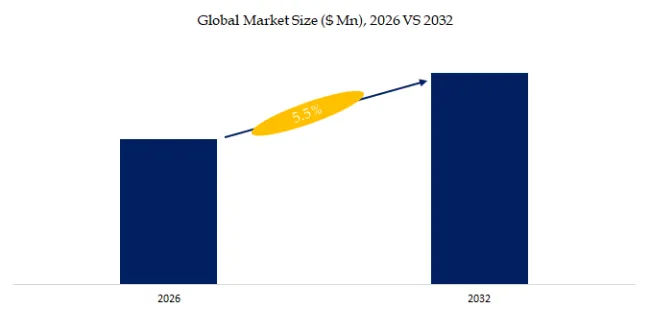
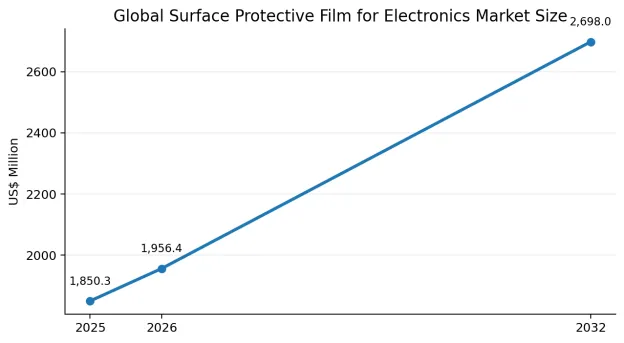
The global market for Surface Protective Film for Electronics was estimated to be worth US$ 1850 million in 2025 and is projected to reach US$ 2698 million, growing at a CAGR of 5.5% from 2026 to 2032.
【Get a free sample PDF of this report (Including Full TOC, List of Tables & Figures, Chart)】
https://www.qyresearch.com/reports/5718836/surface-protective-film-for-electronics
Surface Protective Film for Electronics Market Summary
Surface Protective Film for Electronics refers to functional protective films used on electronic products and components during manufacturing, transportation, assembly and end-use handling. It is typically based on PET, PE, PP or other polymer films with acrylic, silicone or specialty adhesive systems, designed to protect displays, touch panels, housings, optical films, semiconductor parts and precision surfaces from scratches, dust, stains, static electricity and process damage.
The market is steadily expanding as consumer electronics, display panels, smart devices, automotive electronics and semiconductor applications continue to require cleaner processing, higher optical clarity, lower residue and more reliable temporary protection. Product differentiation is increasingly driven by coating uniformity, adhesive stability, antistatic performance, low-residue removal, cleanroom converting and customized die-cutting capability.
|
2025 Market Size |
2026 Market Size |
2032 Market Size |
2026-2032 CAGR |
According to the new market research report “Global Surface Protective Film for Electronics Market Report 2026-2032″, published by QYResearch, the global market for Surface Protective Film for Electronics was valued at US$ 1,850.3 million in the year 2025 and is projected to reach a revised size of US$ 2,698.0 million by 2032, growing at a CAGR of 5.5% during the forecast period 2026-2032.
Figure00001. Global Surface Protective Film for Electronics Market Size (US$ Million), 2026 VS 2032
Above data is based on report from QYResearch: Global Surface Protective Film for ElectronicsMarket Report 2026-2032(published in 2026). If you need the latest data, plaese contact QYResearch.
Figure00002. Global Surface Protective Film for Electronics Market Size (US$ Million), 2025-2032
Above data is based on report from QYResearch: Global Surface Protective Film for ElectronicsMarket Report 2026-2032(published in 2026). If you need the latest data, plaese contact QYResearch.
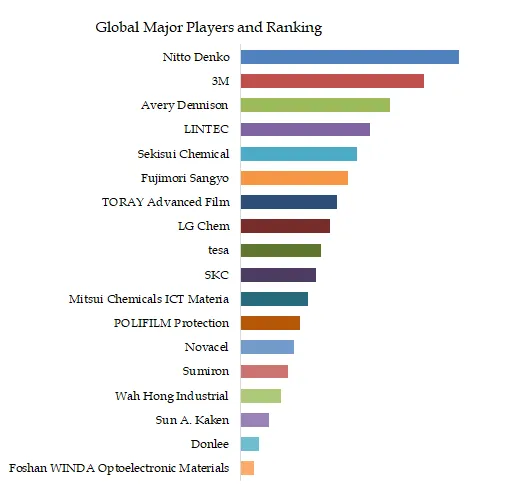
Figure00003. Global Surface Protective Film for Electronics Top 18 Players Ranking and Market Share (Ranking is based on the revenue of 2025, continually updated)
Above data is based on report from QYResearch: Global Surface Protective Film for ElectronicsMarket Report 2026-2032 (published in 2026). If you need the latest data, plaese contact QYResearch.
Competition is led by companies with strong capabilities in film substrate processing, adhesive formulation, precision coating, cleanroom converting, optical/electronic material qualification and global customer service. Key participants include 3M, Sumiron, Avery Dennison, Nitto Denko, etc.
Table 1. Surface Protective Film for Electronics Industry Development Trends
| Development Trends | Description | |
| 1 | Higher Requirements for Cleanliness and Low Residue | Surface protective films for electronics are increasingly required to provide stable adhesion while leaving minimal residue after removal. As electronic components become more delicate, films must reduce contamination, adhesive transfer, static charge, and surface defects during processing, transportation, and assembly. |
| 2 | Development Toward Thinner and More Precise Film Structures | The market is shifting toward thinner, flatter, and more uniform protective films. Better thickness control, optical clarity, dimensional stability, and surface smoothness are becoming important as the films are used in display panels, touch modules, semiconductor-related components, and precision electronic surfaces. |
| 3 | Functional Integration and Material Upgrading | Protective films are evolving from simple anti-scratch materials to multifunctional films with anti-static, heat-resistant, UV-resistant, optical-grade, easy-peel, and process-compatible properties. Material systems such as PET, PE, PP, TPU, and specialty adhesive layers are being optimized for different electronic manufacturing environments. |
Source: Secondary Sources, Press Releases, Expert Interviews and QYResearch, 2026
Table 2. Surface Protective Film for Electronics Industry Development Opportunities
| Development Opportunities | Description | |
| 1 | Continuous Expansion of Electronic Device Manufacturing | The growth of smartphones, tablets, laptops, wearable devices, automotive electronics, and smart home products creates stable demand for surface protection during production and logistics. As electronic products use more glass, metal, plastic, and coated surfaces, the need for customized protective films continues to rise. |
| 2 | Demand Growth from Advanced Displays and Precision Components | OLED, Mini LED, flexible displays, camera modules, sensors, and precision optical components require higher-performance protective films. These applications create opportunities for suppliers that can provide films with better cleanliness, optical performance, adhesion stability, and compatibility with automated manufacturing. |
| 3 | Import Substitution and Customized Local Supply | Electronics manufacturers increasingly require shorter lead times, localized technical support, and customized film solutions. This creates opportunities for regional suppliers, especially those with coating, adhesive formulation, slitting, and cleanroom production capabilities, to replace imported products in selected mid- to high-end applications. |
Source: Secondary Sources, Press Releases, Expert Interviews and QYResearch, 2026
Table 3. Surface Protective Film for Electronics Obstacles/Challenges to Industry Development
| Obstacles/Challenges | Description | |
| 1 | High Technical Barriers in Cleanliness and Stability | Electronic applications require strict control of particles, gels, bubbles, adhesive residue, electrostatic discharge, and surface defects. Small quality fluctuations may lead to production yield losses for downstream customers, so suppliers must maintain stable cleanroom manufacturing, coating uniformity, and quality inspection capabilities. |
| 2 | Intense Price Competition and Cost Pressure | Many standard protective film products have relatively mature technology and strong price competition. Raw material price fluctuations, customer cost reduction demands, and competition from regional manufacturers can compress profit margins, especially in general-purpose electronics protection films. |
| 3 | Difficulty in Balancing Adhesion, Protection, and Easy Removal | Protective films must adhere firmly during processing and transportation but also be removed cleanly without damaging surfaces or leaving marks. Different substrates, surface coatings, temperatures, and process conditions make product design complex, requiring continuous formulation adjustment and application testing. |
Source: Secondary Sources, Press Releases, Expert Interviews and QYResearch, 2026
Future development will focus on cleaner coating processes, more stable adhesive systems, higher optical-grade performance, antistatic and multifunctional film structures, and deeper collaboration with display, semiconductor, automotive electronics and smart-device manufacturers. Suppliers with precision coating, formulation, converting and global qualification capabilities are expected to strengthen their market position.
The report provides a detailed analysis of the market size, growth potential, and key trends for each segment. Through detailed analysis, industry players can identify profit opportunities, develop strategies for specific customer segments, and allocate resources effectively.
The Surface Protective Film for Electronics market is segmented as below:
By Company
3M
Sumiron
Avery Dennison
Nitto Denko
Fujimori Sangyo
Sekisui Chemical
Sun A. Kaken
TORAY Advanced Film
Mitsui Chemicals ICT Materia
LINTEC
LG Chem
SKC
tesa
POLIFILM Protection
Novacel
Donlee
Foshan WINDA Optoelectronic Materials
Wah Hong Industrial
Segment by Type
Low Adhesion Type (<50 gf/25mm)
Medium Adhesion Type (50–200 gf/25mm)
High Adhesion Type (200–500 gf/25mm)
Ultra-High Adhesion Type (>500 gf/25mm)
Segment by Application
Display Panels
Touch Panels
Optical Films
Electronic Device Housings
Semiconductor Components
Electronic Assembly and Transportation
Others
Each chapter of the report provides detailed information for readers to further understand the Surface Protective Film for Electronics market:
Chapter 1: Introduces the report scope of the Surface Protective Film for Electronics report, global total market size (valve, volume and price). This chapter also provides the market dynamics, latest developments of the market, the driving factors and restrictive factors of the market, the challenges and risks faced by manufacturers in the industry, and the analysis of relevant policies in the industry. (2021-2032)
Chapter 2: Detailed analysis of Surface Protective Film for Electronics manufacturers competitive landscape, price, sales and revenue market share, latest development plan, merger, and acquisition information, etc. (2021-2026)
Chapter 3: Provides the analysis of various Surface Protective Film for Electronics market segments by Type, covering the market size and development potential of each market segment, to help readers find the blue ocean market in different market segments. (2021-2032)
Chapter 4: Provides the analysis of various market segments by Application, covering the market size and development potential of each market segment, to help readers find the blue ocean market in different downstream markets.(2021-2032)
Chapter 5: Sales, revenue of Surface Protective Film for Electronics in regional level. It provides a quantitative analysis of the market size and development potential of each region and introduces the market development, future development prospects, market space, and market size of each country in the world..(2021-2032)
Chapter 6: Sales, revenue of Surface Protective Film for Electronics in country level. It provides sigmate data by Type, and by Application for each country/region.(2021-2032)
Chapter 7: Provides profiles of key players, introducing the basic situation of the main companies in the market in detail, including product sales, revenue, price, gross margin, product introduction, recent development, etc. (2021-2026)
Chapter 8: Analysis of industrial chain, including the upstream and downstream of the industry.
Chapter 9: Conclusion.
Benefits of purchasing QYResearch report:
Competitive Analysis: QYResearch provides in-depth Surface Protective Film for Electronics competitive analysis, including information on key company profiles, new entrants, acquisitions, mergers, large market shear, opportunities, and challenges. These analyses provide clients with a comprehensive understanding of market conditions and competitive dynamics, enabling them to develop effective market strategies and maintain their competitive edge.
Industry Analysis: QYResearch provides Surface Protective Film for Electronics comprehensive industry data and trend analysis, including raw material analysis, market application analysis, product type analysis, market demand analysis, market supply analysis, downstream market analysis, and supply chain analysis.
and trend analysis. These analyses help clients understand the direction of industry development and make informed business decisions.
Market Size: QYResearch provides Surface Protective Film for Electronics market size analysis, including capacity, production, sales, production value, price, cost, and profit analysis. This data helps clients understand market size and development potential, and is an important reference for business development.
Other relevant reports of QYResearch:
Global Surface Protective Film for Electronics Market Outlook, In‑Depth Analysis & Forecast to 2032
Global Surface Protective Film for Electronics Sales Market Report, Competitive Analysis and Regional Opportunities 2026-2032
Global Surface Protective Film for Electronics Market Research Report 2026
About Us:
QYResearch founded in California, USA in 2007, which is a leading global market research and consulting company. Our primary business include market research reports, custom reports, commissioned research, IPO consultancy, business plans, etc. With over 19 years of experience and a dedicated research team, we are well placed to provide useful information and data for your business, and we have established offices in 7 countries (include United States, Germany, Switzerland, Japan, Korea, China and India) and business partners in over 30 countries. We have provided industrial information services to more than 60,000 companies in over the world.
Contact Us:
If you have any queries regarding this report or if you would like further information, please contact us:
QY Research Inc.
Add: 17890 Castleton Street Suite 369 City of Industry CA 91748 United States
EN: https://www.qyresearch.com
Email: global@qyresearch.com
Tel: 001-626-842-1666(US)
JP: https://www.qyresearch.co.jp










