

QY Research Inc. (Global Market Report Research Publisher) announces the release of 2025 latest report “Biofuel- Global Market Share and Ranking, Overall Sales and Demand Forecast 2026-2032”. Based on current situation and impact historical analysis (2020-2024) and forecast calculations (2026-2032), this report provides a comprehensive analysis of the global Biofuel market, including market size, share, demand, industry development status, and forecasts for the next few years.
The global market for Biofuel was estimated to be worth US$ 164980 million in 2025 and is projected to reach US$ 332020 million, growing at a CAGR of 10.7% from 2026 to 2032.
【Get a free sample PDF of this report (Including Full TOC, List of Tables & Figures, Chart)】
https://www.qyresearch.com/reports/6010023/biofuel
Product Overview and Scope of Biofuels
Solid, liquid, or gaseous fuels that are produced from biomass are called biofuels. They are renewable and are good substitutes to fossil fuels. Most biofuels available in the market today are made from plants. They are often used as transportation fuels.
Certain plants are being cultivated specifically for biofuel production. In the U.S., switchgrass, soybeans, and corn are the major sources of biofuel. Brazil uses sugar cane while Europe processes sugar beet and wheat. Other agricultural products being processed into biofuels are cassava and sorghum in China, miscanthus and palm oil in Southeast Asia, and jatropha in India.
Examples of biofuels are biodiesel, bio-alcohols (bio-ethanol, biomethanol, biobutanol), biogas, syngas, and solid biofuels like wood, charcoal, and sawdust. Countries that have strongly promoted biofuel development and use include Brazil, the U.S., France, Sweden, and Germany.
The two most widely used types of biofuels are bio-alcohols and biodiesel, so this report mainly focuses on bio-ethanol and biodiesel.
The raw materials for biofuels exhibit a diversified gradient, moving “from food to waste.” The first generation primarily utilizes starchy or sugary edible crops such as corn, sugarcane, and soybeans, but faces ethical and food security controversies regarding competition with human food production. The second generation shifts to non-food biomass such as straw, sawdust, waste oil, and agricultural and forestry residues, relying on pretreatment and enzymatic hydrolysis technologies to overcome the lignin barrier. The third generation focuses on highly photosynthetic organisms such as microalgae and cyanobacteria, offering advantages such as not occupying arable land and having short growth cycles. Raw material supply is highly geographically specific (e.g., Brazilian sugarcane, US corn, Southeast Asian palm oil) and subject to seasonal fluctuations. The radius of raw material collection, storage and transportation losses, and moisture content control directly impact supply chain stability.
In terms of cost structure, raw material procurement dominates (typically accounting for 60%-80% of total costs), and fluctuations in international agricultural product prices, competition for land resources, and climate disasters directly impact the production end. Processing costs vary significantly due to generational differences in technology—traditional grain-based ethanol or transesterification biodiesel processes are mature and require relatively low equipment investment, while cellulosic ethanol and algal biofuels incur expensive pretreatment, specialized enzyme preparations, high-temperature and high-pressure reactors, and separation and purification costs, resulting in significantly higher capital expenditures (CAPEX) and unit operating costs (OPEX). Furthermore, decentralized raw material logistics, the phasing out of policy subsidies, diseconomies of scale in production (especially for second/third generation technologies), and price competition with refined oil products collectively constitute the core cost bottlenecks restricting the commercialization of biofuels.
Biofuels Market Summary
According to the new market research report “Global Biofuels Market Report 2026-2032”, published by QYResearch, the global Biofuels market size is projected to reach USD 304.13 billion by 2032, at a CAGR of 9.5% during the forecast period.
Figure00002. Global Biofuels Market Size (US$ Million), 2021-2032
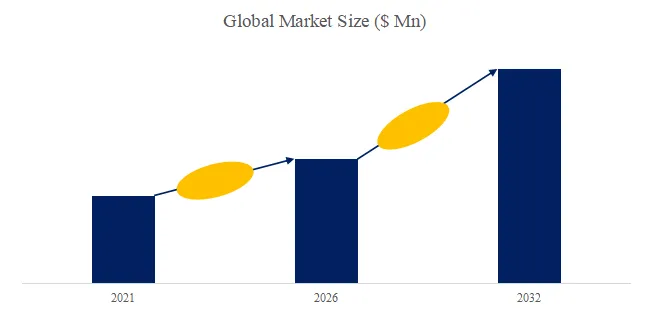
Above data is based on report from QYResearch: Global Biofuels Market Report 2026-2032 (published in 2025). If you need the latest data, plaese contact QYResearch.
Figure00003. Global Biofuels Top 20 Players Ranking and Market Share (Ranking is based on the revenue of 2025, continually updated)
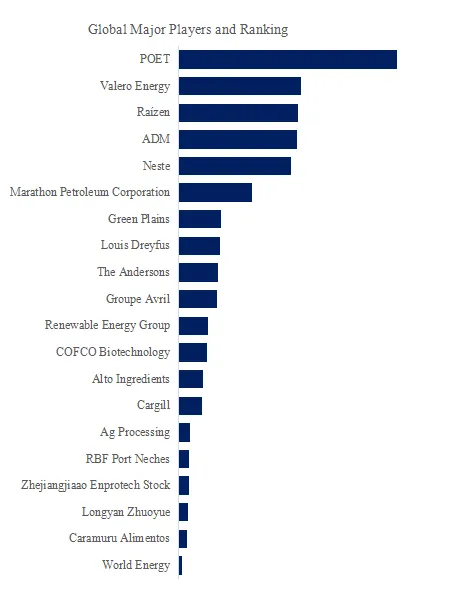
Above data is based on report from QYResearch: Global Biofuels Market Report 2026-2032 (published in 2024). If you need the latest data, plaese contact QYResearch.
According to QYResearch Top Players Research Center, the global key manufacturers of Biofuels include POET, Valero Energy, Raízen, ADM, Neste, Marathon Petroleum Corporation, Green Plains, Louis Dreyfus, The Andersons, Groupe Avril, etc. In 2025, the global top 10 players had a share approximately 27.0% in terms of revenue.
Figure00004. Biofuels, Global Market Size, Split by Product Segment
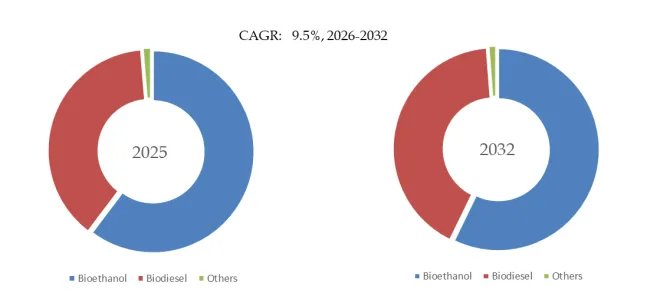
Based on or includes research from QYResearch: Global Biofuels Market Report 2026-2032.
In terms of product type, currently Bioethanol is the largest segment, hold a share of 60.3%.
In terms of product application, currently Transportation Fuels is the largest segment, hold a share of 72.4%.
The report provides a detailed analysis of the market size, growth potential, and key trends for each segment. Through detailed analysis, industry players can identify profit opportunities, develop strategies for specific customer segments, and allocate resources effectively.
The Biofuel market is segmented as below:
By Company
Groupe Avril
Neste
ADM
Cargill
Green Plains
Valero Energy
Louis Dreyfus
Renewable Energy Group
RBF Port Neches
Ag Processing
Caramuru Alimentos
World Energy
POET
Marathon Petroleum Corporation
Raízen
Alto Ingredients
The Andersons
COFCO Biotechnology
Longyan Zhuoyue
Zhejiangjiaao Enprotech Stock
Segment by Type
Bioethanol
Biodiesel
Others
Segment by Application
Transportation Fuels
Industrial Fuels
Chemical Industry
Each chapter of the report provides detailed information for readers to further understand the Biofuel market:
Chapter 1: Introduces the report scope of the Biofuel report, global total market size (valve, volume and price). This chapter also provides the market dynamics, latest developments of the market, the driving factors and restrictive factors of the market, the challenges and risks faced by manufacturers in the industry, and the analysis of relevant policies in the industry. (2021-2032)
Chapter 2: Detailed analysis of Biofuel manufacturers competitive landscape, price, sales and revenue market share, latest development plan, merger, and acquisition information, etc. (2021-2026)
Chapter 3: Provides the analysis of various Biofuel market segments by Type, covering the market size and development potential of each market segment, to help readers find the blue ocean market in different market segments. (2021-2032)
Chapter 4: Provides the analysis of various market segments by Application, covering the market size and development potential of each market segment, to help readers find the blue ocean market in different downstream markets.(2021-2032)
Chapter 5: Sales, revenue of Biofuel in regional level. It provides a quantitative analysis of the market size and development potential of each region and introduces the market development, future development prospects, market space, and market size of each country in the world..(2021-2032)
Chapter 6: Sales, revenue of Biofuel in country level. It provides sigmate data by Type, and by Application for each country/region.(2021-2032)
Chapter 7: Provides profiles of key players, introducing the basic situation of the main companies in the market in detail, including product sales, revenue, price, gross margin, product introduction, recent development, etc. (2021-2026)
Chapter 8: Analysis of industrial chain, including the upstream and downstream of the industry.
Chapter 9: Conclusion.
Benefits of purchasing QYResearch report:
Competitive Analysis: QYResearch provides in-depth Biofuel competitive analysis, including information on key company profiles, new entrants, acquisitions, mergers, large market shear, opportunities, and challenges. These analyses provide clients with a comprehensive understanding of market conditions and competitive dynamics, enabling them to develop effective market strategies and maintain their competitive edge.
Industry Analysis: QYResearch provides Biofuel comprehensive industry data and trend analysis, including raw material analysis, market application analysis, product type analysis, market demand analysis, market supply analysis, downstream market analysis, and supply chain analysis.
and trend analysis. These analyses help clients understand the direction of industry development and make informed business decisions.
Market Size: QYResearch provides Biofuel market size analysis, including capacity, production, sales, production value, price, cost, and profit analysis. This data helps clients understand market size and development potential, and is an important reference for business development.
Other relevant reports of QYResearch:
Global Biofuel Sales Market Report, Competitive Analysis and Regional Opportunities 2026-2032
Global Biofuel Market Outlook, In‑Depth Analysis & Forecast to 2032
Global Biofuel Market Research Report 2026
Global Biofuels Market Outlook, In‑Depth Analysis & Forecast to 2032
Global Biofuels Sales Market Report, Competitive Analysis and Regional Opportunities 2026-2032
Global Biofuels Market Research Report 2026
Biofuels- Global Market Share and Ranking, Overall Sales and Demand Forecast 2026-2032
Biofuels – Global Market Share and Ranking, Overall Sales and Demand Forecast 2025-2031
Global UCO Biofuel Market Outlook, In‑Depth Analysis & Forecast to 2032
Global UCO Biofuel Market Research Report 2026
Global UCO Biofuel Sales Market Report, Competitive Analysis and Regional Opportunities 2026-2032
UCO Biofuel- Global Market Share and Ranking, Overall Sales and Demand Forecast 2026-2032
Biofuel Cell – Global Market Share and Ranking, Overall Sales and Demand Forecast 2026-2032
Global Biofuel Cell Market Research Report 2026
Global Train Biofuel Market Outlook, In‑Depth Analysis & Forecast to 2032
Global Train Biofuel Sales Market Report, Competitive Analysis and Regional Opportunities 2026-2032
Train Biofuel- Global Market Share and Ranking, Overall Sales and Demand Forecast 2026-2032
Global Train Biofuel Market Research Report 2026
Gaseous Biofuel- Global Market Share and Ranking, Overall Sales and Demand Forecast 2026-2032
Global Gaseous Biofuel Market Research Report 2026
About Us:
QYResearch founded in California, USA in 2007, which is a leading global market research and consulting company. Our primary business include market research reports, custom reports, commissioned research, IPO consultancy, business plans, etc. With over 19 years of experience and a dedicated research team, we are well placed to provide useful information and data for your business, and we have established offices in 7 countries (include United States, Germany, Switzerland, Japan, Korea, China and India) and business partners in over 30 countries. We have provided industrial information services to more than 60,000 companies in over the world.
Contact Us:
If you have any queries regarding this report or if you would like further information, please contact us:
QY Research Inc.
Add: 17890 Castleton Street Suite 369 City of Industry CA 91748 United States
EN: https://www.qyresearch.com
Email: global@qyresearch.com
Tel: 001-626-842-1666(US)
JP: https://www.qyresearch.co.jp










