

PP-compounds Market Summary
PP compounds are a class of polymer materials made by using polypropylene (PP) resin as the matrix and incorporating one or more modifying components (such as inorganic fillers, reinforcing fibers, elastomer phases, and functional additives), followed by processes such as compounding, filling, and reinforcement. Compared with neat PP, PP compounds can deliver significant improvements in mechanical performance, heat resistance, impact strength, dimensional stability, flame retardancy, and other functional properties, while still retaining PP’s advantages of low density, chemical resistance, good processability, and relatively low cost. Typical PP compounds include filled PP (e.g., talc-filled PP), reinforced PP (e.g., glass-fiber-reinforced PP), and toughened PP (e.g., impact PP modified with an elastomer phase). They are widely used in automotive components, home-appliance housings, industrial structural parts, packaging materials, and consumer products, and represent an important category of modified materials in modern plastics engineering.
Table 1. PP-compounds Market Trends
| Key Trends | Description |
| Demand shifts toward electrification and highly integrated modules | End demand gradually moves from conventional ICE parts to lightweight structural/functional parts linked to electrification, while modularization and integration increase the need for balanced stiffness–toughness, dimensional stability, and assembly reliability. |
| Competition moves from single metrics to multi-objective optimization | Customers evaluate not only stiffness or impact, but also heat/low-temperature impact, creep, odor/VOC, appearance, scratch resistance, flame retardancy, and chemical resistance—driving application-specific formulations instead of generic grades. |
| Low VOC/low odor becomes a hard requirement | Stricter requirements in automotive interiors, appliances, and consumer goods push upgrades in raw-material selection, additive systems, devolatilization, clean manufacturing controls, and batch-to-batch consistency with traceability. |
| Flame retardancy and electrical safety requirements move up the priority list | Appliances, electrical applications, and new-energy parts accelerate iterations of halogen-free/low-smoke solutions, while requiring better balance among mechanical property retention, processability, and appearance. |
| Lightweighting and thin-wall molding keep advancing; processing window becomes critical | Under thin-wall injection, foaming, and long-run extrusion, materials must deliver not only strength/toughness but also better flow, melt strength, and warpage control—making “mass-production processability” a key selection barrier. |
| Glass fiber/mineral filling evolves from higher loading to structured design | Rather than simply increasing filler content, suppliers optimize fiber length retention, interfacial coupling, particle size/distribution to improve dimensional stability, heat resistance, and fatigue while reducing warpage, splay, and surface defects. |
| Higher expectations on appearance and tactile feel strengthen surface engineering | Interior/exterior and appliance appearance parts demand high-gloss/matte control, texture consistency, scratch/chemical-cleaner resistance—driving upgrades in additive packages and defect control capability. |
| PCR penetration accelerates, requiring performance recovery and variability control | Higher recycled content increases variability in properties and processing, pushing compounders to enhance compatibilization, stabilization, odor control, and feedstock grading—making “repeatable PCR platforms + quality management” a key differentiator. |
| Mono-material and recyclability design expands within-polyolefin substitution | As packaging and some consumer applications shift toward mono-material design, more performance combinations must be achieved within the polyolefin family, expanding substitution opportunities for PP compounds. |
| Supply-chain localization and delivery reliability gain weight | OEMs emphasize local supply, fast response, and stable delivery; compounders build regional capacity, co-development, near-site logistics, and rapid sampling systems while strengthening cash-flow and receivables management. |
| Pricing shifts from raw-material pass-through to formulation value plus service pricing | With volatility and intense competition, simple pass-through pricing is insufficient; leading players increasingly monetize application validation, platform formulations, quality assurance, and delivery services as part of total value. |
| Competition shifts from scale to system capability and vertical penetration | The market remains fragmented but competition upgrades; leaders win through sampling speed, validation capability, consistency, cross-site replication, and customer co-engineering, with concentration improving gradually. |
Source: Secondary Sources, Expert Interviews and QYResearch, 2026
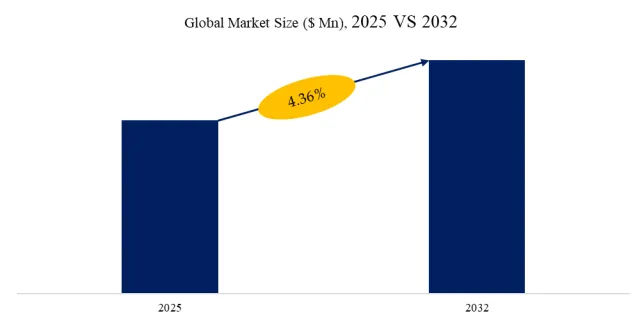
Figure00001. Global PP-compounds Market Size (US$ Million), 2025 vs 2032
Above data is based on report from QYResearch: Global PP-compounds Market Report 2026-2032 (published in 2026). If you need the latest data, plaese contact QYResearch.
According to the new market research report Global PP-compounds Market Report 2026-2032, published by QYResearch, the global PP-compounds market size is projected to reach USD 32.88 billion by 2032, at a CAGR of 4.36% during the forecast period.
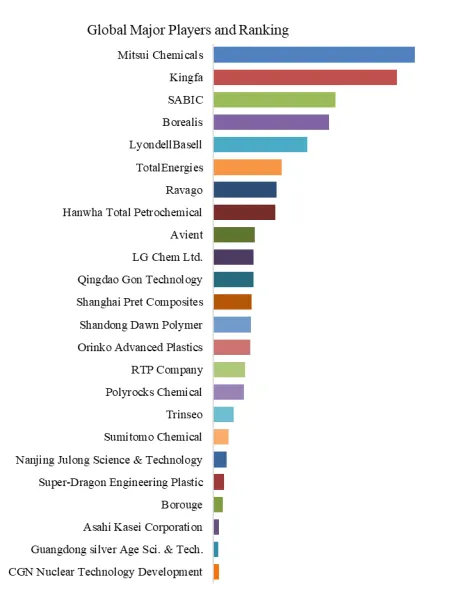
Figure00002. Global PP-compounds Top 24 Players Ranking and Market Share (Ranking is based on the revenue of 2025, continually updated)
Above data is based on report from QYResearch: Global PP-compounds Market Report 2026-2032 (published in 2026). If you need the latest data, plaese contact QYResearch.
According to QYResearch Top Players Research Center, the global key manufacturers of PP-compounds include Mitsui Chemicals, Kingfa, SABIC, Borealis, LyondellBasell, TotalEnergies, Ravago, Hanwha Total Petrochemical, LG Chem Ltd., Qingdao Gon Technology, etc. In 2025, the global top 10 players had a share approximately 38.0% in terms of revenue.
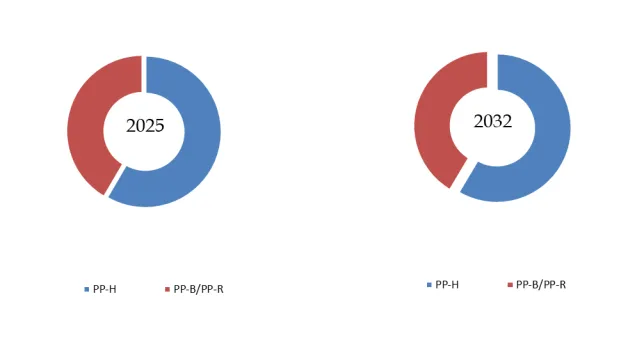
Figure00003. PP-compounds, Global Market Size, Split by Product Segment
Based on or includes research from QYResearch: Global PP-compounds Market Report 2026-2032.
In terms of product type, currently PP-H is the largest segment, hold a share of 58.42%.
About QYResearch
QYResearch founded in California, USA in 2007.It is a leading global market research and consulting company. With over 17 years’ experience and professional research team in various cities over the world QY Research focuses on management consulting, database and seminar services, IPO consulting (data is widely cited in prospectuses, annual reports and presentations), industry chain research and customized research to help our clients in providing non-linear revenue model and make them successful. We are globally recognized for our expansive portfolio of services, good corporate citizenship, and our strong commitment to sustainability. Up to now, we have cooperated with more than 60,000 clients across five continents. Let’s work closely with you and build a bold and better future.
QYResearch is a world-renowned large-scale consulting company. The industry covers various high-tech industry chain market segments, spanning the semiconductor industry chain (semiconductor equipment and parts, semiconductor materials, ICs, Foundry, packaging and testing, discrete devices, sensors, optoelectronic devices), photovoltaic industry chain (equipment, cells, modules, auxiliary material brackets, inverters, power station terminals), new energy automobile industry chain (batteries and materials, auto parts, batteries, motors, electronic control, automotive semiconductors, etc.), communication industry chain (communication system equipment, terminal equipment, electronic components, RF front-end, optical modules, 4G/5G/6G, broadband, IoT, digital economy, AI), advanced materials industry Chain (metal materials, polymer materials, ceramic materials, nano materials, etc.), machinery manufacturing industry chain (CNC machine tools, construction machinery, electrical machinery, 3C automation, industrial robots, lasers, industrial control, drones), food, beverages and pharmaceuticals, medical equipment, agriculture, etc.
Contact Us:
If you have any queries regarding this report or if you would like further information, please contact us:
QY Research Inc.
Add: 17890 Castleton Street Suite 369 City of Industry CA 91748 United States
EN: https://www.qyresearch.com
Email: global@qyresearch.com
Tel: 001-626-842-1666(US)
JP: https://www.qyresearch.co.jp










