

Microtunnel Machine Market Summary
Microtunneling — a trenchless construction method that minimizes surface disruption — has become an integral part of modern civil engineering projects, particularly in megacities and densely populated metropolitan areas where open-cut excavation is either impractical or too disruptive. Microtunnel machines enable the installation of pipelines and conduits beneath existing infrastructure with high precision, improving project timelines while reducing environmental and social impact.
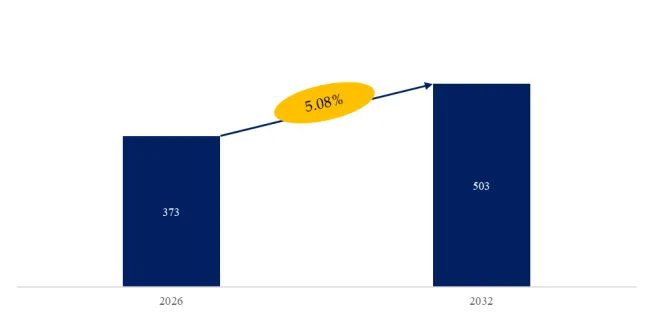
The global Microtunnel Machine market is entering a phase of sustained growth as urban infrastructure investment and underground utility expansion accelerate across regions. According to recent industry forecasts, the market was valued at US$ 355.77 million in 2025 and is expected to reach US$ 502.65 million by 2032, representing a compound annual growth rate (CAGR) of 5.08% from 2026 through 2032. This solid growth trajectory reflects the increasing deployment of trenchless technology solutions for sewer, water, and utility installations in congested urban environments.
Figure00001. Global Microtunnel Machine Market Size (US$ million), 2026-2033
Above data is based on report from QYResearch: Global Microtunnel Machine Market Report 2026-2032 (published in 2026). If you need the latest data, plaese contact QYResearch.
Market Structure and Competitive Landscape
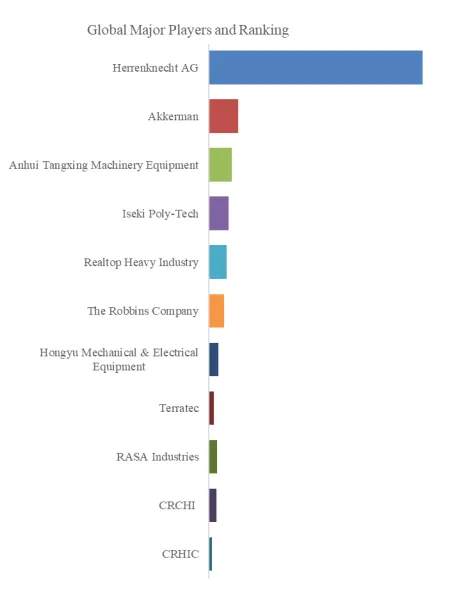
The global Microtunnel Machine market exhibits moderate competitive concentration. In 2025, the top five companies accounted for 49.91% of total market revenue, indicating both the importance of established players and the presence of regional suppliers. Key global companies include:
Herrenknecht AG — Germany-based trenchless technology leader with extensive capabilities in microtunneling systems.
Akkerman Inc. — U.S. manufacturer known for guided boring and microtunnel products.
Anhui Tangxing Machinery Equipment — China’s prominent microtunnel machinery supplier.
Iseki Poly‑Tech Co., Ltd. — Japanese engineering firm with trenchless construction solutions.
Realtop Heavy Industry — China-based heavy equipment and microtunnel machine provider.
The Robbins Company — U.S. tunneling machine manufacturer with diversified solutions.
Hongyu Mechanical & Electrical Equipment — Chinese trenchless equipment maker.
Terratec — Australian supplier of horizontal directional drilling and microtunneling equipment.
RASA Industries — U.S. manufacturer specializing in microtunneling tooling and equipment.
CRCHI / CRHIC — Major Chinese conglomerates offering trenchless solutions including microtunnel machines.
This blend of European, North American, Asian, and Oceania companies reflects the global nature of tunneling demand, as well as localized supply chains tailored to regional civil engineering practices.
Figure00002. Global Microtunnel Machine Top 11 Players Ranking and Market Share (Ranking is based on the revenue of 2025, continually updated)
Above data is based on report from QYResearch: Global Microtunnel Machine Market Report 2026-2032 (published in 2026). If you need the latest data, plaese contact QYResearch.
Drivers of Market Growth
1. Rising Urbanization and Infrastructure Renewal
Rapid urban expansion — especially in Asia-Pacific, the Middle East, and Latin America — has increased investments in underground utilities, wastewater networks, and urban drainage systems. Traditional open‑cut methods face growing resistance due to traffic obstructions and environmental disruption, making microtunneling an attractive alternative. Governments and cities are allocating significant capital toward infrastructure renewal, which inherently supports microtunnel adoption.
2. Trenchless Technology Advantages
Microtunnel methods present multiple benefits over cut‑and‑cover excavation:
Minimal surface disruption, preserving roadways, landscaping, and business access;
Greater safety in confined underground environments;
Higher precision for alignment and grade control;
Reduced project timelines and lifecycle costs compared to conventional methods.
These advantages align with sustainability goals and smart city planning, encouraging large contractor adoption and government procurement.
3. Expansion of Sewer, Water & Utility Networks
Aging sewer systems in North America and Europe require modernization, while emerging economy cities in Asia and Africa are expanding potable water distribution networks. Microtunnel machines are increasingly used to install large‑diameter pipelines below sensitive infrastructure, such as railroads and highways, where surface access is limited.
Technological Trends Influencing the Market
The Microtunnel Machine industry continues to evolve through technological innovation:
1. Automation & Remote Monitoring — Modern microtunnel systems integrate sensors, automated steering systems, and data logging for real‑time control. These features improve drilling accuracy, reduce human error, and enhance jobsite safety.
2. Hybrid Power Systems — Electrically assisted hydraulic drives and energy‑efficient components reduce operating costs and meet stricter environmental standards.
3. Interoperability with BIM & GIS — Integration with Building Information Modeling (BIM) and Geographic Information Systems (GIS) enables precise planning, reducing rework and risk on complex urban projects.
4. Advanced Cutterheads & Materials — Development of cutterheads designed for mixed ground conditions (clay, boulder, soft rock) expands the applicability of microtunneling in diverse soil environments.
These innovations not only improve productivity but also broaden the range of feasible project scenarios for microtunnel deployment.
Challenges Constraining Market Growth
Despite its positive growth trajectory, the microtunnel machine market faces several challenges:
1. High Capital Equipment Costs — Microtunneling systems represent significant investments. Smaller contractors may find it difficult to justify the acquisition of specialized machines without consistent project pipelines.
2. Skill & Expertise Requirements — Successful operation of microtunnel machines demands trained technicians and precise project planning. The limited availability of experienced operators can delay project deployment.
3. Competition with Alternative Methods — In certain geological contexts or project budgets, alternative trenchless technologies such as horizontal directional drilling (HDD) can compete with microtunneling solutions, especially when diameters are smaller or ground conditions favor drilling approaches.
Outlook to 2032 and Beyond
Going forward, the Microtunnel Machine market is expected to maintain a steady growth pace through 2032 and beyond. As cities continue to modernize infrastructure and prioritize sustainability, the demand for trenchless solutions that minimize disruption and maximize efficiency will persist.
Market stakeholders — from multinational manufacturers to regional suppliers — are actively strengthening product portfolios, expanding after‑sales support networks, and investing in digital technology integration to capture value in an increasingly competitive market. Collaboration between contractors, government agencies, and technology providers will be critical to unlocking new opportunities, particularly in emerging markets where infrastructure investment is a strategic priority.
The microtunnel machine market represents a niche yet essential segment of the broader trenchless technology landscape, underpinning modern infrastructure systems and contributing to safer, more efficient underground construction worldwide.
About QYResearch
QYResearch founded in California, USA in 2007.It is a leading global market research and consulting company. With over 17 years’ experience and professional research team in various cities over the world QY Research focuses on management consulting, database and seminar services, IPO consulting (data is widely cited in prospectuses, annual reports and presentations), industry chain research and customized research to help our clients in providing non-linear revenue model and make them successful. We are globally recognized for our expansive portfolio of services, good corporate citizenship, and our strong commitment to sustainability. Up to now, we have cooperated with more than 60,000 clients across five continents. Let’s work closely with you and build a bold and better future.
QYResearch is a world-renowned large-scale consulting company. The industry covers various high-tech industry chain market segments, spanning the semiconductor industry chain (semiconductor equipment and parts, semiconductor materials, ICs, Foundry, packaging and testing, discrete devices, sensors, optoelectronic devices), photovoltaic industry chain (equipment, cells, modules, auxiliary material brackets, inverters, power station terminals), new energy automobile industry chain (batteries and materials, auto parts, batteries, motors, electronic control, automotive semiconductors, etc.), communication industry chain (communication system equipment, terminal equipment, electronic components, RF front-end, optical modules, 4G/5G/6G, broadband, IoT, digital economy, AI), advanced materials industry Chain (metal materials, polymer materials, ceramic materials, nano materials, etc.), machinery manufacturing industry chain (CNC machine tools, construction machinery, electrical machinery, 3C automation, industrial robots, lasers, industrial control, drones), food, beverages and pharmaceuticals, medical equipment, agriculture, etc.
Contact Us:
If you have any queries regarding this report or if you would like further information, please contact us:
QY Research Inc.
Add: 17890 Castleton Street Suite 369 City of Industry CA 91748 United States
EN: https://www.qyresearch.com
Email: global@qyresearch.com
Tel: 001-626-842-1666(US)
JP: https://www.qyresearch.co.jp










