

In-wash Laundry Scent Booster Market Summary
I. Product Definition and Technical Foundation
1. Product Definition and Functional Positioning
An In-wash Laundry Scent Booster is a functional fragrance-enhancing product added directly to the washing machine during the laundry cycle to improve and prolong the scent of fabrics after washing. Typically formulated in bead or granular form, these products consist of fragrance encapsulated within water-soluble or dispersible carriers that release scent gradually throughout the washing, drying, and wearing processes.
Unlike traditional fabric softeners or post-wash fragrance sprays, scent boosters integrate into the washing stage, allowing fragrance molecules to penetrate deeply into textile fibers. This results in a longer-lasting and more consistent fragrance experience. These products are widely used in household laundry, premium fabric care, hospitality linen services, and professional laundry operations.
2. Product Structure and Technical Principles
The performance of in-wash laundry scent boosters relies on advanced fragrance encapsulation technology, controlled-release systems, and stability enhancement techniques. The typical formulation includes fragrance oils, carrier materials, encapsulating polymers, and stabilizing additives.
Fragrance encapsulation is the core technology of scent boosters. Microencapsulation or polymer coating techniques are used to protect fragrance molecules from premature evaporation during storage and washing. These capsules dissolve or break under mechanical action and water exposure, gradually releasing scent over time.
Controlled-release technology ensures sustained fragrance emission throughout washing, drying, and garment usage. High-end products may adopt multi-layer encapsulation structures to achieve staged fragrance release, enhancing longevity and sensory experience.
Additionally, scent boosters must demonstrate excellent solubility and stability across varying water temperatures, detergent formulations, and fabric types. In recent years, environmentally friendly biodegradable materials have become increasingly important, driven by sustainability regulations and consumer demand for eco-conscious products.
Figure00001. Global In-wash Laundry Scent Booster Market Size (US$ Million), 2021-2032
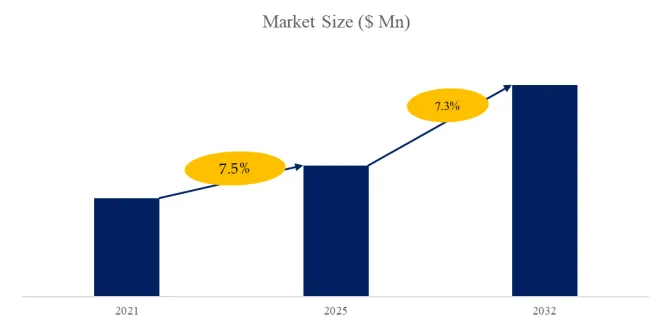
Above data is based on report from QYResearch: Global In-wash Laundry Scent Booster Market Report 2022-2031 (published in 2025). If you need the latest data, plaese contact QYResearch.
Figure00002. Global In-wash Laundry Scent Booster Top 10 Players Ranking and Market Share (Ranking is based on the revenue of 2025, continually updated)
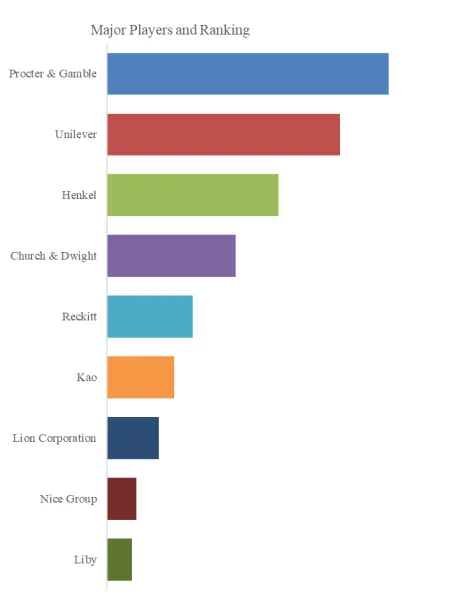
Above data is based on report from QYResearch: Global In-wash Laundry Scent Booster Market Report 2025-2031 (published in 2025). If you need the latest data, plaese contact QYResearch.
II. Industry Chain Analysis
1. Upstream: Raw Materials and Fragrance Supply System
The upstream segment of the in-wash laundry scent booster industry primarily includes fragrance manufacturers, polymer and encapsulation material suppliers, surfactant producers, and packaging material providers.
Fragrance ingredients represent the core value component of the product, directly influencing scent quality, longevity, and consumer perception. Leading fragrance suppliers offer customized scent formulations tailored to specific market preferences and brand positioning.
Encapsulation and carrier materials commonly include polyvinyl alcohol (PVA), starch-based polymers, and other biodegradable compounds that provide solubility, durability, and environmental compatibility. As global environmental regulations tighten, the adoption of biodegradable and sustainable materials continues to grow.
Packaging suppliers provide moisture-resistant and fragrance-retaining packaging solutions to maintain product integrity during transportation and storage.
2. Midstream: Product Development and Manufacturing
The midstream segment is dominated by household and personal care product manufacturers responsible for formulation design, product development, large-scale production, and brand marketing. Companies leverage microencapsulation technology, fragrance stability engineering, and advanced formulation strategies to achieve product differentiation.
The manufacturing process typically involves fragrance blending, encapsulation granulation, drying, and automated packaging. Advanced production equipment ensures uniform particle size distribution, product stability, and high manufacturing efficiency.
Brand strength and marketing capability play a crucial role in the midstream sector. Leading consumer goods companies continuously introduce new fragrance variants, upgrade formulations, and enhance brand identity to capture consumer interest. Both online and offline distribution channels are utilized to expand market reach and strengthen product penetration.
3. Downstream: Application Scenarios and Consumer Markets
The primary application areas of in-wash laundry scent boosters include household laundry, professional laundry services, and commercial linen care sectors.
In the household segment, demand is driven by consumers seeking enhanced fabric care and premium sensory experiences. As consumer lifestyles evolve and disposable incomes rise, fragrance longevity has become a key differentiating factor in laundry care products.
In commercial applications, hotels, hospitals, and high-end laundry service providers require consistent fragrance performance and fabric freshness, contributing to growing adoption in institutional and professional cleaning markets.
Furthermore, the rapid expansion of e-commerce platforms has significantly boosted product accessibility and market penetration, particularly in emerging markets across Asia-Pacific and Latin America, where online retail channels play a vital role in driving industry growth.
III. Development Trends
The in-wash laundry scent booster industry is evolving toward premiumization, personalization, and sustainability. As consumers increasingly prioritize lifestyle quality and sensory experiences, fragrance design has become more sophisticated, transitioning from traditional floral and fruity scents to perfume-inspired fragrances that offer luxury appeal and emotional engagement.
Environmental sustainability has emerged as a major industry trend. Manufacturers are adopting biodegradable encapsulation materials, eco-friendly fragrance formulations, and recyclable packaging to comply with global environmental regulations and meet consumer expectations for sustainable products.
Technological innovation continues to drive product advancement. Multi-layer microencapsulation and advanced controlled-release technologies enable longer-lasting fragrance performance and improved product stability. Some brands are also exploring intelligent fragrance concepts, such as sequential scent release and customizable fragrance blends, to deliver enhanced consumer experiences.
With rising disposable incomes and accelerating urbanization in emerging markets, particularly in Asia-Pacific and Latin America, demand for premium laundry care products is expected to grow steadily. In-wash scent boosters are gradually transitioning from supplementary products to essential components of modern laundry routines.
IV. Industry Entry Barriers
The in-wash laundry scent booster industry presents several entry barriers, primarily related to technological capability, brand recognition, distribution networks, and regulatory compliance.
Firstly, advanced microencapsulation technology and fragrance formulation expertise require substantial research and development investment. New entrants may face challenges in achieving the performance standards established by established global brands.
Secondly, brand trust plays a significant role in consumer purchasing decisions. Leading multinational consumer goods companies maintain strong brand loyalty and market dominance, making it difficult for new players to gain rapid market acceptance without significant marketing investment.
Distribution barriers are also notable. Major retail chains and e-commerce platforms typically prioritize established brands, requiring new entrants to develop robust sales networks and channel partnerships.
Additionally, products must comply with international safety standards and environmental regulations governing fragrance usage, chemical safety, and biodegradability. Regulatory approval processes increase the complexity and cost of market entry.
Overall, the in-wash laundry scent booster industry represents a technology-driven and brand-oriented segment within the global household care market. Supported by continuous consumer demand for enhanced fabric care and sensory experiences, the industry is expected to maintain stable growth, driven by premiumization, sustainability, and innovation.
About The Authors
Hongjichi – Lead Author
Email: hongjichi@qyresearch.com
About QYResearch
QYResearch founded in California, USA in 2007.It is a leading global market research and consulting company. With over 17 years’ experience and professional research team in various cities over the world QY Research focuses on management consulting, database and seminar services, IPO consulting (data is widely cited in prospectuses, annual reports and presentations), industry chain research and customized research to help our clients in providing non-linear revenue model and make them successful. We are globally recognized for our expansive portfolio of services, good corporate citizenship, and our strong commitment to sustainability. Up to now, we have cooperated with more than 60,000 clients across five continents. Let’s work closely with you and build a bold and better future.
QYResearch is a world-renowned large-scale consulting company. The industry covers various high-tech industry chain market segments, spanning the semiconductor industry chain (semiconductor equipment and parts, semiconductor materials, ICs, Foundry, packaging and testing, discrete devices, sensors, optoelectronic devices), photovoltaic industry chain (equipment, cells, modules, auxiliary material brackets, inverters, power station terminals), new energy automobile industry chain (batteries and materials, auto parts, batteries, motors, electronic control, automotive semiconductors, etc.), communication industry chain (communication system equipment, terminal equipment, electronic components, RF front-end, optical modules, 4G/5G/6G, broadband, IoT, digital economy, AI), advanced materials industry Chain (metal materials, polymer materials, ceramic materials, nano materials, etc.), machinery manufacturing industry chain (CNC machine tools, construction machinery, electrical machinery, 3C automation, industrial robots, lasers, industrial control, drones), food, beverages and pharmaceuticals, medical equipment, agriculture, etc.
About Us:
QYResearch founded in California, USA in 2007, which is a leading global market research and consulting company. Our primary business include market research reports, custom reports, commissioned research, IPO consultancy, business plans, etc. With over 18 years of experience and a dedicated research team, we are well placed to provide useful information and data for your business, and we have established offices in 7 countries (include United States, Germany, Switzerland, Japan, Korea, China and India) and business partners in over 30 countries. We have provided industrial information services to more than 60,000 companies in over the world.
Contact Us:
If you have any queries regarding this report or if you would like further information, please contact us:
QY Research Inc.
Add: 17890 Castleton Street Suite 369 City of Industry CA 91748 United States
EN: https://www.qyresearch.com
Email: global@qyresearch.com
Tel: 001-626-842-1666(US)
JP: https://www.qyresearch.co.jp










