

Micro Data Centers Market Summary
Micro Data Centers are self-contained, pre-integrated IT infrastructure enclosures that combine rack space, power protection, cooling, monitoring, and physical security in a compact footprint. They are designed for rapid deployment at edge locations where space, staffing, and uptime requirements are constrained. Typical systems integrate servers, networking, UPS, PDUs, sensors, and environmental controls with remote management software. By standardizing and packaging critical functions, micro data centers enable consistent performance, shorter installation cycles, and scalable expansion for distributed computing needs.
The industrial chain of Micro Data Centers includes upstream components such as racks and enclosures, sheet metal and insulation, UPS modules and batteries, PDUs, breakers and cabling, cooling units, fans, heat exchangers, sensors, controllers, fire protection, and access-control hardware. The midstream consists of system integration, including mechanical and electrical assembly, wiring, firmware and monitoring integration, reliability testing, and factory validation. Downstream applications include edge computing sites for telecom, retail, manufacturing, healthcare, transportation, energy, and smart-city deployments. Supporting services include site survey, installation, commissioning, remote monitoring, maintenance, and lifecycle upgrades.
According to the new market research report “Global Micro Data Centers Market Report 2026-2032”, published by QYResearch, the global Micro Data Centers market size is projected to reach USD 12.5 billion by 2032, at a CAGR of 8.6% during the forecast period.
A large number of enterprises are increasingly adopting micro data centers to store critical data either on premise or in remote locations. Micro data centers exhibit virtues of simplified workload that traditional data centers lack.The micro data center market is expanding as computing shifts toward the edge to reduce latency and improve local resilience for AI inference, IoT, and 5G-enabled services. Buyers value pre-integrated designs that shorten deployment time, standardize quality, and enable remote operations with limited on-site staff. Demand is moving toward higher rack power density, smarter telemetry, cybersecurity-hardened management, and better serviceability, while cooling options diversify from compact DX to rear-door and liquid-ready architectures. Growth is also supported by distributed upgrades in retail, factories, healthcare, and transportation where small footprints and predictable uptime matter. Key constraints include site power availability, heat rejection limits, and the need for consistent maintenance across many locations. Overall, adoption should remain strong as organizations scale edge footprints and prioritize modular, repeatable infrastructure.
Global Micro Data Centers Market Size (US$ Million), 2020-2031
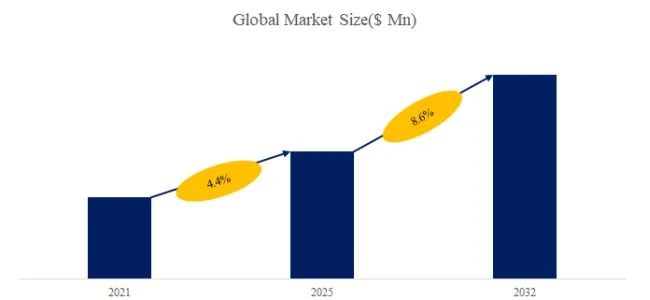
Above data is based on report from QYResearch: Global Micro Data Centers Market Report 2021-2032 (published in 2025). If you need the latest data, plaese contact QYResearch.
Global Micro Data Centers Top 5 Players Ranking and Market Share (Ranking is based on the revenue of 2025, continually updated)
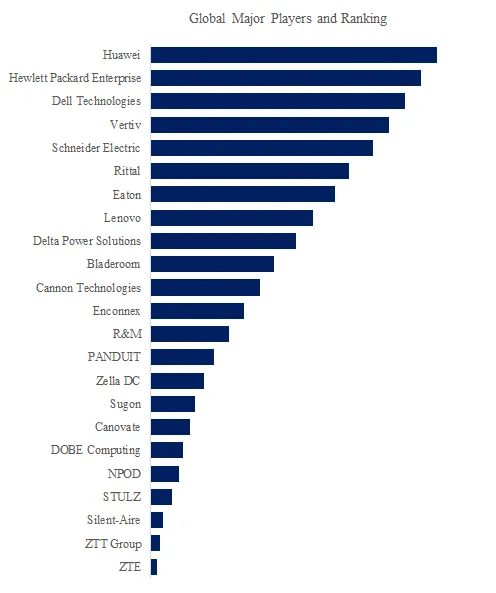
Above data is based on report from QYResearch: Global Micro Data Centers Market Report 2026-2032 (published in 2025). If you need the latest data, plaese contact QYResearch.
According to QYResearch Top Players Research Center, the global key manufacturers of Micro Data Centers include Huawei, Hewlett Packard Enterprise, Dell Technologies, Vertiv, Schneider Electric, Rittal, Eaton, Lenovo, Delta Power Solutions, Bladeroom, etc. In 2025, the global top five players had a share approximately 46.0% in terms of revenue.
Micro Data Centers Market Trends
1. Continued rapid growth of edge computing drives micro data center deployment.
Micro data centers are increasingly adopted as compact, self-contained computing units deployed closer to users, supporting low-latency and real-time data processing across industries like telecommunications, healthcare, retail, and manufacturing. Their modular and prefabricated design enables faster deployment and flexibility compared with traditional centralized data centers, making them ideal for edge environments where immediate processing is required.
2. Modular, prefabricated solutions enhance market adoption and deployment speed.
One of the most observable trends is the shift toward standardized, modular micro data center solutions that reduce installation time from months to weeks while maintaining consistent performance. These systems are increasingly designed with integrated cooling, power, and management capabilities, which simplifies rollout in both urban and remote settings. Their plug-and-play compatibility supports rapid scaling of IT infrastructure without the prolonged planning and build cycles typical of traditional data centers, making them especially attractive for small and medium enterprises (SMEs), branch offices, and edge nodes serving hybrid cloud environments.
3.Sustainability and energy efficiency are shaping product design and customer choices.
As organizations face increasing regulatory and corporate pressures to reduce carbon footprints, micro data centers are evolving with more energy-efficient technologies and designs. Many deployments now incorporate advanced cooling methods, renewable energy integration, and energy monitoring features to support sustainability goals and lower operating costs. This shift reflects broader data center industry priorities where efficiency and environmental impact are becoming central to infrastructure decisions, and micro data centers are uniquely positioned to deliver these benefits at distributed sites.
Micro Data Centers Market Driving Factors and Opportunities
1. Rising demand for edge computing and real-time data processing.
A primary driver for micro data centers is the exponential increase in data generation at the network edge due to IoT, mobile connectivity, and digital services. As businesses and carriers seek to reduce latency and bandwidth usage associated with centralized data processing, micro data centers provide localized computing power that enables faster decision-making and improves user experience. This trend is particularly strong in industries such as telecommunications, manufacturing, healthcare, and retail where near-instantaneous processing and analytics are critical.
2. Rapid 5G deployment and digital transformation initiatives create broad market opportunities.
The rollout of 5G networks across regions is intensifying the need for distributed compute resources that support high-bandwidth, low-latency applications such as autonomous systems, AR/VR, mobile analytics, and smart city services. Micro data centers, with their compact footprint and scalable design, are well-suited to support distributed edge nodes within 5G architectures, opening growth opportunities for vendors and system integrators. Their ability to serve digital transformation goals in enterprises also makes them attractive for hybrid cloud and multi-cloud strategies.
3. Increased digitalization and demand for flexible, scalable IT infrastructure.
As organizations embrace digital transformation, the need for agile and resilient infrastructure that can adapt to changing workloads is growing. Traditional data centers are often too rigid and slow to scale for dynamic enterprise needs, whereas micro data centers offer scalable and customizable solutions that align with operational agility objectives. This creates opportunities not only in core IT deployments but also in remote or underserved regions where connectivity challenges exist.
About The Authors
| Zhangyu – Lead Author |
| Email:zhangyu@qyresearch.com |
About QYResearch
QYResearch founded in California, USA in 2007. It is a leading Global market research and consulting company. With over 17 years’ experience and professional research team in various cities over the world QY Research focuses on management consulting, database and seminar services, IPO consulting, industry chain research and customized research to help our clients in providing non-linear revenue model and make them successful. We are Globally recognized for our expansive portfolio of services, good corporate citizenship, and our strong commitment to sustainability. Up to now, we have cooperated with more than 60,000 clients across five continents. Let’s work closely with you and build a bold and better future.
QYResearch is a world-renowned large-scale consulting company. The industry covers various high-tech industry chain market segments, spanning the semiconductor industry chain (semiconductor equipment and parts, semiconductor materials, ICs, Foundry, packaging and testing, discrete devices, sensors, optoelectronic devices), photovoltaic industry chain (equipment, cells, modules, auxiliary material brackets, inverters, power station terminals), new energy automobile industry chain (batteries and materials, auto parts, batteries, motors, electronic control, automotive semiconductors, etc.), communication industry chain (communication system equipment, terminal equipment, electronic components, RF front-end, optical modules, 4G/5G/6G, broadband, IoT, digital economy, AI), advanced materials industry Chain (metal materials, polymer materials, ceramic materials, nano materials, etc.), machinery manufacturing industry chain (CNC machine tools, construction machinery, electrical machinery, 3C automation, industrial robots, lasers, industrial control, drones), food, beverages and pharmaceuticals, medical equipment, agriculture, etc.
About Us:
QYResearch founded in California, USA in 2007, which is a leading global market research and consulting company. Our primary business include market research reports, custom reports, commissioned research, IPO consultancy, business plans, etc. With over 18 years of experience and a dedicated research team, we are well placed to provide useful information and data for your business, and we have established offices in 7 countries (include United States, Germany, Switzerland, Japan, Korea, China and India) and business partners in over 30 countries. We have provided industrial information services to more than 60,000 companies in over the world.
Contact Us:
If you have any queries regarding this report or if you would like further information, please contact us:
QY Research Inc.
Add: 17890 Castleton Street Suite 369 City of Industry CA 91748 United States
EN: https://www.qyresearch.com
Email: global@qyresearch.com
Tel: 001-626-842-1666(US)
JP: https://www.qyresearch.co.jp










