

Rim Protection Accessories Market Summary
I. Product Definition and Technical Foundations
1. Product Definition and Functional Positioning
Rim Protection Accessories refer to add-on components designed to protect vehicle wheel rims from scratches, curb damage, impact, and environmental wear during everyday driving, parking, or off-road use. Their primary function is to absorb or disperse impact forces from curbs, road debris, potholes, and other external hazards, thereby reducing cosmetic damage and structural stress to alloy wheels.
With the increasing adoption of larger alloy wheels in passenger vehicles, SUVs, and performance cars, rim damage has become more common and costly to repair. As a result, demand for rim protection solutions has grown, particularly in urban environments where curb contact is frequent.
In addition to their protective function, many rim protection products also serve a decorative purpose. Color options and customizable designs allow vehicle owners to enhance the aesthetic appearance of their wheels.
2. Product Types and Structural Designs
Rim protection accessories can be categorized based on installation method and structural design:
l Adhesive Rim Protectors: Flexible strips attached to the outer edge of the rim using high-strength adhesive. These are easy to install and compatible with most passenger vehicles.
l Clip-On or Snap-In Rings: Designed to fit into specific rim grooves using mechanical locking structures. These provide stronger attachment but require precise size compatibility.
l Integrated Rim Rings: Installed between the tire bead and rim during tire mounting, offering more permanent protection. Typically used in professional or modification markets.
l Rim Covers or Guards: Larger protective shells that partially cover the rim surface, combining impact protection with styling features.
Common materials include thermoplastic polyurethane (TPU), rubber composites, and high-impact engineering plastics. These materials must demonstrate abrasion resistance, flexibility, UV resistance, and thermal durability across varying climate conditions.
Figure00001. Global Rim Protection Accessories Market Size (US$ Million), 2021-2032
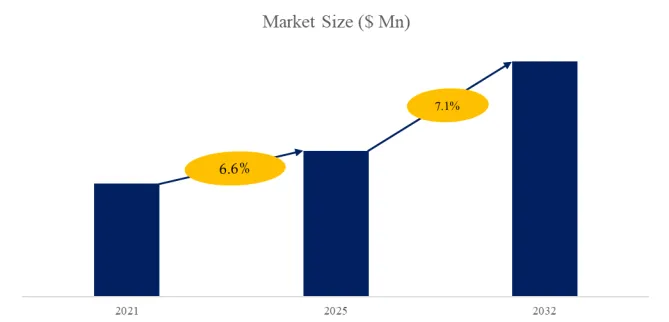
Above data is based on report from QYResearch: Global Rim Protection Accessories Market Report 2022-2031 (published in 2025). If you need the latest data, plaese contact QYResearch.
Figure00002. Global Rim Protection Accessories Top 13 Players Ranking and Market Share (Ranking is based on the revenue of 2025, continually updated)
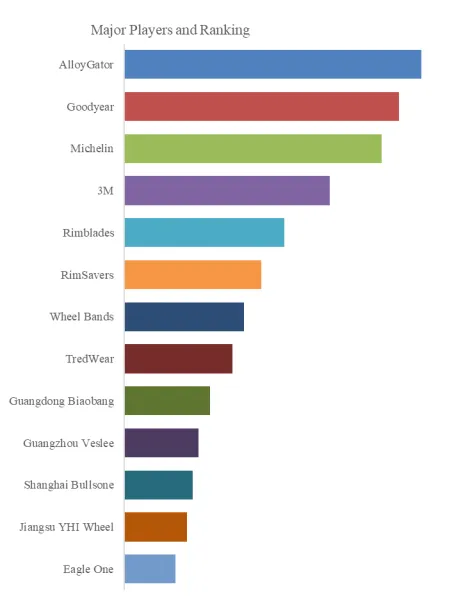
Above data is based on report from QYResearch: Global Rim Protection Accessories Market Report 2025-2031 (published in 2025). If you need the latest data, plaese contact QYResearch.
II. Industry Chain Analysis
1. Upstream Materials and Component Supply
The upstream supply chain consists of engineering plastic manufacturers, rubber compound suppliers, adhesive producers, and mold manufacturers.
Material performance is critical to product quality. TPU is widely used in higher-end products due to its flexibility, impact resistance, and weather durability. Rubber-based materials offer cost advantages but may have shorter lifespan under harsh conditions.
Adhesives must provide strong bonding strength while maintaining resistance to moisture, heat, and road chemicals. Mold development plays a significant role in cost structure, especially because different rim sizes and designs require multiple mold variations, limiting full standardization.
2. Midstream Manufacturing and Brand Operations
Midstream activities include material blending, extrusion or injection molding, trimming, surface finishing, and packaging.
While production technology is relatively mature, dimensional accuracy and durability consistency are important differentiators. Products must maintain structural integrity under centrifugal forces, vibration, and environmental exposure.
Brand positioning plays a major role in competitive performance. Products are primarily sold through e-commerce platforms, automotive accessory retailers, and car modification shops. Marketing messages typically emphasize cost savings (avoiding expensive rim repairs), ease of installation, and enhanced styling.
Some brands partner with tire service centers or automotive workshops to offer professional installation services.
3. Downstream Market Structure and Consumer Demand
The primary downstream market lies within the automotive aftermarket, targeting individual vehicle owners. Rising global vehicle ownership and the increasing popularity of large-diameter alloy wheels (18 inches and above) expand the addressable market.
Premium and modified vehicles represent higher-margin segments, where consumers are more willing to pay for both protection and visual enhancement. Urban driving environments with tight parking spaces further increase the likelihood of rim contact with curbs, supporting demand growth.
Online retail channels are dominant, particularly in markets with strong digital commerce penetration.
Overall demand is closely linked to vehicle ownership trends, car customization culture, and consumer willingness to invest in vehicle appearance protection.
III. Development Trends, Opportunities, and Challenges
1. Product and Technology Trends
The market is gradually shifting toward higher durability and extended service life. Some manufacturers are exploring self-healing surface materials and enhanced UV resistance technologies to improve longevity.
Customization trends are also increasing. Multi-color options, branded collaborations, and personalized styling features are becoming more common, strengthening the aesthetic appeal of rim protection products.
Ease of installation is another key competitive factor. Products designed for tool-free installation are particularly attractive to DIY consumers.
2. Market Opportunities
Global vehicle fleet expansion, especially in emerging markets, provides a stable demand foundation. Growth in SUV and large-wheel vehicle segments further supports long-term market expansion.
Automotive customization culture continues to grow in several regions, generating additional demand in the performance and enthusiast markets.
Electrification of vehicles does not significantly reduce demand, as rim protection requirements are largely independent of powertrain type.
3. Industry Challenges
Entry barriers are relatively low, resulting in intense competition and price pressure in commoditized segments. Low-quality products that detach or deform can negatively impact consumer perception and brand reputation.
Certain premium tire models incorporate built-in rim protector edges, partially reducing the need for external accessories.
The aftermarket remains fragmented, and brand loyalty is limited, requiring continuous marketing investment.
IV. Entry Barriers and Competitive Landscape
Overall technological entry barriers are moderate to low. Core differentiation lies in material formulation optimization, mold precision, product durability testing, and distribution channel development.
Access to established retail networks and online marketplace visibility significantly influence market success. Premium segments demand higher durability validation and quality assurance standards.
In summary, rim protection accessories represent a consumer-driven automotive aftermarket niche characterized by steady growth potential, strong price competition, and performance differentiation centered on material quality and brand positioning.
About The Authors
Hongjichi – Lead Author
Email: hongjichi@qyresearch.com
About QYResearch
QYResearch founded in California, USA in 2007.It is a leading global market research and consulting company. With over 17 years’ experience and professional research team in various cities over the world QY Research focuses on management consulting, database and seminar services, IPO consulting (data is widely cited in prospectuses, annual reports and presentations), industry chain research and customized research to help our clients in providing non-linear revenue model and make them successful. We are globally recognized for our expansive portfolio of services, good corporate citizenship, and our strong commitment to sustainability. Up to now, we have cooperated with more than 60,000 clients across five continents. Let’s work closely with you and build a bold and better future.
QYResearch is a world-renowned large-scale consulting company. The industry covers various high-tech industry chain market segments, spanning the semiconductor industry chain (semiconductor equipment and parts, semiconductor materials, ICs, Foundry, packaging and testing, discrete devices, sensors, optoelectronic devices), photovoltaic industry chain (equipment, cells, modules, auxiliary material brackets, inverters, power station terminals), new energy automobile industry chain (batteries and materials, auto parts, batteries, motors, electronic control, automotive semiconductors, etc.), communication industry chain (communication system equipment, terminal equipment, electronic components, RF front-end, optical modules, 4G/5G/6G, broadband, IoT, digital economy, AI), advanced materials industry Chain (metal materials, polymer materials, ceramic materials, nano materials, etc.), machinery manufacturing industry chain (CNC machine tools, construction machinery, electrical machinery, 3C automation, industrial robots, lasers, industrial control, drones), food, beverages and pharmaceuticals, medical equipment, agriculture, etc.
About Us:
QYResearch founded in California, USA in 2007, which is a leading global market research and consulting company. Our primary business include market research reports, custom reports, commissioned research, IPO consultancy, business plans, etc. With over 18 years of experience and a dedicated research team, we are well placed to provide useful information and data for your business, and we have established offices in 7 countries (include United States, Germany, Switzerland, Japan, Korea, China and India) and business partners in over 30 countries. We have provided industrial information services to more than 60,000 companies in over the world.
Contact Us:
If you have any queries regarding this report or if you would like further information, please contact us:
QY Research Inc.
Add: 17890 Castleton Street Suite 369 City of Industry CA 91748 United States
EN: https://www.qyresearch.com
Email: global@qyresearch.com
Tel: 001-626-842-1666(US)
JP: https://www.qyresearch.co.jp










