

Solar Home Battery Supply Market Summary
Solar Home Batteries are storage systems tailored for residential use, capturing energy from rooftop solar panels and delivering electricity to household loads whenever needed. They provide essential functions such as peak shaving, load shifting, and backup power during outages, allowing families to manage energy more efficiently. Key strengths include rapid response, modular and scalable capacity, and flexible installation, enabling seamless integration with time-of-use pricing and smart home energy management strategies. Long-term safety and operational reliability are critical, serving as the cornerstone for consistent economic benefits and sustaining user trust in the system.
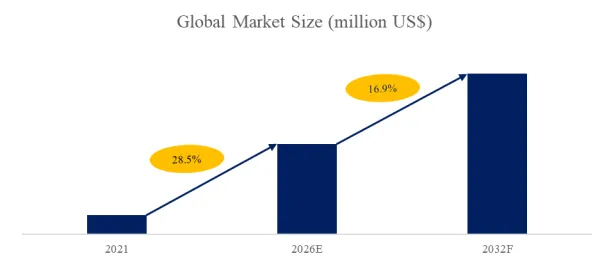
According to the new market research report “Global Solar Home Battery Supply Market Report 2026-2032”, published by QYResearch, the global Solar Home Battery Supply market size is projected to reach USD 9.88 billion by 2032, at a CAGR of 16.9% during the forecast period.
Figure00001. Global Solar Home Battery Supply Market Size (US$ Million), 2021-2032
Above data is based on report from QYResearch: Global Solar Home Battery Supply Market Report 2026-2032 (published in 2026). If you need the latest data, plaese contact QYResearch.
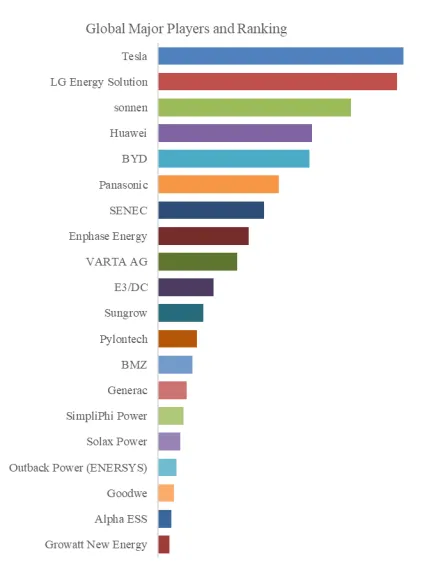
Figure00002. Global Solar Home Battery Supply Top 20 Players Ranking and Market Share (Ranking is based on the revenue of 2025, continually updated)
Above data is based on report from QYResearch: Global Solar Home Battery Supply Market Report 2026-2032 (published in 2026). If you need the latest data, plaese contact QYResearch.
According to QYResearch Top Players Research Center, the global key manufacturers of Solar Home Battery Supply include Tesla, LG Energy Solution, sonnen, Huawei, BYD, etc. In 2025, the global top five players had a share approximately 45.0% in terms of revenue.
Industrial Chain
The upstream of the residential solar battery value chain centers on two critical inputs: lithium-ion cells and photovoltaic modules. Lithium-ion cells determine the system’s energy density, safety thresholds, cycle life, and cost structure, while photovoltaic modules provide the primary source of energy and influence overall input stability. Leading cell suppliers include CATL, BYD, and EVE Energy. In photovoltaics, LONGi Green Energy, JinkoSolar, Trina Solar, and First Solar provide standardized, scalable modules. The reliability and availability of these upstream components are fundamental, directly impacting system safety, longevity, and the ability to scale deployment.
The midstream phase is where differentiation and value creation are realized. It covers system architecture, battery management and safety strategies, power conversion and electrical integration, thermal management, software control, remote monitoring, certification testing, and quality-driven productization. Here, manufacturers convert varied household consumption patterns, pricing schemes, and installation environments into reliable, standardized solutions with predictable lifecycle costs. Strong system integration capabilities and disciplined quality management are critical to ensuring long-term usability, minimizing risk, and protecting brand reputation.
At the downstream level, residential solar batteries reach end-users through both online and offline channels. Online sales focus on standardized configurations, transparent pricing, and rapid delivery, catering to tech-savvy consumers with simpler installation needs. Offline channels rely on localized services, including on-site assessment, installation, commissioning, and post-sale support, to guarantee system performance and safety. In an increasingly competitive market, suppliers are prioritizing reduced installation complexity, higher system uptime, and minimized warranty or rework costs, all of which are essential for sustainable profitability and customer satisfaction.
Influencing Factors
Drivers:
The growth of the residential solar battery market is being driven not only by rising electricity costs and the need for reliable home power, but also by recent geopolitical energy risks. Heightened tensions in the Middle East and potential disruptions to oil supply have amplified energy price volatility, increasing household sensitivity to electricity cost uncertainty. In this context, home energy storage systems offer not only economic benefits through peak shaving and load shifting, but also act as a hedge against energy price fluctuations and enhance household energy autonomy. Combined with expected grid instability, frequent extreme weather events, and increasing rooftop photovoltaic adoption, the “self-consumption plus storage management” model is becoming more valuable, strengthening both economic and security incentives and serving as a key driver for industry growth.
Challenges:
The residential solar battery sector continues to face hurdles from high upfront costs, complex installation requirements, and long payback periods—particularly in regions where electricity price differences are small or policy support is limited. Beyond economics, stringent demands for system safety, regulatory compliance, and long-term reliability place significant pressure on integration capabilities and quality management, effectively raising the barrier for new entrants.
Trends:
Looking forward, the evolution of home solar energy storage is centered on safety, intelligence, and lifecycle efficiency. Systems are expected to adopt higher safety standards, deeper software-driven energy management, and modular designs that simplify deployment and expansion. Closer integration with broader home energy ecosystems will enhance both operational efficiency and user experience. As competition shifts from hardware pricing to system reliability and service quality, suppliers that excel in integration, performance consistency, and efficient operations are positioned to secure lasting competitive advantages.
About The Authors
Lead Author: Julie Zhang
Email: zhangjianan@qyresearch.com
Julie Zhang, a key industry analyst a industry analyst of QYResearch (Beijing Hengzhou Bozhi International Information Consulting Co.,Ltd.), focuses on market research and trend forecasting of the entire industry chain upstream and downstream of the electric vehicle and lithium battery industry, we are good at providing strategic market insights through in-depth data mining, focusing on trends and technological innovations in the automotive and lithium battery industry, and helping the company achieve sustainable success in the highly competitive market environment. Typical studies include Electronic Fusing IC, EV Skateboard Platform, Electric Vehicle Controller, Automotive Interior Monitoring System, Automotive PCIe Switch Chips, End-To-End Automotive Software Platform, LiFSI Electrolyte Salts, Portable Power Supply, Outdoor Mobile Powers, and Solar Energy Storage Battery, etc.
About QYResearch
QYResearch founded in California, USA in 2007. It is a leading global market research and consulting company. With over 17 years’ experience and professional research team in various cities over the world QY Research focuses on management consulting, database and seminar services, IPO consulting (data is widely cited in prospectuses, annual reports and presentations), industry chain research and customized research to help our clients in providing non-linear revenue model and make them successful. We are globally recognized for our expansive portfolio of services, good corporate citizenship, and our strong commitment to sustainability. Up to now, we have cooperated with more than 60,000 clients across five continents. Let’s work closely with you and build a bold and better future.
QYResearch is a world-renowned large-scale consulting company. The industry covers various high-tech industry chain market segments, spanning the semiconductor industry chain (semiconductor equipment and parts, semiconductor materials, ICs, Foundry, packaging and testing, discrete devices, sensors, optoelectronic devices), photovoltaic industry chain (equipment, cells, modules, auxiliary material brackets, inverters, power station terminals), new energy automobile industry chain (batteries and materials, auto parts, batteries, motors, electronic control, automotive semiconductors, etc.), communication industry chain (communication system equipment, terminal equipment, electronic components, RF front-end, optical modules, 4G/5G/6G, broadband, IoT, digital economy, AI), advanced materials industry Chain (metal materials, polymer materials, ceramic materials, nano materials, etc.), machinery manufacturing industry chain (CNC machine tools, construction machinery, electrical machinery, 3C automation, industrial robots, lasers, industrial control, drones), food, beverages and pharmaceuticals, medical equipment, agriculture, etc.
About Us:
QYResearch founded in California, USA in 2007, which is a leading global market research and consulting company. Our primary business include market research reports, custom reports, commissioned research, IPO consultancy, business plans, etc. With over 18 years of experience and a dedicated research team, we are well placed to provide useful information and data for your business, and we have established offices in 7 countries (include United States, Germany, Switzerland, Japan, Korea, China and India) and business partners in over 30 countries. We have provided industrial information services to more than 60,000 companies in over the world.
Contact Us:
If you have any queries regarding this report or if you would like further information, please contact us:
QY Research Inc.
Add: 17890 Castleton Street Suite 369 City of Industry CA 91748 United States
EN: https://www.qyresearch.com
Email: global@qyresearch.com
Tel: 001-626-842-1666(US)
JP: https://www.qyresearch.co.jp










