

People Counting System Market Summary
A people counting system is an electronic device used to measure the number of people passing through a specific passageway or entrance. Examples include simple manual counters, infrared beams, thermal imaging systems, WiFi trackers, and video counters using advanced machine learning algorithms. Retail establishments often use people counters to assess the effectiveness of marketing campaigns, architectural design and layout, and the popularity of specific brands.
Source, FLIR Systems
According to the new market research report “Global People Counting System Market Report 2026-2032”, published by QYResearch, the global People Counting System market size is projected to reach USD 1.42 billion by 2032, at a CAGR of 6.9% during the forecast period.
Figure00001. Global People Counting System Market Size (US$ Million), 2021-2032
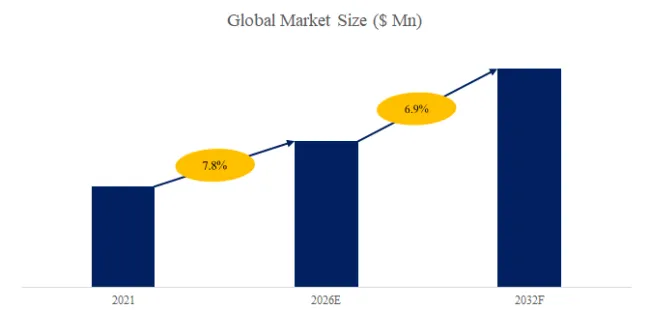
Above data is based on report from QYResearch: Global People Counting System Market Report 2026-2032 (published in 2026). If you need the latest data, plaese contact QYResearch.
A Panoramic View of the Industry Chain: Full-Link Collaboration from Hardware Sensing to Intelligent Decision-Making The people counting system industry chain has formed a complete ecosystem of “upstream hardware support – midstream algorithm empowerment – downstream scenario implementation.” Upstream focuses on core hardware such as sensors and chips, covering diverse sensing devices such as infrared sensors, 3D cameras, and millimeter-wave radar, as well as computing power carriers such as low-power AI chips and edge computing modules. For example, the new generation of TOF (Time-of-Flight) sensors achieves high-precision human detection by measuring the round-trip time of light pulses, with anti-interference capabilities 50% higher than traditional infrared sensors; edge computing chips support localized data processing, reducing cloud transmission latency and meeting real-time requirements. Midstream is led by algorithm vendors and system integrators, using technologies such as deep learning and computer vision to transform raw data into structured information such as customer flow heatmaps, dwell time, and entry/exit directions, and developing cloud management platforms to achieve multi-store data aggregation and analysis. Downstream applications cover diverse fields such as retail, transportation, culture and tourism, and security. For example, shopping malls optimize store layouts through customer flow analysis, subway stations use real-time crowd control to regulate security checkpoints, and scenic spots rely on heat maps to guide tourists and avoid congestion, forming a closed-loop ecosystem of “perception-analysis-decision-making.”
Policy Support: Smart City Construction Drives Standardized Industry Development
Policy dividends provide dual support for people counting systems. At the national level, smart cities and new infrastructure are listed as strategic directions, explicitly requiring the deployment of intelligent sensing equipment in public places to improve the precision of urban governance. For example, the “14th Five-Year Plan for Digital Economy Development” proposes “promoting the open sharing of public data resources,” providing a policy basis for cross-departmental collaborative applications of customer flow data; many local governments have issued “Guidelines for the Construction of Smart Business Districts,” requiring large commercial complexes to configure customer flow statistics systems and connect the data to the city’s intelligent brain. At the industry level, standardization is accelerating. The National Technical Committee for Standardization of Intelligent Buildings and Residential Areas released the “Technical Specifications for Customer Flow Statistics Systems,” unifying core parameters such as data interfaces and accuracy indicators, breaking down data barriers between different manufacturers’ equipment, and promoting the industry’s upgrade from “single-point deployment” to “full-domain interconnection.” Trends and Opportunities: Technology Convergence and Scenario Deepening Drive Development
The industry exhibits three major development trends: **Technology Convergence:** Deep integration of technologies such as AI, IoT, and 5G enhances system intelligence. For example, AI visual algorithms can distinguish between adults and children, employees and customers, reducing data errors; 5G+edge computing architecture supports large-scale device access, meeting the needs of high-concurrency scenarios such as transportation hubs. **Scenario Refinement:** Moving from extensive customer flow statistics to user behavior analysis. For example, in retail scenarios, systems can combine POS data to analyze the “enter-browse-purchase” conversion rate, providing a basis for precision marketing; in cultural tourism scenarios, analyzing tourist dwell time and paths optimizes scenic area route design. **Data Valuation:** Customer flow data becomes a core asset for enterprises, giving rise to new data service business models. For example, third-party data platforms integrate customer flow data from multiple business districts, providing decision support for brand site selection and supply chain optimization, forming a closed-loop business model of “hardware + algorithm + data.” On the opportunity front, policy dividends such as the digital transformation of old shopping malls and the construction of county-level commercial systems are providing opportunities for small and medium-sized enterprises (SMEs) to penetrate lower-tier markets. Emerging scenarios like smart factories and smart hospitals are driving increased demand for personnel positioning and trajectory tracking, expanding industry boundaries.
Challenges and Breakthroughs: From Technological Breakthroughs to Ecosystem Collaboration
The industry faces multiple challenges: Technologically, accuracy and stability in complex scenarios need improvement; for example, environments with strong light, backlight, and dense crowds can easily lead to counting errors. Regarding privacy, data collection and use need to balance efficiency and compliance; for example, the EU’s General Data Protection Regulation (GDPR) imposes strict restrictions on biometric data such as facial recognition. In terms of cost, high-end equipment and customized services are expensive, limiting the acceptance of SMEs. The solution lies in differentiated competition and ecosystem collaboration: Leading companies should focus on full-scenario coverage, consolidating their market position through technological iteration; SMEs should cultivate niche markets, such as developing lightweight solutions for convenience stores and community stores, or focusing on specific technological routes (e.g., pure vision solutions to reduce costs); simultaneously, they should strengthen cooperation with industry associations and standards organizations to promote the application of technologies such as privacy computing and federated learning, releasing value while ensuring data security.
Barriers to Entry: A Triple Test of Technology, Brand, and Ecosystem The market for people counting systems faces high barriers to entry: Technological barriers require mastery of core patents such as multimodal perception fusion and high-precision counting algorithms. Technologies like dynamic background modeling and crowd occlusion handling require long-term R&D investment. Brand barriers exist, as leading clients in retail and transportation tend to choose vendors with extensive experience in various scenarios, making it difficult for new entrants to quickly build trust. Ecosystem barriers require deep integration with third-party software such as smart city platforms and business management systems to form a closed-loop ecosystem of “hardware + algorithm + application.” Against this backdrop, new entrants must break through the barriers by differentiating themselves, such as focusing on emerging scenarios (e.g., metaverse exhibition halls, unmanned retail) or developing open-source algorithm platforms to lower the barrier to entry, in order to secure a place in the fiercely competitive market.
About The Authors
| Chengping Zhang | A experienced Technology & Market Analyst. Deep experience in chemical industry, focus on electronic materials, engineering materials and mineral resources, etc. Fully engaged in the development of technology and market reports as well as custom projects. | |
|
Senior Analyst |
||
| Email: zhangchengping@qyresearch.com |
Website: www.qyresearch.com Hot Line:4006068865
QYResearch focus on Market Survey and Research
US: +1-888-365-4458(US) +1-202-499-1434(Int’L)
EU: +44-808-111-0143(UK) +44-203-734-8135(EU)
Asia: +86-10-8294-5717(CN) +852-30628839(HK)
About QYResearch
QYResearch founded in California, USA in 2007.It is a leading global market research and consulting company. With over 17 years’ experience and professional research team in various cities over the world QY Research focuses on management consulting, database and seminar services, IPO consulting (data is widely cited in prospectuses, annual reports and presentations), industry chain research and customized research to help our clients in providing non-linear revenue model and make them successful. We are globally recognized for our expansive portfolio of services, good corporate citizenship, and our strong commitment to sustainability. Up to now, we have cooperated with more than 60,000 clients across five continents. Let’s work closely with you and build a bold and better future.
QYResearch is a world-renowned large-scale consulting company. The industry covers various high-tech industry chain market segments, spanning the semiconductor industry chain (semiconductor equipment and parts, semiconductor materials, ICs, Foundry, packaging and testing, discrete devices, sensors, optoelectronic devices), photovoltaic industry chain (equipment, cells, modules, auxiliary material brackets, inverters, power station terminals), new energy automobile industry chain (batteries and materials, auto parts, batteries, motors, electronic control, automotive semiconductors, etc.), communication industry chain (communication system equipment, terminal equipment, electronic components, RF front-end, optical modules, 4G/5G/6G, broadband, IoT, digital economy, AI), advanced materials industry Chain (metal materials, polymer materials, ceramic materials, nano materials, etc.), machinery manufacturing industry chain (CNC machine tools, construction machinery, electrical machinery, 3C automation, industrial robots, lasers, industrial control, drones), food, beverages and pharmaceuticals, medical equipment, agriculture, etc.
About Us:
QYResearch founded in California, USA in 2007, which is a leading global market research and consulting company. Our primary business include market research reports, custom reports, commissioned research, IPO consultancy, business plans, etc. With over 18 years of experience and a dedicated research team, we are well placed to provide useful information and data for your business, and we have established offices in 7 countries (include United States, Germany, Switzerland, Japan, Korea, China and India) and business partners in over 30 countries. We have provided industrial information services to more than 60,000 companies in over the world.
Contact Us:
If you have any queries regarding this report or if you would like further information, please contact us:
QY Research Inc.
Add: 17890 Castleton Street Suite 369 City of Industry CA 91748 United States
EN: https://www.qyresearch.com
Email: global@qyresearch.com
Tel: 001-626-842-1666(US)
JP: https://www.qyresearch.co.jp










