

1. Robot Combat Vehicles Market Summary
In 2025, the global production of Robot Combat Vehicles reached approximately 3,126 units, with an average global market price of around US$650,000 per unit. In the same year, the global total production capacity of Robot Combat Vehicles reached 3,907 units. The industry average gross profit margin of this product reached 36%.
According to the latest research report from QYResearch, in 2025, global Robot Combat Vehicles production reached approximately 3,126 units, with an average global market price of around US$650,000 per unit, the industry’s gross profit margin is approximately 36%. In terms of market size, the global Robot Combat Vehicles market size is projected to grow from USD 2.03 billion in 2025 to USD 4.45 billion by 2032, at a CAGR of 12.00%during the forecast period.
Figure00001. Global Robot Combat Vehicles Market Revenue Growth Rate, 2021-2032
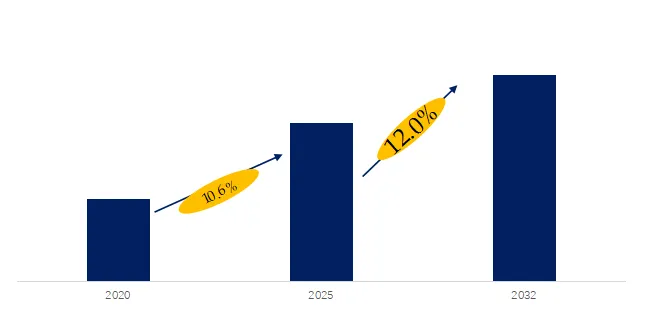
Above data is based on report from QYResearch: Global Robot Combat Vehicles Market Report 2026-2032 (published in 2025). If you need the latest data, plaese contact QYResearch.
2 Introduction of Major Manufacturers of Robot Combat Vehicles
| Serial Number | Company |
| 1 | Oshkosh Defense |
| 2 | General Dynamics Land Systems |
| 3 | IAI |
| 4 | Kalashnikov Concern |
| 5 | Milrem Robotics |
| 6 | North Industries Corporation |
| 7 | Pratt Miller |
| 8 | Textron Systems |
| 9 | Howe & Howe Technologies |
| 10 | Elbit Systems |
| 11 | QinetiQ |
| 12 | Hanwha Defense |
| 13 | Aselsan |
Source: Third-party data, QYResearch Research Team
According to a survey by QYResearch’s Leading Enterprise Research Center, global Robot Combat Vehicles manufacturers include Oshkosh Defense, General Dynamics Land Systems, IAI, Kalashnikov Concern, Milrem Robotics, etc. By 2025, the top five global manufacturers will hold approximately 33% of the market share.
Introduction to Key Companies
Company 1
| Oshkosh Defense | Description |
| Company Introduction | Headquartered in the United States, Oshkosh Defense is a leading global manufacturer of military and special-purpose vehicles. The company focuses on the research and development and production of highly mobile tactical vehicles, logistics support vehicles, and armored vehicles, serving the U.S. Military and the international defense market. Oshkosh Defense is renowned for its innovative engineering and durable design. Its products are widely used in battlefield transport, tactical operations, and rescue operations, while incorporating intelligent systems to enhance vehicle survivability and mission efficiency in complex environments. Oshkosh Defense is committed to providing comprehensive vehicle solutions for modern military operations. |
| Product Introduction | Oshkosh Defense’s robotic combat vehicle product is its “Unmanned Tactical Vehicle” series. Combining remote control and autonomous navigation technologies, these vehicles can perform reconnaissance, transport, and support missions in complex terrain. Equipped with high-performance sensors, LiDAR, and autonomous driving algorithms, the vehicles achieve obstacle avoidance, path planning, and battlefield environmental awareness. The system supports remote operation and semi-automatic modes, reducing personnel exposure risk and improving operational flexibility and mission efficiency. This series aims to provide unmanned tactical support for modern military operations, enhancing troop battlefield survivability while ensuring safety redundancy and mission reliability. |
Source: Third-party data, QYResearch Research Team
Company 2
| General Dynamics Land Systems | Description |
| Company Introduction | General Dynamics Land Systems (GDLS), a subsidiary of General Dynamics Corporation and headquartered in Michigan, is a leading global manufacturer of armored fighting vehicles. The company focuses on the research and development and production of land warfare equipment such as main battle tanks, armored personnel carriers, and armored reconnaissance vehicles, combining advanced electronic systems, fire control systems, and networked command and control technologies to enhance combat effectiveness and survivability. GDLS customers include the U.S. and international militaries, and its products are widely used in land combat and tactical support missions. It also actively explores unmanned and intelligent vehicle technologies to meet the needs of modern military operations. |
| Product Introduction | GDLS’ robotic combat vehicle products include unmanned ground tactical platforms capable of performing reconnaissance, fire support, and logistical transport missions. These vehicles employ autonomous navigation systems, lidar, and sensor fusion technology to achieve real-time battlefield environment awareness and path planning. Control modes support remote operation and semi-autonomous mission execution to reduce soldier exposure risk while improving operational efficiency. This unmanned platform can integrate various weapons and mission modules, enhancing tactical flexibility and survivability, and is a significant achievement of GDLS in promoting the intelligent and unmanned development of land warfare equipment. |
Source: Third-party data, QYResearch Research Team
Company 3
| IAI | Description |
| Company Introduction | IAI, founded in 1953 and headquartered in Israel, is a globally renowned defense and aerospace company. The company’s business encompasses drones, missile systems, satellite technology, and robotic combat vehicles, boasting strong technological capabilities. IAI focuses on developing advanced autonomous systems, intelligent sensing, and command and control technologies, providing diverse defense solutions for militaries worldwide. Its innovation capabilities excel in unmanned combat platforms, long-range reconnaissance, and autonomous combat systems, driving the development of modern, intelligent warfare equipment while providing high reliability and tactical flexibility. |
| Product Introduction | IAI’s robotic combat vehicles primarily consist of unmanned ground-based tactical platforms capable of reconnaissance, patrol, and fire support missions. Equipped with lidar, high-definition cameras, and advanced autonomous navigation systems, these vehicles enable obstacle avoidance and path planning in complex environments. Supporting remote operation and autonomous mission execution, they reduce personnel exposure to combat risks and improve operational efficiency and flexibility. This unmanned platform can integrate weapon systems, sensors, and communication modules for urban warfare, border patrols, and battlefield support, representing a significant achievement of IAI in promoting the intelligentization of unmanned combat equipment. |
Source: Third-party data, QYResearch Research Team
3 Robot Combat Vehicles Industry Chain Analysis
| Industry Chain | Description |
| Upstream | The upstream of robotic combat vehicles primarily consists of companies engaged in core technology R&D and key component manufacturing. Core technologies include artificial intelligence autonomous decision-making systems, computer vision and sensor fusion technologies, lidar, infrared imaging, communication and navigation modules, etc. These technologies determine the vehicle’s autonomous perception and decision-making capabilities in complex battlefield environments. Component suppliers provide high-performance engines, electric drive systems, hydraulic control systems, armor materials, weapon interfaces, and energy management modules, providing hardware support for the vehicle’s reliability and combat capabilities. Furthermore, the upstream also includes data processing platforms, simulation training systems, and tactical algorithm providers. These companies construct the technological foundation and operational intelligence ecosystem for robotic combat vehicles, laying a solid foundation for midstream system integration and downstream operational deployment. |
| Midstream | The midstream segment encompasses the manufacturing of robotic combat vehicles, system integration, and combat platform development. Vehicle manufacturers conduct structural design, power system configuration, armor protection, and combat module integration based on the technologies and components provided by the upstream, and carry out reliability and environmental adaptability testing. System integrators integrate perception systems, weapon control systems, navigation and communication modules, and autonomous decision-making algorithms into the vehicle, achieving efficient synergy between vehicle intelligence and combat functions. Meanwhile, the midstream sector also includes the development of command and control software, fleet coordination and dispatch platforms, and remote control interfaces, enabling multi-vehicle, multi-mission collaborative combat capabilities. This is the core link in transforming technological achievements into actual combat capabilities. |
| Downstream | The downstream sector mainly involves the deployment and application of robotic combat vehicles, the execution of combat missions, and operation and maintenance support. Military or security agencies, as end users, apply robotic combat vehicles to missions such as reconnaissance, patrol, support strikes, and combat in complex terrain. Downstream also includes full lifecycle management such as vehicle maintenance, system upgrades, data transmission, and tactical analysis to ensure the long-term reliable operation of combat vehicles. Combat training and tactical exercises are also key downstream components, improving the collaborative efficiency of vehicles and operators by simulating real combat environments. Furthermore, downstream feedback information from the supply chain, combat data, and system optimization needs provide improvement directions for midstream and upstream R&D, forming a complete closed-loop industrial chain. |
Source: Third-party data, QYResearch Research Team
4 Robot Combat Vehicles Industry Development Trends, Opportunities, Obstacles and Industry Barriers
Development Trends:
1. Intelligent Autonomous Combat. Globally, robotic combat vehicles are developing towards high levels of intelligence. Advances in artificial intelligence, autonomous decision-making, and machine vision enable vehicles to autonomously perceive, analyze, and execute tasks in complex battlefield environments. Future unmanned combat platforms will gradually achieve remote collaborative combat, formation control, and dynamic mission optimization, improving battlefield response speed and combat efficiency.
2. Modular and Multi-Purpose Design. To adapt to diverse combat needs, robotic combat vehicles adopt a modular design, allowing for rapid replacement of weapon systems, sensors, or communication equipment to achieve multi-functional missions such as reconnaissance, strike, and support. This flexibility reduces R&D costs and maintenance difficulty, while also improving the vehicle’s applicability and tactical value in different combat scenarios.
3. Accelerated Global Military Cooperation. Internationally, the development of robotic combat vehicle technology and equipment shows a trend towards transnational cooperation. Military enterprises and research institutions share technical standards, simulation platforms, and key components. Through alliance R&D, joint testing, and export cooperation, enterprises can rapidly enhance their R&D capabilities and accelerate technology commercialization and operational deployment.
Development Opportunities:
1. Enhanced Operational Efficiency and Safety: Robotic combat vehicles can replace soldiers in high-risk areas to perform reconnaissance, fire support, and logistical transport missions, reducing casualties and improving battlefield efficiency. Unmanned warfare provides the military with more flexible, safe, and efficient combat capabilities, representing a strategic upgrade opportunity for modern warfare.
2. Driving the Development of Emerging Military Industry Chains: The development of robotic combat vehicles drives the rapid growth of related industries such as artificial intelligence, sensors, power systems, and high-precision manufacturing. Upstream and downstream enterprises can form a complete ecosystem, including hardware production, software development, system integration, and operation and maintenance services, injecting new vitality into the global military industry.
3. Enhanced Data Value in Intelligent Warfare: Combat vehicles generate massive amounts of battlefield data during missions, including terrain information, target identification, movement trajectories, and combat effects. This data can not only be used for real-time decision-making but also for training AI algorithms, optimizing combat strategies, and improving the performance of subsequent platforms, forming a new data-driven value chain.
Hindering Factors:
1. High Technological Barriers and R&D Costs. Robotic combat vehicles involve core technologies in multiple fields, including artificial intelligence, machine vision, communication and navigation, weapon control, and power systems. The development cycle is long and the costs are high. Small and medium-sized enterprises or countries find it difficult to quickly overcome technological bottlenecks, limiting the widespread adoption and large-scale application of these technologies.
2. Legal and Ethical Controversies. The use of unmanned combat platforms involves international law, the law of war, and ethical controversies, such as liability determination, civilian casualty risks, and the ethical boundaries of autonomous weapons. These issues lack globally unified standards, potentially limiting the deployment and export of robotic combat vehicles.
3. Adaptability to Complex Battlefield Environments. The reliability of robotic combat vehicles in complex terrain, extreme weather, or communication-constrained conditions remains a challenge. Perception errors, network latency, and system failures can affect mission execution, limiting their widespread application in diverse battlefield environments and increasing deployment risks.
Barriers:
1. Core Technology Barriers: Artificial intelligence-based autonomous decision-making systems, advanced sensor fusion, tactical control algorithms, and remote control platforms constitute the core technological barriers for robotic combat vehicles. Companies mastering these technologies hold a significant competitive advantage, making it difficult for new entrants to break through in the short term, thus creating a high barrier to entry.
2. Data and Combat Experience Barriers: Robotic combat vehicles require a large amount of real-world combat and simulation training data for algorithm optimization. Companies possessing rich battlefield data and training experience can continuously improve the intelligence level of their combat vehicles, forming a data barrier that is difficult to replicate, providing industry leaders with a sustainable competitive advantage.
3. Industry Ecosystem and Customer Barriers: Leading companies typically establish a complete upstream and downstream supply chain and combat vehicle ecosystem, including component suppliers, system integrators, maintenance services, and military customer relationships. This ecosystem and long-term partnerships create high barriers for new entrants in terms of market access, resources, and customer acquisition.
About QYResearch
QYResearch founded in California, USA in 2007.It is a leading Global market research and consulting company. With over 16 years’ experience and professional research team in various cities over the world QY Research focuses on management consulting, database and seminar services, IPO consulting, industry chain research and customized research to help our clients in providing non-linear revenue model and make them successful. We are Globally recognized for our expansive portfolio of services, good corporate citizenship, and our strong commitment to sustainability. Up to now, we have cooperated with more than 60,000 clients across five continents. Let’s work closely with you and build a bold and better future.
QYResearch is a world-renowned large-scale consulting company. The industry covers various high-tech industry chain market segments, spanning the semiconductor industry chain (semiconductor equipment and parts, semiconductor materials, ICs, Foundry, packaging and testing, discrete devices, sensors, optoelectronic devices), photovoltaic industry chain (equipment, cells, modules, auxiliary material brackets, inverters, power station terminals), new energy automobile industry chain (batteries and materials, auto parts, batteries, motors, electronic control, automotive semiconductors, etc.), communication industry chain (communication system equipment, terminal equipment, electronic components, RF front-end, optical modules, 4G/5G/6G, broadband, IoT, digital economy, AI), advanced materials industry Chain (metal materials, polymer materials, ceramic materials, nano materials, etc.), machinery manufacturing industry chain (CNC machine tools, construction machinery, electrical machinery, 3C automation, industrial robots, lasers, industrial control, drones), food, beverages and pharmaceuticals, medical equipment, agriculture, etc.
About Us:
QYResearch founded in California, USA in 2007, which is a leading global market research and consulting company. Our primary business include market research reports, custom reports, commissioned research, IPO consultancy, business plans, etc. With over 18 years of experience and a dedicated research team, we are well placed to provide useful information and data for your business, and we have established offices in 7 countries (include United States, Germany, Switzerland, Japan, Korea, China and India) and business partners in over 30 countries. We have provided industrial information services to more than 60,000 companies in over the world.
Contact Us:
If you have any queries regarding this report or if you would like further information, please contact us:
QY Research Inc.
Add: 17890 Castleton Street Suite 369 City of Industry CA 91748 United States
EN: https://www.qyresearch.com
Email: global@qyresearch.com
Tel: 001-626-842-1666(US)
JP: https://www.qyresearch.co.jp










