

Carbon Dioxide Gas Recovery Equipment Market Summary
Carbon Dioxide Gas Recovery Equipment refers to industrial systems designed to capture and recover CO₂ from gas streams generated by combustion, chemical processes, or other industrial operations. These systems are widely used in industries such as chemicals, food and beverage, power generation, and pharmaceuticals, where carbon dioxide can be both a byproduct and a valuable resource. The recovered CO₂ can be purified and reused for applications such as carbonation, chemical synthesis, or refrigeration, providing environmental and economic benefits.
One common method is Chemical Absorption, in which CO₂ reacts with a chemical solvent to form a compound that temporarily binds the gas. The CO₂ is later released from the solvent by applying heat or changing pressure, producing high-purity carbon dioxide. This method is particularly suitable for gas streams with higher CO₂ concentrations and allows precise control over the recovery process.
Another approach is Physical Adsorption, where CO₂ molecules are captured on the surface of a solid adsorbent material under specific pressure and temperature conditions. The adsorbed CO₂ is later released by lowering the pressure or increasing the temperature, often using a process known as Pressure Swing Adsorption (PSA) or Vacuum Pressure Swing Adsorption (VPSA). Physical adsorption is energy-efficient for moderate-to-low concentration CO₂ streams and can be scaled for continuous industrial operation.
Membrane Separation is a third technique that separates CO₂ from other gases using a selective membrane. CO₂ molecules pass through the membrane faster than other components due to differences in solubility or diffusivity, effectively concentrating the gas without chemical reaction. Membrane systems are compact, modular, and well-suited for distributed or small-to-medium scale applications, offering flexibility and simplicity in operation.
Carbon Dioxide Gas Recovery Equipment using Chemical Absorption, Physical Adsorption, and Membrane Separation provides a reliable, flexible, and environmentally responsible solution for industrial CO₂ management. These technologies allow companies to reduce emissions, recover valuable gases, and move toward more sustainable and circular industrial practices.
Industry Overview
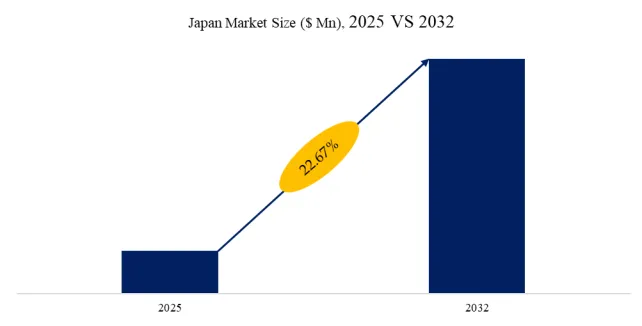
The Japan Carbon Dioxide Gas Recovery Equipment market is projected to grow from US$ 17.16 million in 2025 to US$ 94.67 million by 2032, at a Compound Annual Growth Rate (CAGR) of 22.67% during the forecast period.
Carbon Dioxide Gas Recovery Equipment has emerged as a strategic technology for sustainable industrial operations. By capturing CO₂ from flue gases, process streams, or other industrial emissions, these systems help reduce greenhouse gas outputs while providing a reusable industrial gas. The three main technology categories—Chemical Absorption, Physical Adsorption, and Membrane Separation—offer solutions tailored to different CO₂ concentrations, flow rates, and purity requirements. Chemical absorption is widely applied for high-concentration streams due to its efficiency and high recovery rate, physical adsorption is suitable for moderate-to-low concentrations with lower energy requirements, and membrane separation provides modular, compact solutions for small-scale or distributed applications. This technological diversity enables industries to select systems that best match their operational needs and economic constraints.
The market for CO₂ recovery equipment is experiencing steady growth, driven by multiple converging factors. Increasing regulatory pressure on carbon emissions, voluntary corporate sustainability commitments, and global efforts toward achieving net-zero targets are motivating industrial operators to adopt CO₂ recovery solutions. Furthermore, the rise of Carbon Capture, Utilization, and Storage (CCUS) initiatives has opened opportunities for captured CO₂ to be converted into fuels, chemicals, or other value-added products, enhancing economic viability. Technological advances, such as more efficient adsorbents, advanced amine solvents, and high-performance membranes, are further improving capture efficiency while reducing energy consumption and operational costs.
Applications of CO₂ recovery equipment are expanding beyond traditional large-scale industrial plants. Systems are increasingly used in distributed or small-to-medium scale operations, such as universities, research facilities, pilot plants, and small commercial or manufacturing sites. This trend is supported by the development of compact, modular systems and digital monitoring tools, which allow for flexible deployment, remote operation, and integration with data-driven process optimization strategies. These innovations are enabling a broader set of industries to participate in carbon management and decarbonization efforts.
Despite the positive market trajectory, several challenges remain. High initial capital costs and ongoing energy requirements can limit adoption, particularly in regions or industries with tight financial constraints. Technical complexity and integration issues, such as the need for gas pre-treatment and adaptation to varying gas compositions, can further increase operational risk. Additionally, regulatory uncertainty and inconsistent carbon pricing in many markets can reduce the economic attractiveness of CO₂ recovery investments. Addressing these barriers requires not only technological improvements but also clear policy frameworks and incentives to support widespread adoption.
Looking ahead, the future of CO₂ recovery equipment is closely aligned with global carbon neutrality and circular economy strategies. As industries strive to minimize emissions while maximizing resource efficiency, demand for high-purity, reusable CO₂ will continue to grow. Continuous R&D in absorption materials, adsorption media, and membrane technologies will enhance energy efficiency, lower costs, and expand the applicability of recovery systems. The integration of digital technologies, such as AI-based process control and predictive maintenance, will further improve system performance and operational reliability. In the long term, CO₂ recovery equipment is expected to play a central role in decarbonizing multiple industrial sectors, supporting both regulatory compliance and sustainable production practices worldwide.
Figure00001. Japan Carbon Dioxide Gas Recovery Equipment Market Size (Billion Yuan), 2025 vs 2032
Above data is based on report from QYResearch: Japan Carbon Dioxide Gas Recovery Equipment Market Report 2026-2032 (published in 2026). If you need the latest data, plaese contact QYResearch.
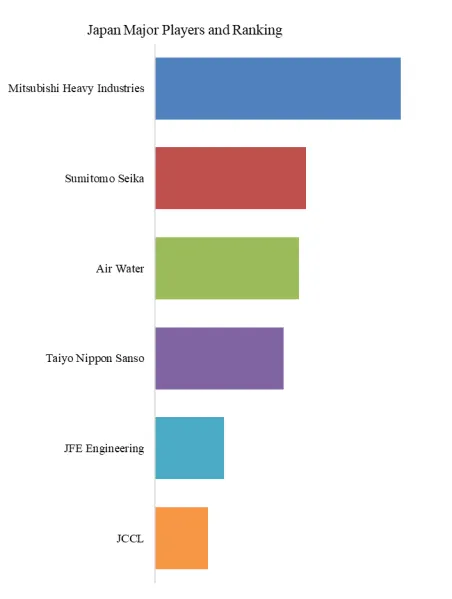
Figure00002. Japan Carbon Dioxide Gas Recovery Equipment Top 6 Players Ranking and Market Share (Ranking is based on the revenue of 2025, continually updated)
Above data is based on report from QYResearch: Japan Carbon Dioxide Gas Recovery Equipment Market Report 2026-2032 (published in 2026). If you need the latest data, plaese contact QYResearch.
According to QYResearch Top Players Research Center, Japan key manufacturers of Carbon Dioxide Gas Recovery Equipment include Mitsubishi Heavy Industries, Sumitomo Seika, Air Water, Taiyo Nippon Sanso, JFE Engineering, etc. In 2025, Japan top five players had a share approximately 92.0% in terms of revenue.
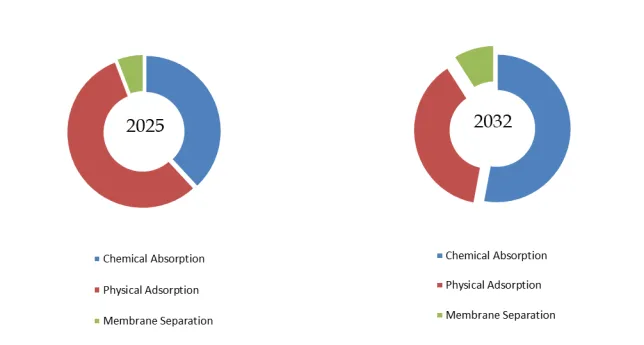
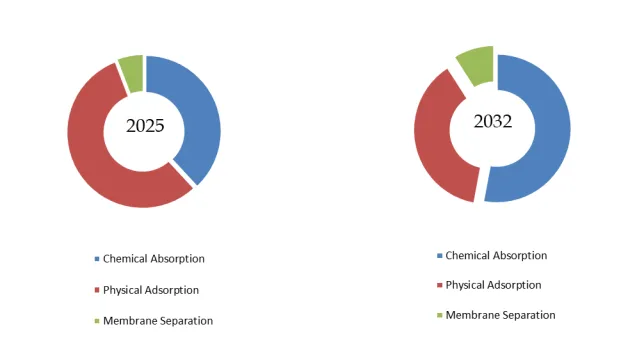
Figure00003. Carbon Dioxide Gas Recovery Equipment, Japan Market Size, Split by Product Segment
Based on or includes research from QYResearch: Japan Carbon Dioxide Gas Recovery Equipment Market Report 2026-2032.
In terms of product type, currently Physical Adsorption is the largest segment, hold a share of 56.03%.
Figure00004. Carbon Dioxide Gas Recovery Equipment, Japan Market Size, Split by Applications Segment
Based on or includes research from QYResearch: Japan Carbon Dioxide Gas Recovery Equipment Market Report 2026-2032.
In terms of product application, currently Flue Gas CO2 Recovery (SGR) is the largest segment, hold a share of 75.47%.
About QYResearch
QYResearch founded in California, USA in 2007.It is a leading global market research and consulting company. With over 17 years’ experience and professional research team in various cities over the world QY Research focuses on management consulting, database and seminar services, IPO consulting (data is widely cited in prospectuses, annual reports and presentations), industry chain research and customized research to help our clients in providing non-linear revenue model and make them successful. We are globally recognized for our expansive portfolio of services, good corporate citizenship, and our strong commitment to sustainability. Up to now, we have cooperated with more than 60,000 clients across five continents. Let’s work closely with you and build a bold and better future.
QYResearch is a world-renowned large-scale consulting company. The industry covers various high-tech industry chain market segments, spanning the semiconductor industry chain (semiconductor equipment and parts, semiconductor materials, ICs, Foundry, packaging and testing, discrete devices, sensors, optoelectronic devices), photovoltaic industry chain (equipment, cells, modules, auxiliary material brackets, inverters, power station terminals), new energy automobile industry chain (batteries and materials, auto parts, batteries, motors, electronic control, automotive semiconductors, etc.), communication industry chain (communication system equipment, terminal equipment, electronic components, RF front-end, optical modules, 4G/5G/6G, broadband, IoT, digital economy, AI), advanced materials industry Chain (metal materials, polymer materials, ceramic materials, nano materials, etc.), machinery manufacturing industry chain (CNC machine tools, construction machinery, electrical machinery, 3C automation, industrial robots, lasers, industrial control, drones), food, beverages and pharmaceuticals, medical equipment, agriculture, etc.
About Us:
QYResearch founded in California, USA in 2007, which is a leading global market research and consulting company. Our primary business include market research reports, custom reports, commissioned research, IPO consultancy, business plans, etc. With over 18 years of experience and a dedicated research team, we are well placed to provide useful information and data for your business, and we have established offices in 7 countries (include United States, Germany, Switzerland, Japan, Korea, China and India) and business partners in over 30 countries. We have provided industrial information services to more than 60,000 companies in over the world.
Contact Us:
If you have any queries regarding this report or if you would like further information, please contact us:
QY Research Inc.
Add: 17890 Castleton Street Suite 369 City of Industry CA 91748 United States
EN: https://www.qyresearch.com
Email: global@qyresearch.com
Tel: 001-626-842-1666(US)
JP: https://www.qyresearch.co.jp










