

Harmonic Drive Market Summary
A harmonic drive precision gear reducer, also known as a strain wave gear, is a precision speed reduction mechanism that utilizes the elastic deformation of a flexible (or flexspline) wheel meshing with a rigid (or circular spline) wheel and a wave generator to transmit motion and torque. Its operation principle is based on the theory of strain wave transmission, where the wave generator induces a controlled elastic deformation in the flexible wheel, creating a tooth meshing disparity that results in speed reduction and torque multiplication. Characterized by high reduction ratios, compactness, lightweight, high rotational accuracy, and quick response, harmonic drives find extensive applications in industrial robots, precision machinery, automotive, and more.
Table 1. Harmonic Drive Precision Gear Reducers Market Drivers
| Key Drivers | Description |
| Increasing Demand for Precision and Reliability | Industrial Automation: The growing trend of industrial automation in manufacturing, automotive, and robotics industries requires highly precise and reliable components. Harmonic gear reducers excel in providing the necessary accuracy and durability, making them indispensable in these applications.
Robotics: In the field of robotics, harmonic gear reducers are crucial for achieving smooth and precise movements, which are essential for tasks requiring high accuracy and repeatability. |
| Government Incentives and Support | Subsidies and Grants: Governments around the world are offering incentives and grants to promote the adoption of advanced manufacturing technologies and automation. These financial supports are helping to drive the demand for harmonic gear reducers.
Research and Development Funding: Government funding for R&D activities is fostering innovation in the design and production of harmonic gear reducers, leading to better products and more diverse applications. |
| Growth in Space and Defence Sectors | Precision Requirements: The space and defence sectors have stringent requirements for precision and reliability. Harmonic gear reducers meet these demands, making them essential components in these industries.
Government Investments: Increased government spending on space exploration and defence projects is creating new opportunities for harmonic gear reducer manufacturers. |
| In the future, the explosive growth of humanoid robots will drive market growth | The explosive growth of the humanoid robot industry is now the core engine driving the market expansion for harmonic drive reducers. This is driven by the critical need within humanoid robots for joint movement that requires extreme precision, smooth operation, and high torque density—needs that harmonic drives are uniquely suited to meet with their superior accuracy and compact, lightweight design. As humanoid robots transition from R&D to large-scale commercialization, the massive procurement demand is not only reducing the unit cost of harmonic drives but also maturing the supply chain and accelerating technological innovation. Looking ahead, this synergy is poised to fuel sustained, high-growth momentum for the harmonic drive market, solidifying its role as an indispensable component in the future of advanced robotics. |
Source: Secondary Sources and QYResearch, 2026
Table 2. Harmonic Drive Precision Gear Reducers Market Trends
| Key Trends | Description |
| Rise of Industrial Automation | Increased Adoption in Robotics: The robotics industry is one of the primary drivers for the harmonic gear reducers market. These components are essential in precision applications where high accuracy and reliability are required.
Manufacturing Sector: The push towards Industry 4.0 and smart factories is boosting the demand for automated systems, which in turn increases the need for harmonic gear reducers. |
| Technological Advancements | Improved Design and Materials: Continuous research and development efforts are leading to more efficient and durable harmonic gear reducers. Advanced materials and innovative designs are reducing wear and tear, extending the lifespan of these components.
PEEK material can significantly reduce weight and lower temperature rise in harmonic reducers, making it more suitable for humanoid robots: PEEK material is primarily used in harmonic reducers to replace the rigid and flexible wheels. Its advantages include lightweight properties (can reduce weight by over 70%), self-lubrication (reducing temperature rise and noise), and corrosion resistance. However, PEEK has lower rigidity (requiring carbon fiber reinforcement), potential creep under long-term high loads (leading to a 20% reduction in lifespan), and high material cost (approximately 5 times that of metal). Leading manufacturers have already filed patents, and new entrants have launched related products: Leading companies such as HDSI and Leaderdrive have already secured relevant patents and possess technical reserves. Shenzhen KOMO Innovation Robot Technology released multiple models of PEEK material harmonic reducers in April 2025, featuring steel wheels and housings made via PEEK material injection molding, planned for use in the upper body joints of humanoid robots. The manufacturing process for PEEK harmonic reducers differs from traditional ones, as PEEK components rely on injection molding or 3D printing, and cost reduction still depends on large-scale production. |
| US and China Lead, with Japan, Korea, and Europe in the Mix: Humanoid Robots Set to Ignite New Global Demand for Harmonic Reducers | The global humanoid robot industry is now characterized by a landscape where the US (with Tesla and Figure AI) and China are the innovation frontrunners, with Japan, Korea, and Europe actively contributing to the ecosystem. As manufacturers in these key regions accelerate the transition to mass production, the market demand for harmonic reducers—a core component for robotic joints—is projected to experience explosive global growth. The stringent requirements for precision, torque, and compactness in humanoid robot joints make harmonic reducers the ideal solution. Looking ahead, this demand surge will be driven by regional synergies: North America and China will be the primary engines for volume growth, while Japan—as a traditional leader in harmonic reducer technology—and Europe will play critical roles in high-end supply and technological innovation. Korea, with its tech giants’ vigorous investments, adds significant momentum. This multi-regional industrial expansion is poised to elevate harmonic reducers to an unprecedented strategic level. |
Source: Secondary Sources and QYResearch, 2026
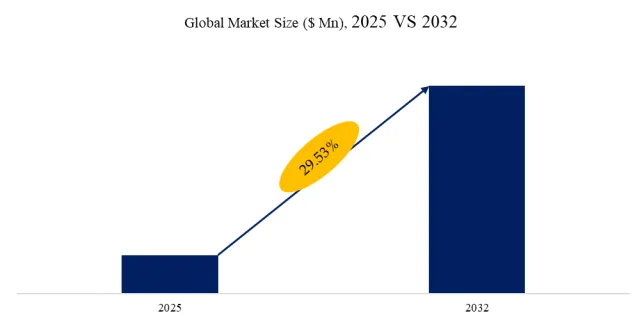
Figure00002. Global Harmonic Drive Market Size (US$ Million), 2025 vs 2032
Above data is based on report from QYResearch: Global Harmonic Drive Market Report 2026-2032 (published in 2026). If you need the latest data, plaese contact QYResearch.
According to the new market research report “Global Harmonic Drive Market Report 2026-2032”, published by QYResearch, the global Harmonic Drive market size is projected to reach USD 2.93 billion by 2032, at a CAGR of 29.53% during the forecast period.
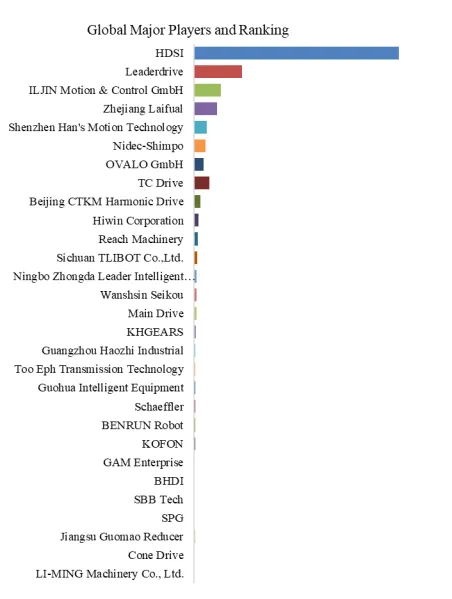
Figure00003. Global Harmonic Drive Top 29 Players Ranking and Market Share (Ranking is based on the revenue of 2025, continually updated)
Above data is based on report from QYResearch: Global Harmonic Drive Market Report 2026-2032 (published in 2026). If you need the latest data, plaese contact QYResearch.
According to QYResearch Top Players Research Center, the global key manufacturers of Harmonic Drive include HDSI, Leaderdrive, ILJIN Motion & Control GmbH, Zhejiang Laifual, Shenzhen Han’s Motion Technology, Nidec-Shimpo, OVALO GmbH, TC Drive, Hiwin Corporation, Reach Machinery, etc. In 2025, the global top 10 players had a share approximately 89.0% in terms of revenue.
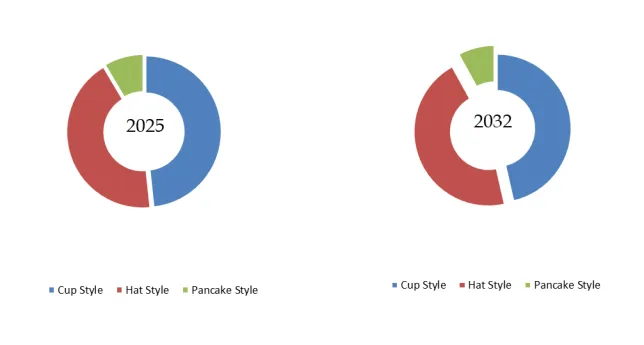
Figure00004. Harmonic Drive, Global Market Size, Split by Product Segment
Based on or includes research from QYResearch: Global Harmonic Drive Market Report 2026-2032.
In terms of product type, currently Cup Style is the largest segment, hold a share of 48.33%.
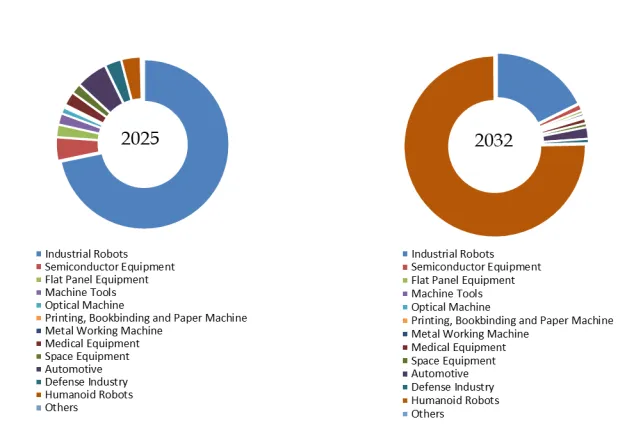
Figure00005. Harmonic Drive, Global Market Size, Split by Applications Segment
Based on or includes research from QYResearch: Global Harmonic Drive Market Report 2026-2032.
In terms of product application, currently Industrial Robots is the largest segment, hold a share of 71.73%.
Figure00006. Harmonic Drive, Global Market Size, Split by Region
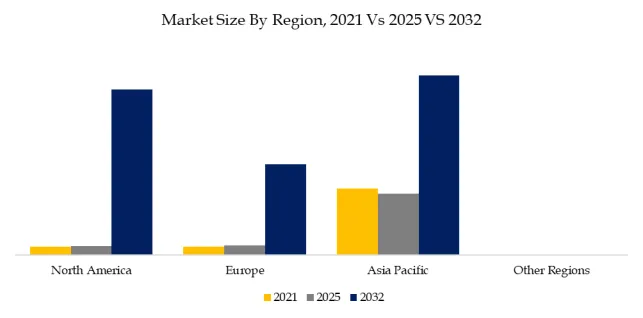
Based on or includes research from QYResearch: Global Harmonic Drive Market Report 2026-2032.
About the Authors
| Wei Qin – Electronics Industry Analyst
qinwei@qyresearch.com
Focusing on the electronics and communications field for a long time, she has observed, followed up and researched on various links in the industry chain, such as semiconductors, consumer electronics, home appliances, fiber optic communications, Internet of Things (IoT) and smart home for a long time. He has rich experience in industry research and has completed many successful cases. |
About QYResearch
QYResearch founded in California, USA in 2007.It is a leading global market research and consulting company. With over 17 years’ experience and professional research team in various cities over the world QY Research focuses on management consulting, database and seminar services, IPO consulting (data is widely cited in prospectuses, annual reports and presentations), industry chain research and customized research to help our clients in providing non-linear revenue model and make them successful. We are globally recognized for our expansive portfolio of services, good corporate citizenship, and our strong commitment to sustainability. Up to now, we have cooperated with more than 60,000 clients across five continents. Let’s work closely with you and build a bold and better future.
QYResearch is a world-renowned large-scale consulting company. The industry covers various high-tech industry chain market segments, spanning the semiconductor industry chain (semiconductor equipment and parts, semiconductor materials, ICs, Foundry, packaging and testing, discrete devices, sensors, optoelectronic devices), photovoltaic industry chain (equipment, cells, modules, auxiliary material brackets, inverters, power station terminals), new energy automobile industry chain (batteries and materials, auto parts, batteries, motors, electronic control, automotive semiconductors, etc.), communication industry chain (communication system equipment, terminal equipment, electronic components, RF front-end, optical modules, 4G/5G/6G, broadband, IoT, digital economy, AI), advanced materials industry Chain (metal materials, polymer materials, ceramic materials, nano materials, etc.), machinery manufacturing industry chain (CNC machine tools, construction machinery, electrical machinery, 3C automation, industrial robots, lasers, industrial control, drones), food, beverages and pharmaceuticals, medical equipment, agriculture, etc.
About Us:
QYResearch founded in California, USA in 2007, which is a leading global market research and consulting company. Our primary business include market research reports, custom reports, commissioned research, IPO consultancy, business plans, etc. With over 18 years of experience and a dedicated research team, we are well placed to provide useful information and data for your business, and we have established offices in 7 countries (include United States, Germany, Switzerland, Japan, Korea, China and India) and business partners in over 30 countries. We have provided industrial information services to more than 60,000 companies in over the world.
Contact Us:
If you have any queries regarding this report or if you would like further information, please contact us:
QY Research Inc.
Add: 17890 Castleton Street Suite 369 City of Industry CA 91748 United States
EN: https://www.qyresearch.com
Email: global@qyresearch.com
Tel: 001-626-842-1666(US)
JP: https://www.qyresearch.co.jp










