

TFT Touch Screen Market Summary
TFT Touch Screen refers to a fully integrated display solution that combines a thin-film transistor liquid crystal display with a touch-sensitive interface, enabling both visual output and user interaction within a single module. It delivers sharp image quality alongside fast and accurate touch response, while maintaining consistent performance over extended operating periods. By embedding touch functionality directly into the display structure, it allows devices to achieve more direct and efficient human–machine interaction without compromising display stability. As end-use products continue to advance toward smarter and more interactive designs, TFT Touch Screens have increasingly become a foundational interface technology across diverse application segments.
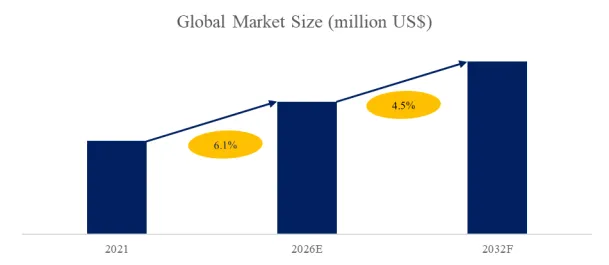
According to the new market research report “Global TFT Touch Screen Market Report 2026-2032”, published by QYResearch, the global TFT Touch Screen market size is projected to reach USD 39.85 billion by 2032, at a CAGR of 4.5% during the forecast period.
Figure00001. Global TFT Touch Screen Market Size (US$ Million), 2021-2032
Above data is based on report from QYResearch: Global TFT Touch Screen Market Report 2026-2032 (published in 2026). If you need the latest data, plaese contact QYResearch.
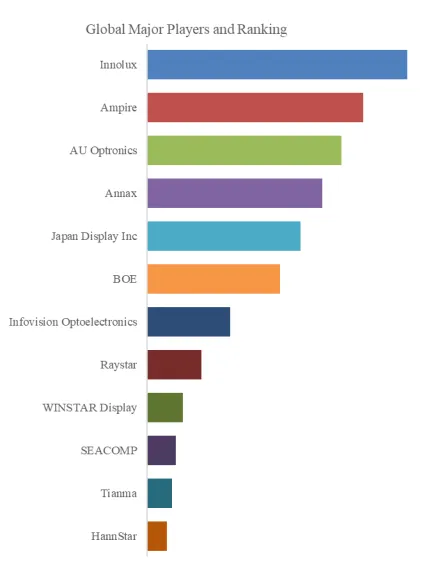
Figure00002. Global TFT Touch Screen Top 12 Players Ranking and Market Share (Ranking is based on the revenue of 2025, continually updated)
Above data is based on report from QYResearch: Global TFT Touch Screen Market Report 2026-2032 (published in 2026). If you need the latest data, plaese contact QYResearch.
According to QYResearch Top Players Research Center, the global key manufacturers of TFT Touch Screen include Innolux, Ampire, AU Optronics, Annax, Japan Display Inc, etc. In 2025, the global top five players had a share approximately 43.0% in terms of revenue.
Industrial Chain
Within the upstream portion of the value chain, TFT Touch Screens are fundamentally supported by two key material components: TFT LCD panels and ITO conductive films. TFT panels establish core display attributes such as resolution, brightness, size configuration, and overall cost positioning, while ITO films function as the conductive layer for touch sensing, directly impacting responsiveness and signal integrity. Leading panel suppliers include BOE Technology Group, CSOT, and AUO. In the ITO segment, Changxin Technology, Nitto Denko, and Toray maintain established process expertise. The consistency and performance of these upstream inputs play a decisive role in determining display quality, touch reliability, and production yield.
The midstream stage is where system integration and technical differentiation are most concentrated. It encompasses touch architecture design, layer stacking optimization, optical bonding and lamination processes, controller IC tuning, firmware calibration, module assembly, and comprehensive reliability validation. At this stage, manufacturers must carefully optimize multiple parameters, including touch precision, display uniformity, energy efficiency, and structural durability, while ensuring stable functionality under varying environmental conditions such as temperature and humidity. Strong engineering execution and robust quality control systems are essential to minimize defect rates and enable scalable production.
Downstream, TFT Touch Screens function as the primary interface for both information display and user interaction across a wide array of applications, including consumer electronics, smart home systems, industrial control equipment, and medical devices. Key end customers include Apple, Samsung Electronics, Xiaomi, Amazon, Google, Haier, Siemens, Schneider Electric, Philips, GE HealthCare, and Mindray. As intelligent systems continue to expand across industries, the deployment scope of TFT Touch Screens is steadily broadening, reinforcing their role as a standard human–machine interface solution.
Influencing Factors
Drivers:
Market expansion for TFT Touch Screens is largely underpinned by the ongoing shift toward smarter and more visually driven end products. In consumer electronics and smart home applications, users increasingly expect seamless visual presentation combined with intuitive touch interaction, elevating the role of integrated display solutions. At the same time, industrial automation and medical equipment are accelerating the adoption of digital interfaces, further broadening demand. Supporting this trend, a well-established TFT LCD ecosystem and continuous advancements in touch sensing technologies enable manufacturers to deliver solutions that effectively align cost efficiency with performance requirements.
Challenges:
Despite steady demand growth, the industry remains constrained by pricing pressure and limited product differentiation. Fundamental display and touch capabilities can be reproduced with relative ease, leading many competitors to focus on cost-driven strategies that compress margins. Moreover, the midstream manufacturing process introduces additional complexity, as it requires high-precision bonding, consistent yield management, and rigorous long-term reliability validation. These factors place sustained demands on production expertise and quality assurance systems.
Trend:
Future development is expected to center on performance enhancement and structural optimization. Higher pixel density, slimmer module designs, and increased functional integration will define the next phase of product evolution. In parallel, deeper integration of display and touch layers, along with improvements in optical clarity and environmental durability, will shape technology upgrades. As deployment expands into more demanding environments such as industrial control and healthcare, suppliers with proven reliability, stable performance, and comprehensive quality management capabilities are expected to strengthen their competitive positioning.
About The Authors
Lead Author: Julie Zhang
Email: zhangjianan@qyresearch.com
Julie Zhang, a key industry analyst a industry analyst of QYResearch (Beijing Hengzhou Bozhi International Information Consulting Co.,Ltd.), focuses on market research and trend forecasting of the entire industry chain upstream and downstream of the electric vehicle and lithium battery industry, we are good at providing strategic market insights through in-depth data mining, focusing on trends and technological innovations in the automotive and lithium battery industry, and helping the company achieve sustainable success in the highly competitive market environment. Typical studies include Electronic Fusing IC, EV Skateboard Platform, Electric Vehicle Controller, Automotive Interior Monitoring System, Automotive PCIe Switch Chips, End-To-End Automotive Software Platform, LiFSI Electrolyte Salts, Portable Power Supply, Outdoor Mobile Powers, and Solar Energy Storage Battery, etc.
About QYResearch
QYResearch founded in California, USA in 2007. It is a leading global market research and consulting company. With over 17 years’ experience and professional research team in various cities over the world QY Research focuses on management consulting, database and seminar services, IPO consulting (data is widely cited in prospectuses, annual reports and presentations), industry chain research and customized research to help our clients in providing non-linear revenue model and make them successful. We are globally recognized for our expansive portfolio of services, good corporate citizenship, and our strong commitment to sustainability. Up to now, we have cooperated with more than 60,000 clients across five continents. Let’s work closely with you and build a bold and better future.
QYResearch is a world-renowned large-scale consulting company. The industry covers various high-tech industry chain market segments, spanning the semiconductor industry chain (semiconductor equipment and parts, semiconductor materials, ICs, Foundry, packaging and testing, discrete devices, sensors, optoelectronic devices), photovoltaic industry chain (equipment, cells, modules, auxiliary material brackets, inverters, power station terminals), new energy automobile industry chain (batteries and materials, auto parts, batteries, motors, electronic control, automotive semiconductors, etc.), communication industry chain (communication system equipment, terminal equipment, electronic components, RF front-end, optical modules, 4G/5G/6G, broadband, IoT, digital economy, AI), advanced materials industry Chain (metal materials, polymer materials, ceramic materials, nano materials, etc.), machinery manufacturing industry chain (CNC machine tools, construction machinery, electrical machinery, 3C automation, industrial robots, lasers, industrial control, drones), food, beverages and pharmaceuticals, medical equipment, agriculture, etc.
About Us:
QYResearch founded in California, USA in 2007, which is a leading global market research and consulting company. Our primary business include market research reports, custom reports, commissioned research, IPO consultancy, business plans, etc. With over 18 years of experience and a dedicated research team, we are well placed to provide useful information and data for your business, and we have established offices in 7 countries (include United States, Germany, Switzerland, Japan, Korea, China and India) and business partners in over 30 countries. We have provided industrial information services to more than 60,000 companies in over the world.
Contact Us:
If you have any queries regarding this report or if you would like further information, please contact us:
QY Research Inc.
Add: 17890 Castleton Street Suite 369 City of Industry CA 91748 United States
EN: https://www.qyresearch.com
Email: global@qyresearch.com
Tel: 001-626-842-1666(US)
JP: https://www.qyresearch.co.jp










