

Daily-use Glass Bottles Market Summary
Daily-use glass bottles are glass containers made primarily from raw materials such as quartz sand and soda ash, through high-temperature melting, molding, and annealing processes. They are widely used in daily life for packaging and holding various consumer goods. Their core function is to utilize the excellent barrier properties, chemical stability, and transparent or semi-transparent visual characteristics of glass to safely, hygienically, and reliably store liquid or solid contents such as food and beverages (such as liquor, beer, condiments, canned goods, and drinks), cosmetics, and pharmaceutical products. They also take into account the environmentally friendly attribute of being recyclable, forming an indispensable basic packaging container in many areas of people’s livelihood, from food processing and pharmaceuticals to daily chemical cosmetics.
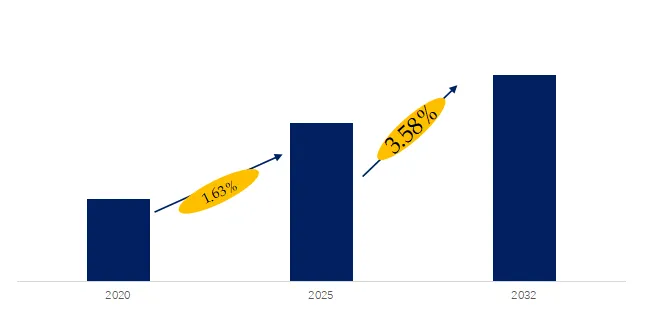
According to the new market research report “Global Daily-use Glass Bottles Market Report 2025-2032″, published by QYResearch, the global Daily-use Glass Bottles market size is projected to grow from USD 20.64 billion in 2025 to USD 26.47 billion by 2032, at a CAGR of 3.58% during the forecast period.
Figure00001. Global Daily-use Glass Bottles Market Size (US$ Million), 2020-2032
Above data is based on report from QYResearch: Global Daily-use Glass Bottles Market Report 2025-2032 (published in 2025). If you need the latest data, plaese contact QYResearch.
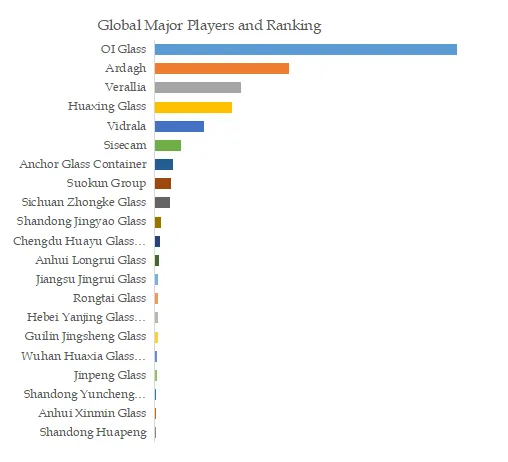
Figure00002. Global Daily-use Glass Bottles Top 21 Players Ranking and Market Share (Ranking is based on the revenue of 2025, continually updated)
Above data is based on report from QYResearch: Global Daily-use Glass Bottles Market Report 2025-2032(published in 2025). If you need the latest data, plaese contact QYResearch.
This report profiles key players of Daily-use Glass Bottles such as OI Glass, Ardagh, Verallia, Huaxing Glass, Vidrala, etc.
In 2025, the global top five Daily-use Glass Bottles players account for 47.69% of market share in terms of revenue. Above figure shows the key players ranked by revenue in Daily-use Glass Bottles.
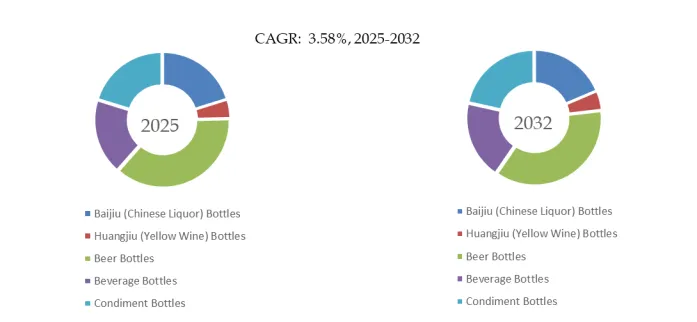
Figure00003. Daily-use Glass Bottles, Global Market Size, Split by Product Segment
Based on or includes research from QYResearch: Global Daily-use Glass Bottles Market Report 2025-2032.
In terms of product type, Beer Bottle is the largest segment, hold a share of 10.08%.
Key Driving Factors:
1. Global Environmental Policies Drive Glass Bottle Market Growth. Global environmental policies and increasing consumer awareness of green consumption have created vast development opportunities for the glass bottle industry. With the EU, North America, and many Asian countries restricting the use of single-use plastics, the market demand for glass bottles, as a recyclable alternative, will continue to rise, especially in the beverage, food, and cosmetics industries.
2. Technological Advancements Improve Production Efficiency and Product Innovation. Technological advancements drive production efficiency and product innovation. Automated molding, lightweight design, intelligent quality inspection, and innovative surface decoration processes enable companies to reduce costs, improve aesthetics and functionality, and meet the demands of the high-end market. This also provides technological feasibility for SMEs to enter the market.
3. Consumption Upgrading Drives High-End Market Expansion. Consumption upgrading and personalized demands are driving the growth of the high-end market. Customized bottle shapes, creative designs, and functional packaging have become key means of brand building. Especially in the perfume, wine, and health beverage sectors, high-quality glass bottles have become an important factor in consumers’ purchasing decisions, driving the continued expansion of the high-end market.
4. Emerging Market Development Brings Overseas Growth Opportunities. The economic development and accelerated urbanization of emerging markets provide new growth points for the industry. Demand for everyday glass bottles is increasing year by year in Asian, Latin American, and African markets. With the rising purchasing power of the middle class, the penetration rate of glass bottles in beverage and food packaging will further increase, providing opportunities for companies to expand into overseas markets.
Key Hindering Factors:
1. Raw Material Price Fluctuation Risk. The prices of key raw materials for the glass industry, such as silica sand and soda ash, are significantly affected by the global supply chain and international market fluctuations. Instability in raw material prices can directly lead to increased production costs, thereby squeezing profit margins. For example, tight supply and demand in the international market or increased transportation costs can trigger a rapid rise in raw material prices. To address this risk, companies typically need to adopt multiple risk management strategies, including signing long-term procurement contracts, establishing diversified supply channels, and optimizing inventory management to achieve cost stability and supply continuity.
2. High Energy Consumption and Environmental Compliance Pressure Risk. The continuous operation of high-temperature furnaces in glass production results in huge energy consumption, accompanied by large amounts of waste gas and solid waste emissions. With increasingly stringent environmental policies, companies that fail to meet relevant emission standards or energy use regulations may face direct economic penalties such as fines, production restrictions, or even shutdowns. This not only increases production costs but may also weaken the company’s production capacity and profitability. Therefore, companies need to reduce environmental compliance risks through technological upgrades, energy conservation and emission reduction, and optimization of clean production processes.
3. Market Competition and Price War Risk. The glass industry is characterized by numerous enterprises and severe product homogenization, especially in the low-to-mid-end market where price competition is particularly fierce. Frequent price wars can lead to a decline in gross profit margins, further forcing companies to cut R&D investment and brand building budgets, thus affecting their long-term development potential and market competitiveness. Furthermore, over-reliance on low-price competition may weaken a company’s image and bargaining power in the high-end market, hindering the implementation of its sustainable development strategy.
4. Risk of Insufficient Technological Innovation and Design Capabilities. As consumer demand for personalized, high-quality glass packaging continues to rise, companies that lag behind in technological innovation and design capabilities will face the risk of declining product competitiveness. This could lead to the loss of high-end customers, a decline in market share, and exacerbate the overall operational pressure on the industry. To maintain market competitiveness, companies need to continuously improve their R&D capabilities, introduce innovative materials and processes, and focus on product differentiation design to meet ever-changing consumer demands.
Industry Development Opportunities:
1. The green trend is driving glass bottles to replace plastics. The daily-use glass bottle industry is gradually moving towards green and environmentally friendly practices. Influenced by global plastic pollution and related policy and regulatory restrictions, companies are placing greater emphasis on the research and application of recycling and biodegradable materials, making glass bottles increasingly advantageous in replacing plastic bottles. Policies in many countries encourage the use of recyclable packaging materials and raise overall environmental standards in the industry, further driving market demand growth.
2. Raw material price fluctuations affect industry profitability. While industry capacity expansion and market demand are growing in tandem, raw material price fluctuations remain a significant factor restricting profitability. The prices of glass raw materials such as silica sand, soda ash, and limestone fluctuate with changes in the global supply chain and international market environment, directly impacting companies’ cost structure and profitability. To address this risk, companies typically control costs through inventory management, long-term supply agreements, and technological optimization.
3. Market competition prompts companies to enhance differentiation and service capabilities. Increasing market competition drives companies to seek differentiated advantages through brand building, technological innovation, and sales channel expansion. The high-end market focuses more on product quality and aesthetic value, while the mid-to-low-end market emphasizes cost-effectiveness and supply stability. Industry enterprises are continuously investing in R&D, logistics, customer service, and supply chain management to increase market share and customer loyalty, achieving long-term, stable development.
4. Digitalization and intelligent manufacturing enhance efficiency and competitiveness. Digitalization and intelligent manufacturing technologies are gradually penetrating the industry. Through production data monitoring, intelligent production lines, and remote management systems, enterprises can optimize production efficiency, reduce scrap rates, and improve supply chain responsiveness. This not only improves the operating cost structure but also provides technological support for meeting the market’s customized and flexible demands, further enhancing the enterprise’s market competitiveness and risk resistance.
About QYResearch
QYResearch founded in California, USA in 2007.It is a leading global market research and consulting company. With over 17 years’ experience and professional research team in various cities over the world QY Research focuses on management consulting, database and seminar services, IPO consulting (data is widely cited in prospectuses, annual reports and presentations), industry chain research and customized research to help our clients in providing non-linear revenue model and make them successful. We are globally recognized for our expansive portfolio of services, good corporate citizenship, and our strong commitment to sustainability. Up to now, we have cooperated with more than 60,000 clients across five continents. Let’s work closely with you and build a bold and better future.
QYResearch is a world-renowned large-scale consulting company. The industry covers various high-tech industry chain market segments, spanning the semiconductor industry chain (semiconductor equipment and parts, semiconductor materials, ICs, Foundry, packaging and testing, discrete devices, sensors, optoelectronic devices), photovoltaic industry chain (equipment, cells, modules, auxiliary material brackets, inverters, power station terminals), new energy automobile industry chain (batteries and materials, auto parts, batteries, motors, electronic control, automotive semiconductors, etc.), communication industry chain (communication system equipment, terminal equipment, electronic components, RF front-end, optical modules, 4G/5G/6G, broadband, IoT, digital economy, AI), advanced materials industry Chain (metal materials, polymer materials, ceramic materials, nano materials, etc.), machinery manufacturing industry chain (CNC machine tools, construction machinery, electrical machinery, 3C automation, industrial robots, lasers, industrial control, drones), food, beverages and pharmaceuticals, medical equipment, agriculture, etc.
About Us:
QYResearch founded in California, USA in 2007, which is a leading global market research and consulting company. Our primary business include market research reports, custom reports, commissioned research, IPO consultancy, business plans, etc. With over 18 years of experience and a dedicated research team, we are well placed to provide useful information and data for your business, and we have established offices in 7 countries (include United States, Germany, Switzerland, Japan, Korea, China and India) and business partners in over 30 countries. We have provided industrial information services to more than 60,000 companies in over the world.
Contact Us:
If you have any queries regarding this report or if you would like further information, please contact us:
QY Research Inc.
Add: 17890 Castleton Street Suite 369 City of Industry CA 91748 United States
EN: https://www.qyresearch.com
Email: global@qyresearch.com
Tel: 001-626-842-1666(US)
JP: https://www.qyresearch.co.jp










