日別アーカイブ: 2026年4月23日

Robotic Collision Sensor Research:CAGR of 12.5% during the forecast period

Robotic Collision Sensor Market Summary

Robot collision sensor is an important safety component of robot, which is used to detect whether accidental contact or collision occurs between robot and surrounding environment or object in real time, to trigger emergency stop or adjust motion trajectory to protect the safety of people, robot itself and peripheral equipment.


According to the new market research report “Global Robotic Collision Sensor Market Report 2026-2032″, published by QYResearch, the global Robotic Collision Sensor market size is projected to grow from USD 61.44 million in 2025 to USD 140 million by 2032, at a CAGR of 12.5% during the forecast period.


Above data is based on report from QYResearch: Global Robotic Collision Sensor Market Report 2026-2032(published in 2026). If you need the latest data, plaese contact QYResearch.


Table. Global Robotic Collision Sensor Main Manufacturers

Headquarter Company Business Introduction
USA ATI Industrial Automation ATI Industrial Automation is a manufacturer of robotic automation equipment, specializing in engineering, research and development, and production of robot end effectors and robot accessories. The company’s main products include robot tool changers, multi-axis force/torque sensors, robot collision sensors, compliance devices, material removal tools, and couplers, which are widely used in industrial robots, collaborative robots, medical robots, and automated assembly, grinding, and inspection applications.

ATI’s core competitiveness lies in its high-precision force sensing and robot end effector technologies, and its products have been widely adopted in global manufacturing automation systems.

USA RAD RAD is a manufacturer of robotic automation attachments and is considered one of the early inventors of robot collision sensor technology. The company primarily designs and manufactures robot end effector attachments, including robot collision sensors, compliance devices, deburring tools, robot grippers, and tool changers. Its core product, the Ultimatic™ collision sensor series, mechanically detects robot contact with obstacles and sends a stop signal to the control system to protect the robot and tooling.
USA AGI AGI Automation is an industrial automation component manufacturer specializing in the design and production of pneumatic automation components and robot end effectors. The company’s products include pneumatic grippers, linear and rotary actuators, robot tool changers, feeding mechanisms, overload protection and collision sensors, and other automated assembly equipment components, widely used in manufacturing processes such as assembly, handling, packaging, loading/unloading, and parts transfer.

AGI focuses on pneumatic gripping and automated assembly mechanisms as its core technologies and is a professional manufacturer of industrial robot accessories and assembly automation components.

Sweden Robot System Robot System Products AB (RSP) is a manufacturer of robot accessories and automation components, specializing in the research and development and production of robot end effector interfaces and safety devices. The company’s main products include robot collision sensors, tool changers, electrical and fluid connection modules, and robot mounting and protection components, which are widely used in automotive manufacturing, welding, assembly, and industrial automation production lines. RSP’s core business focuses on modular robot interfaces and collision protection technology.
German SCHUNK SCHUNK is an industrial automation and gripping technology manufacturer and one of the world’s leading suppliers of gripping systems and robot end effectors. The company’s main products include mechanical and electric grippers, machine tool chucks, tool clamping systems, robot automation modules, and collaborative robot grasping solutions, widely used in machine tooling, automotive manufacturing, electronics assembly, and industrial robot automation. SCHUNK’s core competitiveness lies in its high-precision gripping and modular automation technologies.
Italy EFFECTO GROUP EFFECTO GROUP is an industrial automation equipment manufacturer specializing in the research and development and production of robot end effectors and workpiece clamping solutions. Through its brands, the company offers pneumatic and electric grippers, tool changers, robot collision sensors, compliance devices, deburring tools, self-centering vises, and clamping systems, which are widely used in the automotive, aerospace, machine tool, medical, food, and general manufacturing automation industries.

EFFECTO GROUP positions itself as a supplier of industrial robot end effectors and automated clamping technologies, serving global automated production lines and robot system integration applications.

Denmark OnRobot OnRobot is a manufacturer of robot end effectors, formed by the consolidation of several robot accessory companies. The company focuses on providing plug-and-play automation solutions for collaborative and industrial robots.

OnRobot’s main products include electric and adaptive grippers, vacuum grippers, force/torque sensors, vision systems, grinding and screw fastening tools, etc., supporting major robot platforms such as UR, ABB, FANUC, and KUKA. These products are widely used in automation scenarios such as assembly, handling, packaging, machine tool loading and unloading, and quality inspection. The company positions itself as a general-purpose end effector supplier within the collaborative robot ecosystem.

Switzerland Bota Systems Bota Systems AG is a robotic sensor technology company specializing in the research and development and production of multi-axis force/torque sensors and robot force control solutions. The company’s main products include six-dimensional force/torque sensors, robot end-effector force control modules, and software interfaces, used for force feedback control in applications such as precision assembly, grinding, polishing, and human-robot collaboration. Bota Systems’ sensors are characterized by compact design, high sampling rates, and ease of integration, supporting robot platforms such as UR, Franka, and KUKA, serving the fields of industrial automation and robotics research.
German SICK AG SICK AG is an industrial sensor and automation solutions manufacturer and one of the world’s leading suppliers of industrial sensing and machine vision technologies. The company’s main products include photoelectric sensors, laser scanners, machine vision systems, industrial safety sensors, encoders, and gas analyzers, which are widely used in industrial automation, logistics and warehousing, automotive manufacturing, process control, and robot safety systems. SICK possesses strong technological expertise and global market influence in industrial safety and intelligent sensing technologies.
German Pepperl+Fuchs Pepperl+Fuchs is a manufacturer of industrial sensing and explosion-proof automation equipment, and one of the world’s leading suppliers of industrial sensors and intrinsically safe explosion-proof technologies. The company’s business is primarily divided into two segments: industrial sensors (such as proximity sensors, photoelectric sensors, encoders, and RFID systems) and process automation and explosion-proof equipment. Its products are widely used in factory automation, logistics, petrochemicals, power generation, and hazardous environments. Pepperl+Fuchs’ core competitiveness lies in industrial sensing and intrinsic safety technologies.
China Duco Robot Duco Robot is a manufacturer of collaborative and desktop robots, specializing in the research and development and production of lightweight industrial robots, collaborative robots, and educational robots. The company’s main products include desktop robotic arms, collaborative robots, SCARA robots, and automated workstation solutions, widely used in electronic assembly, 3C manufacturing, scientific research and education, medical, and light industrial automation. Duco Robot’s core market positioning is based on miniaturized, easy-to-program, and cost-effective robot products.

Above data is based on report from QYResearch: Global Robotic Collision Sensor Market Report 2026-2032 (published in 2026). If you need the latest data, plaese contact QYResearch.


Robot Collision Sensor Supply Chain Analysis:

Upstream: Primarily includes suppliers of core components such as force/torque sensing chips, MEMS accelerometers, strain gauges, piezoelectric elements, elastomer structural components, signal processing ICs, and connectors.

Midstream: Manufacturers of collision sensors and safety monitoring modules (such as six-dimensional force sensor manufacturers, robot safety system manufacturers, and end effector sensor manufacturers), responsible for structural design, calibration, algorithms, and safety certification.

Downstream: Industrial robot manufacturers, collaborative robot manufacturers, and automation system integrators, ultimately applying these technologies in automotive manufacturing, electronic assembly, logistics automation, service robots, and human-robot collaboration scenarios.

Overall, the technological barriers in this industry chain are concentrated in high-precision force sensing, real-time signal processing algorithms, safety function certification, and robot control system integration capabilities, belonging to the core functional sensor sub-sector of robots.


Key Drivers:

The core driving force behind the growth of the robot collision sensor market stems firstly from the global wave of industrial automation upgrades. The deepening of smart manufacturing and Industry 4.0 has led to the continuous expansion of robot applications in industries such as automotive, electronics, and food processing, directly driving the rigid demand for safety sensing components. Simultaneously, the rise of human-robot collaboration has become a key driving force. In the new production model where humans and robots share workspaces, higher demands are placed on real-time and accurate collision avoidance protection, prompting sensor technology to develop towards higher sensitivity and faster response speeds. Technological progress and innovation are the internal engines. Continuous breakthroughs in technologies such as LiDAR, multi-sensor fusion, and AI algorithm optimization have significantly improved the accuracy, reliability, and intelligence level of sensors, while continuously reducing their costs, gradually lowering the application threshold. Strong policy support provides a favorable development environment for the market. Governments around the world have introduced plans and financial support policies to encourage the development of robots and core components in order to promote the intelligent transformation and upgrading of industries. The rapid expansion of downstream application scenarios has brought new growth poles, extending from traditional industrial fields to emerging fields such as service robots, special robots, healthcare, and even humanoid robots. These complex scenarios place diversified and demanding requirements on collision perception. Finally, the rapid increase in the localization rate of sensors is also an undeniable driving force. Domestic enterprises have made significant progress in technological research and development, with some products reaching international advanced levels. Driven by both market demand and national strategy, the process of domestic substitution has accelerated, injecting new vitality into the market.

Main Obstacles:

The primary obstacle facing robot collision sensors lies in their technological maturity and complexity. Achieving high precision and high reliability still requires overcoming many challenges, especially in complex and dynamic real-world industrial scenarios filled with electromagnetic interference. The issues of false alarm rate, response delay, and long-term stability of sensors have not yet been perfectly resolved. Cost pressure is another prevalent constraint. The research and development and production costs of high-performance sensors are high, and their price still constitutes a significant investment threshold for many small and medium-sized manufacturing enterprises, especially in applications pursuing ultimate cost-effectiveness, where customers are extremely price-sensitive. The highly fragmented and non-standardized nature of downstream application scenarios also presents significant obstacles. Different industries, different tasks, and even different robot models have differentiated requirements for sensor size, performance, interfaces, and installation methods, making it difficult to achieve standardized mass production and resulting in high research and development and market expansion costs. Insufficient market awareness and education also hinder the speed of adoption. Many end-users, especially those in traditional industries, have limited understanding of the necessity, technical principles, and value of collision sensors, often viewing them as “optional accessories” that increase costs rather than “core components” that ensure safety and efficiency, resulting in a lengthy decision-making process. Furthermore, industry standards and certification systems are still evolving, lacking fully unified and widely accepted testing standards. This introduces uncertainty and additional costs into product performance comparisons, quality assessments, and market access. The shortage of professional talent, particularly interdisciplinary R&D personnel with expertise in mechanics, electronics, and software algorithms, also restricts rapid technological iteration and innovative breakthroughs. Finally, the stability of the supply chain, especially the supply of high-end chips and special materials, may become a potential risk in the complex international trade environment, affecting product delivery and cost control.

Industry Development Opportunities:

The robot collision sensor industry is experiencing unprecedented development opportunities. Firstly, the industrialization of humanoid robots has brought exponential growth in demand. To simulate human perception, individual humanoid robots need to be equipped with complex sensor arrays, including force, touch, and vision sensors, directly opening up a new market worth hundreds of billions. Secondly, continuous technological breakthroughs have injected strong momentum into the industry. Large-scale artificial intelligence models have significantly improved the intelligence level of multimodal perception. Multi-sensor fusion, edge computing, and self-learning algorithms are constantly optimizing sensor accuracy and response speed. Meanwhile, new materials such as flexible carbon nanotube substrates have significantly reduced manufacturing costs. The rapid expansion of application scenarios has provided vast opportunities. Sensor applications are rapidly extending from traditional industrial manufacturing to public services such as healthcare, smart agriculture, low-altitude economy, and home care, with increasingly diversified demands. Strong policy and capital support provide a solid backing. Governments worldwide have introduced industry incentive policies, and China has established a multi-billion-dollar industry fund. Meanwhile, the capital market is paying close attention, with a large influx of funds supporting technology research and development and capacity expansion. Finally, the accelerated process of domestic substitution has created a historic window of opportunity for domestic enterprises. Domestic companies have achieved substantial breakthroughs in core areas such as high-precision force sensors and electronic skin, highlighting the cost-effectiveness advantage of their products and continuously increasing their market share, thus reshaping the global competitive landscape.


About The Authors

Meng Yu Lead Author

Email: yumeng@qyresearch.com

QYResearch Nanning Research Center analyst, main research areas include semiconductors, chemical materials, electronics and other fields, some of the sub-research topics include Motor for semiconductor equipment, air bearing stage, low CTE ceramic material, high purity oleic acid, camera soc, intelligent energy management system, etc., also engaged in market segment report development, and participate in the writing of customized projects.


About QYResearch

QYResearch founded in California, USA in 2007.It is a leading global market research and consulting company. With over 17 years’ experience and professional research team in various cities over the world QY Research focuses on management consulting, database and seminar services, IPO consulting (data is widely cited in prospectuses, annual reports and presentations), industry chain research and customized research to help our clients in providing non-linear revenue model and make them successful. We are globally recognized for our expansive portfolio of services, good corporate citizenship, and our strong commitment to sustainability. Up to now, we have cooperated with more than 60,000 clients across five continents. Let’s work closely with you and build a bold and better future.

QYResearch is a world-renowned large-scale consulting company. The industry covers various high-tech industry chain market segments, spanning the semiconductor industry chain (semiconductor equipment and parts, semiconductor materials, ICs, Foundry, packaging and testing, discrete devices, sensors, optoelectronic devices), photovoltaic industry chain (equipment, cells, modules, auxiliary material brackets, inverters, power station terminals), new energy automobile industry chain (batteries and materials, auto parts, batteries, motors, electronic control, automotive semiconductors, etc.), communication industry chain (communication system equipment, terminal equipment, electronic components, RF front-end, optical modules, 4G/5G/6G, broadband, IoT, digital economy, AI), advanced materials industry Chain (metal materials, polymer materials, ceramic materials, nano materials, etc.), machinery manufacturing industry chain (CNC machine tools, construction machinery, electrical machinery, 3C automation, industrial robots, lasers, industrial control, drones), food, beverages and pharmaceuticals, medical equipment, agriculture, etc.


About Us:
QYResearch founded in California, USA in 2007, which is a leading global market research and consulting company. Our primary business include market research reports, custom reports, commissioned research, IPO consultancy, business plans, etc. With over 18 years of experience and a dedicated research team, we are well placed to provide useful information and data for your business, and we have established offices in 7 countries (include United States, Germany, Switzerland, Japan, Korea, China and India) and business partners in over 30 countries. We have provided industrial information services to more than 60,000 companies in over the world.

Contact Us:
If you have any queries regarding this report or if you would like further information, please contact us:
QY Research Inc.
Add: 17890 Castleton Street Suite 369 City of Industry CA 91748 United States
EN: https://www.qyresearch.com
Email: global@qyresearch.com
Tel: 001-626-842-1666(US)
JP: https://www.qyresearch.co.jp

カテゴリー: 未分類 | 投稿者huangsisi 14:30 | コメントをどうぞ

RFID Tag Printing Materials: Encodable Labels with Embedded Antennas for Inventory Tracking, Asset Management & Supply Chain

Global Leading Market Research Publisher Global Info Research announces the release of its latest report “RFID Printing Consumables – Global Market Share and Ranking, Overall Sales and Demand Forecast 2026-2032″. As retailers, logistics providers, and healthcare facilities face escalating pressure to improve inventory accuracy (traditional barcodes require line-of-sight scanning, labor-intensive), reduce shrinkage (retail theft costs US$ 100B+ annually), and enable real-time asset tracking (hospitals lose 10-20% of equipment), RFID printing consumables have become essential for high-volume encoding and printing of smart labels. RFID Printing Consumables refer to the range of materials used in the process of printing on RFID (Radio Frequency Identification) labels or tags. These consumables include RFID labels embedded with integrated circuits and antennas, thermal transfer ribbons for printing durable text or barcodes, direct thermal RFID labels that require no ribbon. The labels may be made of paper or synthetic materials, depending on durability requirements. RFID printing consumables are essential in ensuring accurate encoding, clear print quality, and reliable tag performance across applications such as logistics, retail, healthcare, and manufacturing. Modern RFID smart labels feature UHF (860-960MHz) or NFC (13.56MHz) inlays, printable surfaces (direct thermal or thermal transfer), and pressure-sensitive adhesives for various substrates. Based on current situation and impact historical analysis (2021-2025) and forecast calculations (2026-2032), this report provides a comprehensive analysis of the global RFID Printing Consumables market, including market size, share, demand, industry development status, and forecasts for the next few years.

The global market for RFID Printing Consumables was estimated to be worth US$ 5,704 million in 2025 and is projected to reach US$ 10,240 million, growing at a CAGR of 8.9% from 2026 to 2032.

【Get a free sample PDF of this report (Including Full TOC, List of Tables & Figures, Chart)】
https://www.qyresearch.com/reports/6094212/rfid-printing-consumables


1. Market Size Trajectory & Recent Data (2025–2026 Update)

In H1 2026, global RFID printing consumables shipments surged 11% YoY, driven by three factors: (i) retail RFID mandate (Walmart, Target, Macy’s require UHF tags on apparel, footwear); (ii) healthcare asset tracking (hospitals tagging IV pumps, wheelchairs, beds); (iii) logistics automation (airlines baggage tracking, parcel sortation). Unlike non-RFID labels (CAGR 2%), RFID consumables are outperforming at 10.5% CAGR due to inventory accuracy benefits (99%+ vs. 85% for barcode).


2. Technology Deep-Dive: Tags/Labels vs. Thermal Transfer Ribbons

Tags and Labels (75% of 2025 revenue): RFID inlays (IC + antenna) laminated with printable facestock (paper, polypropylene, polyester, vinyl). Available in UHF (retail, logistics) and HF/NFC (healthcare, access control). Avery Dennison’s 2026 “AD-382″ UHF inlay (860-960MHz) features 8-meter read range, 10,000+ write cycles, and printable direct thermal or thermal transfer surface. Largest segment.

Thermal Transfer Ribbons (25% of revenue): Wax, wax/resin, or resin ribbons for printing barcodes, text, logos onto RFID labels. Resin ribbons (durable, chemical/scratch resistant) for harsh environments (industrial, outdoor). Fastest-growing at 12% CAGR (high-durability applications). Zebra’s 2026 “Premium Resin R6000″ ribbon (1,500m length) prints on polyester RFID labels, rated for 10+ years outdoor, chemical exposure (oils, solvents).

Key specifications: Tag frequency (UHF 860-960MHz, HF 13.56MHz, LF 125kHz), read range (1-12m), memory (EPC 96-496 bits, user memory 0-8kb), facestock (paper, PP, PET, vinyl), adhesive (permanent, removable, high-tack), ribbon type (wax, wax/resin, resin), and print resolution (203/300/600 dpi).

Technical breakthrough (2026): Beontag’s “EcoTag” RFID label uses 100% recycled PET facestock and biodegradable adhesive, reducing carbon footprint by 60%. UHF inlay (Impinj M730) with 6m read range. Adopted by H&M, Zara for sustainable apparel tagging.

Ongoing challenges: Tag detuning (metal/liquid proximity detunes antenna, reduces read range). SML Group’s 2026 “Metalflex” tag with ferrite sheet backing (0.5mm) enables on-metal RFID (read range 3m on steel). High-speed encoding/printing (10,000+ tags/hour requires ribbon/tag compatibility). Zebra’s 2026 “PrintEngine” auto-calibrates ribbon tension and printhead temperature, reducing voids/misreads by 80%. Adhesive failure (labels fall off in cold storage -20°C or hot environments 80°C). HID Global’s 2026 “TempBond” adhesive range -40°C to +120°C, certified for pharmaceutical cold chain and automotive paint shops.


3. Industry Deep-Dive: Consumables Manufacturing vs. End-User Printing

  • Consumables Manufacturing (Tag/ribbon producers: Avery Dennison, Checkpoint, Trimco, Beontag, SATO, SML, Zebra, Honeywell, HID, NAXIS, Xindeco, Hangzhou Century, Invengo, Alien, The Tag Factory, Tageos): Focuses on inlay design (antenna geometry, IC attachment), lamination (bonding facestock to inlay), slitting (roll widths 1-6 inches), and quality testing (read range, sensitivity). Technical bottleneck: achieving <5% yield loss in inlay attachment (IC misalignment). Alien Technology’s 2026 “Higgs-10″ strap attachment achieves 99.5% yield at 50,000 units/hour.
  • End-User Printing (Retailers, logistics providers, healthcare, manufacturers): Requires RFID consumables compatible with specific printer models (Zebra, Honeywell, SATO), encoding software (tag data format, EPC structure), and application environment (indoor/outdoor, temperature, chemicals). Q1 2026 case study: Walmart (apparel RFID mandate) standardized Avery Dennison’s UHF tags + Zebra resin ribbons. Requirements: 6m read range (warehouse dock doors), 100+ wash cycles (apparel), 10,000 tags/hour encoding speed. Avery/Zebra delivered 99.8% first-pass yield, 5-year tag life. Volume: 2 billion tags/year.

Exclusive observation on manufacturing localization: US (Avery Dennison, Zebra, Honeywell, HID, Alien, Checkpoint) holds 45% global RFID consumables revenue (technology leadership). China (Xindeco, Hangzhou Century, Invengo) holds 25% (domestic retail/manufacturing, price leader 30-40% below US). Europe (Beontag, Trimco, SATO Europe, Tageos) holds 20%. Rest 10%.


4. Policy Drivers, User Cases & Regional Dynamics

Regulatory Landscape (2025-2026):

  • US: FCC Part 15 (UHF RFID operation 902-928MHz). FDA UDI (Unique Device Identification) for medical devices requires RFID tags for implantables and high-risk equipment.
  • EU: ETSI EN 302-208 (UHF RFID 865-868MHz). EU Waste Framework Directive encourages recyclable RFID tags (Beontag EcoTag compliant).
  • China: MIIT regulation (UHF 920-925MHz). GB/T 36365-2025 (RFID label performance standard) for logistics.

User Case – Hospital Asset Tracking, US: In March 2026, Mayo Clinic (30,000 medical devices) implemented HID Global’s RFID tags + Zebra printing consumables. Requirements: sterilizable (autoclave 134°C), chemical resistant (disinfectants), 1m read range (NFC for nurse handhelds). Results: equipment loss reduced 70% (US$ 8M annual savings), nurse time locating equipment reduced 2 hours/shift, and regulatory compliance (FDA UDI). Tag cost: US$ 1.50 each, printed on-demand.

Exclusive Observation on Regional Dynamics:

  • North America (40% market revenue): US largest (retail RFID mandate, healthcare). Avery Dennison, Zebra, Honeywell, HID, Alien, Checkpoint dominant.
  • Europe (28%): Germany, UK, France, Italy. Beontag, Trimco, SATO, Tageos, Avery Dennison, Zebra strong. Retail and automotive (tire labeling).
  • Asia-Pacific (25%): China (manufacturing, logistics), Japan, South Korea. Xindeco, Hangzhou Century, Invengo, Avery Dennison, SATO, Zebra active. Fastest-growing at 12% CAGR.
  • Rest of World (7%): Latin America, Middle East.

Application Segmentation: Retail (40% of revenue) – apparel, footwear, electronics, inventory tracking, theft prevention. Logistics and Transportation (25%) – parcel tracking, baggage handling, container identification. Industrial Use (15%) – asset tracking, work-in-process, tool tracking. Health Care (12%) – medical device tracking, patient identification, pharmaceutical cold chain. Others (8%) – library, automotive, aviation.


5. Competitive Landscape

Key Players: Checkpoint Systems, Avery Dennison, Trimco Group, Beontag, SATO, SML Group, Zebra, Honeywell, HID Global, NAXIS, Xindeco IOT, Hangzhou Century, Invengo Information Technology, Alien Technology, The Tag Factory, Tageos.

Segment by Type: Tags and Labels (75%), Thermal Transfer Ribbons (25%, fastest-growing 12% CAGR).

Segment by Application: Retail (40%), Logistics & Transportation (25%), Industrial Use (15%), Health Care (12%), Others (8%).

Regional Market Share (2025 revenue): North America 40%, Europe 28%, Asia-Pacific 25%, Rest of World 7%.

Exclusive observation on competitive dynamics: Avery Dennison (US) holds 22% global RFID consumables revenue share (largest, strongest in retail). Zebra (US) holds 15% (printers + consumables, integrated solution). Honeywell (US) holds 10% (industrial, logistics). Checkpoint (US) holds 8% (retail EAS + RFID). HID Global (US) holds 6% (healthcare, access control). Alien Technology (US) holds 5% (inlays). Beontag (Portugal/Brazil) holds 4% (sustainable tags). Xindeco (China) holds 4% (fastest-growing, domestic China). Others (26%): Trimco, SATO, SML, NAXIS, Hangzhou Century, Invengo, The Tag Factory, Tageos.


6. Strategic Outlook (2026-2032)

By 2032, RFID printing consumables market projected to reach US$ 14-16 billion. Tags and labels will maintain 70-75% share. Thermal transfer ribbons grow to 25-30% (resin ribbons for industrial). UHF will dominate retail/logistics (80%+). HF/NFC will lead healthcare/access control (15%). Average selling prices: UHF tags (US$ 0.05-0.15), HF/NFC (US$ 0.10-0.30), resin ribbons (US$ 0.01-0.03 per label). On-demand printing (printers + consumables) will grow 15% CAGR.

For buyers (retailers, logistics, healthcare): For retail apparel (high volume, low cost), choose UHF RFID tags with paper facestock, permanent adhesive, and wax/resin ribbon (print durability 6-12 months). For industrial asset tracking (harsh environment), polyester or vinyl tags with resin ribbon (chemical/scratch/UV resistance, 5+ years). For healthcare (sterilization), polypropylene tags with resin ribbon (autoclave 134°C, chemical resistance). For on-metal applications (metal containers, tool tracking), specify on-metal tags with ferrite or air gap. For sustainable/circular economy, specify recycled PET facestock and biodegradable adhesive (Beontag, Avery Dennison EcoTag). Always test tag-printer-ribbon compatibility before volume purchase.

For suppliers: Next frontier is printable RFID tags with integrated sensors (temperature, humidity, shock) for cold chain/pharma and chipless RFID (printed antennas, no IC, lower cost). Additionally, development of 100% compostable RFID consumables (paper substrate, biodegradable adhesive, compostable antenna) and ultra-high-speed printing (100,000+ tags/hour, 600 dpi) will capture emerging smart packaging and e-commerce automation markets.

Global Info Research’s full report includes granular 10-year forecasts by country (20 major markets), technology readiness levels of emerging RFID consumables (sensor tags, chipless RFID, compostable tags), and a proprietary “RFID Consumables Score” benchmarking 70 commercial RFID printing consumables products across 12 performance metrics (read range, memory, print durability, adhesion, temperature range, sustainability).


Contact Us:
If you have any queries regarding this report or if you would like further information, please contact us:
Global Info Research
Add: 17890 Castleton Street Suite 369 City of Industry CA 91748 United States
EN: https://www.qyresearch.com
E-mail: global@qyresearch.com
Tel: 001-626-842-1666(US)
JP: https://www.qyresearch.co.jp

カテゴリー: 未分類 | 投稿者huangsisi 14:28 | コメントをどうぞ

Ultrasonic Point-Level & Continuous Monitoring Sensors: 4-20mA Output, Echo Processing & Hazardous Area Certification

Global Leading Market Research Publisher Global Info Research announces the release of its latest report “Ultrasonic Level Switch & Sensor – Global Market Share and Ranking, Overall Sales and Demand Forecast 2026-2032″. As industrial facilities (water treatment plants, chemical refineries, power stations) face escalating demands for reliable non-contact level measurement (no moving parts, no media contact, ideal for corrosive/ sticky/ dirty liquids), traditional float switches (mechanical failure, fouling) and capacitance probes (coating sensitivity) require frequent maintenance. Ultrasonic level switches & sensors address these challenges by transmitting high-frequency pulses (40-200 kHz) to the liquid surface and measuring echo return time, calculating level height without contacting the media. Ultrasonic level switch & sensor is a non-contact liquid level detection device, by transmitting high-frequency ultrasonic pulses to the liquid level, and receiving reflected echoes, according to the transmission and reception time difference to calculate the liquid level height. Modern ultrasonic sensors feature automatic temperature compensation (sound velocity varies with temperature), narrow beam angles (5°-12° for confined spaces), and HART/Modbus communication. Based on current situation and impact historical analysis (2021-2025) and forecast calculations (2026-2032), this report provides a comprehensive analysis of the global Ultrasonic Level Switch & Sensor market, including market size, share, demand, industry development status, and forecasts for the next few years.

The global market for Ultrasonic Level Switch & Sensor was estimated to be worth US$ 2,164 million in 2025 and is projected to reach US$ 3,235 million, growing at a CAGR of 6.0% from 2026 to 2032. In 2024, global ultrasonic level switch & sensor production reached approximately 17 million units, with an average global market price of around US$ 120 per unit.

【Get a free sample PDF of this report (Including Full TOC, List of Tables & Figures, Chart)】
https://www.qyresearch.com/reports/6094183/ultrasonic-level-switch—sensor


1. Technology Deep-Dive: Point-Level vs. Continuous Monitoring

Ultrasonic Point-Level Detection (Switch – 45% of 2025 revenue): Detects presence/absence of liquid at a specific set point (high level, low level). Output: relay or solid-state switch (open/collector). Lower cost, simpler installation. Preferred for pump control, overflow prevention, dry-run protection. Flowline’s 2026 “LU30″ point-level switch (40 kHz) detects liquid presence at 1-5m range, 10mm dead zone, IP68. Largest segment.

Ultrasonic Continuous Monitoring (Sensor – 55% of revenue): Measures level continuously (0-10m range), outputs 4-20mA or digital (Modbus, HART). Provides real-time level data, volume calculation, trend logging. Preferred for inventory management, process control, open channel flow measurement. Fastest-growing at 7% CAGR (Industry 4.0). Vega’s 2026 “VEGASON 62″ continuous sensor (80 kHz) measures 0.3-8m, ±2mm accuracy, 3° beam angle, Bluetooth configuration.

Key specifications: Frequency (40-200 kHz – lower frequency longer range, higher frequency narrower beam), measuring range (0.2-15m), dead zone (near the sensor where measurement impossible, 50-300mm), accuracy (±0.2-2% of range), beam angle (5°-12°), output (4-20mA, relay, Modbus, HART), temperature range (-40°C to +80°C), and enclosure rating (IP66/IP67, NEMA 4X).

Technical breakthrough (2026): Endress+Hauser’s “Prosonic S FDU91″ features multi-echo tracking algorithm (distinguishes true liquid echo from false echoes caused by agitators, baffles, foam). Reduces false readings by 90% in turbulent tanks. 200kHz, 0.5-10m range, 0.5% accuracy.

Ongoing challenges: Foam/dust interference (absorbs ultrasonic signal). Siemens’ 2026 “FoamReject” algorithm analyzes echo amplitude decay pattern, distinguishing foam (low amplitude, long decay) from liquid (high amplitude, sharp peak). Vapor/condensation on transducer face (reduces output). Keyence’s 2026 “SelfClean” transducer uses piezo vibration (40kHz burst) to shed droplets, maintaining performance in 100% humidity. High temperature liquids (>80°C) cause air stratification, bending ultrasonic beam. Baumer’s 2026 “TempComp” sensor measures air temperature near transducer, calculates velocity gradient, compensates beam steering error.


2. Industry Deep-Dive: Manufacturing vs. Process Integration

  • Discrete Manufacturing (Sensor producers: ABB, Endress+Hauser, Siemens, Vega, Pepperl+Fuchs, Keyence, Flowline, Baumer, TE Connectivity, AMETEK, OMEGA, SOR, Pro-Wave, Alfa Elektronik, LUMEL, Trojan, Gemssensors, APG, Hawk, SONOTEC, BinMaster, AFRISO, SSI Technologies): Focuses on piezoelectric transducer design (PZT ceramics, matching layers), beam focusing (acoustic lens), signal processing (time-of-flight, echo envelope analysis), and housing (316L stainless steel, PVDF for chemical resistance). Technical bottleneck: achieving <50mm dead zone for small tanks. Pepperl+Fuchs’ 2026 “UC-F77″ achieves 30mm dead zone using dual-transducer (transmit + receive separate) and 200kHz frequency.
  • Process Integration (Industrial plants: water treatment, chemical, petrochemical, power, food & beverage): Requires ultrasonic sensors with hazardous area certifications (ATEX, IECEx, Class I Div 1/2), chemical resistance (PVDF, PTFE), and communication protocol compatibility (HART, Modbus, Profibus, Foundation Fieldbus). Q1 2026 case study: City of Houston water treatment plant (100+ tanks) replaced float switches with Siemens “SITRANS LU150″ ultrasonic point-level switches. Results: maintenance reduced 80% (no moving parts, no fouling), false alarms eliminated (foam rejection algorithm), and installation cost reduced 50% (no tank penetration, external mounting). Sensor cost: US$ 350 each, payback period 8 months.

Exclusive observation on manufacturing localization: Europe (Germany, Switzerland, UK) dominates ultrasonic level sensor manufacturing (50% global revenue). Endress+Hauser (Switzerland), Siemens (Germany), Vega (Germany), Pepperl+Fuchs (Germany), Baumer (Switzerland), ABB (Switzerland/Sweden). US (Flowline, AMETEK, OMEGA, TE, SOR, APG, Hawk, BinMaster) holds 30%. Japan (Keyence, SSI, Pro-Wave) holds 15%. China emerging (5%, domestic water treatment).


3. Policy Drivers, User Cases & Regional Dynamics

Regulatory Landscape (2025-2026):

  • US: EPA wastewater discharge permits require accurate level monitoring for chemical dosing. OSHA Process Safety Management (PSM) for flammable liquids requires high-level alarms (point-level switches). UL/cUL certification for hazardous locations.
  • EU: ATEX Directive (2014/34/EU) for explosive atmospheres (chemical, petrochemical). MID (Measuring Instruments Directive) for custody transfer applications. REACH for chemical-resistant materials.
  • China: GB/T 34036-2025 (ultrasonic level sensor performance standard) for water treatment and environmental monitoring.

User Case – Chemical Storage Tank, Germany: In March 2026, BASF (chemical plant) installed Vega’s VEGASON 62 continuous ultrasonic sensors on 50 solvent tanks (20,000L each). Requirements: 8m range, ±5mm accuracy, ATEX Zone 1 (explosive vapors), 4-20mA + HART. Results: real-time inventory tracking (±0.5% accuracy), reduced manual tank dipping (2 hours/day saved), and integrated with SAP for automatic reordering. Sensor cost: US$ 800 each, payback period 14 months.

Exclusive Observation on Regional Dynamics:

  • Europe (40% market revenue): Germany, Switzerland, UK, France. Endress+Hauser, Siemens, Vega, Pepperl+Fuchs, Baumer, ABB, LUMEL, SONOTEC, Alfa Elektronik, AFRISO, SOR, OMEGA, Trojon dominant.
  • North America (30%): US, Canada. Flowline, AMETEK, TE, OMEGA, APG, Hawk, BinMaster, SSI, Gemssensors, ABM, Truck, Siemens (US), Endress+Hauser (US), Pepperl+Fuchs (US) active.
  • Asia-Pacific (20%): China, Japan, South Korea, India. Keyence, Pro-Wave, ABB, Endress+Hauser, Siemens, Vega strong. China domestic emerging.
  • Rest of World (10%): Latin America, Middle East.

Application Segmentation: Water Treatment (30% of revenue) – wastewater, potable water, chemical dosing tanks. Largest segment. Petroleum and Petrochemical (25%) – storage tanks, process vessels, interface detection. Chemical Engineering (20%) – reactors, mixing tanks, corrosive liquids. Electric Power (15%) – boiler feedwater, cooling towers, scrubbers. Others (10%) – food & beverage, pharmaceuticals, mining.


4. Competitive Landscape

Key Players: Gemssensors, ABB, OMEGA Engineering, SOR Controls Group, Baumer, VEGA, APG, Pro-Wave Electronics, TE Connectivity, Alfa Elektronik, Pepperl+Fuchs, LUMEL, Trojan Technologies, Flowline, Endress+Hauser, AMETEK, Truck, ABM, Siemens, Hawk Measurement Systems, SONOTEC, Keyence, BinMaster, AFRISO EMA, SSI Technologies.

Segment by Type: Ultrasonic Continuous Monitoring (55%, fastest-growing 7% CAGR), Ultrasonic Point-Level Detection (45%).

Segment by Application: Water Treatment (30%), Petroleum & Petrochemical (25%), Chemical Engineering (20%), Electric Power (15%), Others (10%).

Regional Market Share (2025 revenue): Europe 40%, North America 30%, Asia-Pacific 20%, Rest of World 10%.

Exclusive observation on competitive dynamics: Endress+Hauser (Switzerland) holds 18% global ultrasonic level sensor revenue share (strongest in water treatment, chemical). Siemens (Germany) holds 15% (industrial automation, power). Vega (Germany) holds 12% (continuous monitoring, hazardous areas). Pepperl+Fuchs (Germany) holds 10% (point-level, compact). ABB (Switzerland) holds 8% (process automation). Flowline (US) holds 6% (point-level, cost-effective). Keyence (Japan) holds 5% (small tanks, high precision). Baumer (Switzerland) holds 4%. Others (22%): Gemssensors, OMEGA, SOR, APG, Pro-Wave, TE, Alfa Elektronik, LUMEL, Trojon, AMETEK, Truck, ABM, Hawk, SONOTEC, BinMaster, AFRISO, SSI.


5. Strategic Outlook (2026-2032)

By 2032, ultrasonic level switch & sensor market projected to reach US$ 4.5-5.0 billion. Continuous monitoring sensors will capture 60-65% share (up from 55%) as Industry 4.0 and IIoT drive demand for real-time data. Point-level switches maintain 35-40% share (safety overfill, pump control). Average selling prices: point-level switches (US$ 80-250), continuous sensors (US$ 300-1,200), hazardous area certified (US$ 500-2,000).

For buyers (industrial plants, water treatment, chemical facilities): For open channels/flumes (wastewater, irrigation), choose ultrasonic continuous sensors with flow calculation (Manning equation, weirs/flumes). For chemical storage (corrosive liquids), PVDF or PTFE transducer housing essential. For hazardous areas (petrochemical, solvent storage), require ATEX/IECEx Zone 0/1 certification and 4-20mA + HART output. For small tanks (<1m height), select sensors with short dead zone (<50mm) and narrow beam angle (5°-8°). For turbulent/foaming surfaces (fermentation, aeration tanks), specify multi-echo tracking algorithms (Endress+Hauser, Siemens, Vega). For battery/solar-powered remote monitoring, choose low-power (1-5mA consumption) with pulse output.

For suppliers: Next frontier is ultrasonic level sensors with integrated IIoT (LoRaWAN, NB-IoT wireless transmission, cloud analytics) for remote tank monitoring (fuel, water, chemical storage). Additionally, development of dual-technology sensors (ultrasonic + radar, ultrasonic + guided wave radar) for challenging conditions (high dust, extreme temperature) and intrinsically safe ultrasonic sensors for Zone 0 (0.5mW power limit) will capture hazardous area applications.

Global Info Research’s full report includes granular 10-year forecasts by country (20 major markets), technology readiness levels of emerging ultrasonic sensor features (wireless IIoT, dual-technology, Zone 0 intrinsic safety), and a proprietary “Level Sensor Performance Score” benchmarking 85 commercial ultrasonic level switch & sensor products across 12 performance metrics (range, dead zone, accuracy, beam angle, temperature compensation, hazardous area certification).


Contact Us:
If you have any queries regarding this report or if you would like further information, please contact us:
Global Info Research
Add: 17890 Castleton Street Suite 369 City of Industry CA 91748 United States
EN: https://www.qyresearch.com
E-mail: global@qyresearch.com
Tel: 001-626-842-1666(US)
JP: https://www.qyresearch.co.jp

カテゴリー: 未分類 | 投稿者huangsisi 12:57 | コメントをどうぞ

Indoor Smart Security Camera Research:CAGR of 11.60% during the forecast period 2026-2032

Indoor Smart Security Camera Market Summary

The global Indoor Smart Security Camera market size is estimated to reach US$ 13928.3 million by 2026 and is anticipated to reach US$ 26908.1 million by 2032, witnessing a CAGR of 11.60% during the forecast period 2026-2032.

Figure00001. Global Indoor Smart Security Camera Market Size (US$ Million), 2021-2032

Indoor Smart Security Camera

Above data is based on report from QYResearch: Global Indoor Smart Security Camera Market Report 2025-2031 (published in 2025). If you need the latest data, please contact QYResearch.

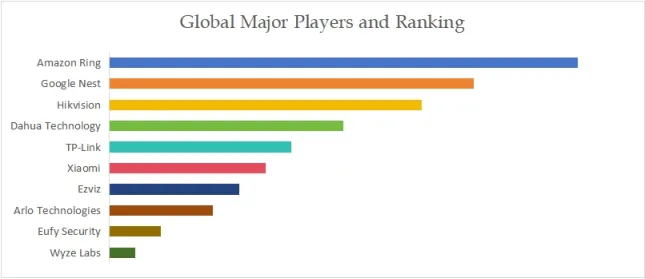
In 2025, the global top 10 players revenue share was approximately 78%.

Figure00002. Global Indoor Smart Security Camera Top 10 Players Ranking and Market Share

Indoor Smart Security Camera

Above data is based on report from QYResearch: Global Indoor Smart Security Camera Market Report 2025-2031 (published in 2025). If you need the latest data, plaese contact QYResearch.


Competitive Landscape


The market is led by ecosystem-driven consumer brands and large-scale video surveillance vendors. Amazon Ring and Google Nest leverage platform integration and subscription services, while Hikvision and Dahua Technology bring scale and hardware depth from professional security. Networking and value-focused brands such as TP-Link, Xiaomi, and Ezviz compete on price-performance and distribution, while Arlo Technologies, Eufy Security, and Wyze Labs differentiate via features, privacy positioning, or aggressive pricing. Competition increasingly centers on AI accuracy, app experience, privacy options, and service ecosystems rather than hardware specs alone.


Main Type


By connectivity and power, products are commonly segmented into Wi-Fi Smart Security Cameras, Wired Smart Security Cameras, and Cellular Smart Security Cameras. Wi-Fi models dominate due to easy setup and lower total cost. Wired cameras emphasize stability and continuous recording for fixed installations. Cellular cameras address locations without reliable broadband but carry higher operating costs and are less common indoors.


Downstream Applications


Usage splits between Home Use and Commercial Use. Home applications drive volume, focusing on simplicity, AI alerts, and privacy controls for apartments and houses. Commercial indoor deployments (small offices, retail, hospitality) prioritize reliability, multi-device management, and evidence-grade recording, often with centralized administration.


Regional Perspective


North America leads adoption with strong smart-home penetration and subscription-based services. Europe emphasizes privacy, data protection, and compliance, shaping feature sets and storage choices. Asia Pacific combines high volume and fast innovation cycles, with strong price competition and rapid AI feature rollout. Latin America grows with affordability-led demand and channel expansion. Middle East & Africa remains smaller but project-driven, favoring dependable hardware and local support.


Price Analysis


Pricing spans entry-level to premium tiers, driven by resolution, AI features, cloud services, privacy options, and ecosystem integration. Entry models compete on affordability, while mid-to-high tiers command premiums for advanced analytics, better low-light performance, and polished software. Buyers increasingly evaluate total cost of ownership, including subscriptions and storage.


Market Drivers


One of the primary market drivers is the rising demand for continuous, remote visibility of indoor spaces, fueled by lifestyle changes such as remote work, increased mobility, and growing attention to home and small-business security. Indoor cameras are increasingly seen not only as security devices but also as tools for monitoring family members, pets, and property, expanding their addressable use cases.


Technological progress—particularly the deployment of edge AI—is another major catalyst. Improved on-device processing reduces reliance on cloud resources, lowers latency, enhances privacy, and improves detection accuracy. This makes smart cameras more acceptable to privacy-conscious users and enables broader adoption across regions with different regulatory environments.


The expansion of smart home ecosystems further accelerates demand. Indoor cameras often serve as a central sensing node that integrates with locks, alarms, lighting, and voice assistants, increasing their functional value within connected environments. Ecosystem integration encourages multi-device adoption and replacement upgrades as users deepen their investment in a single platform.

About The Authors

Yang Huchen | Industry Researcher

Personal Profile

With six years of experience in equipment industry research and consulting, I have consistently tracked the development of mechanical equipment and industrial technology both domestically and internationally, accumulating extensive experience in industry research, data analysis, and market forecasting. I possess a solid foundation in industry trend insights, corporate strategy analysis, market sizing, and competitive landscape research, enabling me to provide clients with forward-looking and actionable research results.

Research Areas

Mechanical Equipment: Including port machinery, special equipment, and engineering equipment.

Industrial Automation: Covering intelligent manufacturing, robotics, sensing and control systems.

Construction Machinery: Key areas such as cranes, excavators, and concrete machinery.

Frontier Equipment: High-tech cryo-electron microscopes, laser weapons, and other cutting-edge technologies.

Project Experience

Led and participated in numerous key research and consulting projects, including:

Mobile Port Cranes: Analyzing global and Chinese market supply and demand patterns, price trends, and technology roadmaps, producing industry benchmark reports.

Cryo-electron microscopes: Analyzing the competitive landscape of core suppliers within the industry chain and the prospects for cutting-edge applications, providing guidance to scientific research institutions. Providing decision support to institutions and enterprises.

Laser Weapon Systems: Tracks emerging equipment markets in the military industry, analyzing the policy environment, technological evolution paths, and application potential.

Engineering Machinery Industry Research Series: Covers equipment such as excavators and loaders, builds competitiveness models, and provides development recommendations.

Partner Clients

Clients include top international manufacturers and leading domestic manufacturers, including:

Toshiba、Honda、Caterpillar、Hitachi、etc.

In addition, we provide research and strategic consulting services to some leading domestic equipment companies and emerging manufacturing companies in China.

Personal Strengths

Systematic Research Ability: Specializes in comprehensive industry chain analysis, with in-depth research experience from upstream components to downstream application scenarios.

Interdisciplinary Perspective: Able to establish research connections between traditional machinery and emerging high-end equipment.

Data-Driven: Proficient in market sizing, price modeling, and trend forecasting.

International Background: Experienced in multinational corporate research, with a deep understanding of international market dynamics and local market differences.

Contact Information

Email: yanghuchen@qyresearch.com

Tel: +86-17801072109


About QYResearch

https://www.qyresearch.com

QYResearch founded in California, USA in 2007.It is a leading global market research and consulting company. With over 17 years’ experience and professional research team in various cities over the world QY Research focuses on management consulting, database and seminar services, IPO consulting, industry chain research and customized research to help our clients in providing non-linear revenue model and make them successful. We are globally recognized for our expansive portfolio of services, good corporate citizenship, and our strong commitment to sustainability. Up to now, we have cooperated with more than 60,000 clients across five continents. Let’s work closely with you and build a bold and better future.

QYResearch is a world-renowned large-scale consulting company. The industry covers various high-tech industry chain market segments, spanning the semiconductor industry chain (semiconductor equipment and parts, semiconductor materials, ICs, Foundry, packaging and testing, discrete devices, sensors, optoelectronic devices), photovoltaic industry chain (equipment, cells, modules, auxiliary material brackets, inverters, power station terminals), new energy automobile industry chain (batteries and materials, auto parts, batteries, motors, electronic control, automotive semiconductors, etc.), communication industry chain (communication system equipment, terminal equipment, electronic components, RF front-end, optical modules, 4G/5G/6G, broadband, IoT, digital economy, AI), advanced materials industry Chain (metal materials, polymer materials, ceramic materials, nano materials, etc.), machinery manufacturing industry chain (CNC machine tools, construction machinery, electrical machinery, 3C automation, industrial robots, lasers, industrial control, drones), food, beverages and pharmaceuticals, medical equipment, agriculture, etc.

About Us:
QYResearch founded in California, USA in 2007, which is a leading global market research and consulting company. Our primary business include market research reports, custom reports, commissioned research, IPO consultancy, business plans, etc. With over 18 years of experience and a dedicated research team, we are well placed to provide useful information and data for your business, and we have established offices in 7 countries (include United States, Germany, Switzerland, Japan, Korea, China and India) and business partners in over 30 countries. We have provided industrial information services to more than 60,000 companies in over the world.

Contact Us:
If you have any queries regarding this report or if you would like further information, please contact us:
QY Research Inc.
Add: 17890 Castleton Street Suite 369 City of Industry CA 91748 United States
EN: https://www.qyresearch.com
Email: global@qyresearch.com
Tel: 001-626-842-1666(US)
JP: https://www.qyresearch.co.jp
カテゴリー: 未分類 | 投稿者huangsisi 12:32 | コメントをどうぞ

Hydro Seeding System Research:CAGR of 4.9 % during the forecast period 2026-2032

Hydro Seeding System Market Summary

A hydro seeding system is an integrated mechanical and technological equipment system designed for efficient vegetation planting, which mixes plant seeds (grass, flower or tree seeds), water, bonding agents, water-retaining agents, fertilizers and other ingredients uniformly through a mixing device, and then sprays the mixture onto the target ground or slope through a high-pressure pump and spray gun to form a stable substrate layer that promotes seed germination and growth, widely used in vegetation restoration, slope protection and greening projects with the advantages of high mechanization, wide adaptability and fast seedling emergence.


Based on or includes research from QYResearch: Global Hydro Seeding System Market Report 2025-2031.

The hydro seeding system market is currently expanding steadily, driven by rising demand for eco‑friendly erosion control, land reclamation, infrastructure greening, and landscape restoration, with growing adoption of automated mixing and precision spraying to improve efficiency and consistency, while applications extend across construction, mining, municipal, and agricultural projects.


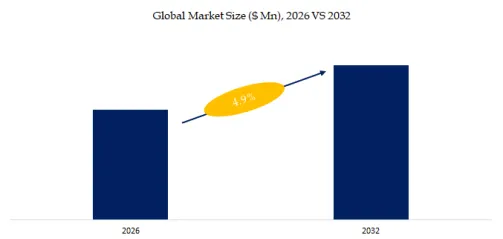
According to the new market research report “Global Hydro Seeding System Market Report 2026-2032″, published by QYResearch, the global market for Hydro Seeding System was valued at US$ 484.5 million in the year 2025 and is projected to reach a revised size of US$ 680.3 million by 2032, growing at a CAGR of 4.9 % during the forecast period 2026-2032.


Figure00001. Global Hydro Seeding System Market Size (US$ Million), 2026 VS 2032

Hydro Seeding System

Above data is based on report from QYResearch: Global Hydro Seeding System Market Report 2026-2032(published in 2026). If you need the latest data, plaese contact QYResearch.

Figure00002. Global Hydro Seeding System Top 11 Players Ranking and Market Share (Ranking is based on the revenue of 2025, continually updated)

Hydro Seeding System

Above data is based on report from QYResearch: Global Hydro Seeding System Market Report 2026-2032 (published in 2026). If you need the latest data, plaese contact QYResearch.

Table 1. Hydro Seeding System Industry Chain Analysis

Item Description
Upstream Core Component Suppliers Provide pumps, spray nozzles, mixing tanks and control systems that determine the spraying efficiency and stability of hydro seeding systems.
Raw Material Providers Supply seeds, mulch, binders and water-retaining agents required for hydro seeding operations and supporting materials.
Technology R&D Institutions Engage in research on spraying technology, material matching and equipment optimization to support upstream product innovation.
Midstream Equipment Manufacturing Enterprises Assemble upstream components to produce hydro seeding systems, focusing on mobility, mixing uniformity and spraying precision.
Supporting Material Processors Process and mix seeds, mulch and binders into specialized hydro seeding mixtures suitable for different ecological scenarios.
Quality Inspection Bodies Conduct performance tests on equipment operation, material compatibility and spraying effect to meet industry application standards.
Downstream Terminal Application Entities Include municipal departments, construction enterprises, mining companies and ecological restoration institutions that use hydro seeding for greening projects.
Distribution & Construction Channels Deliver equipment and materials through industrial dealers and provide on-site construction and operation services.
After-Sales & Technical Services Offer equipment maintenance, material matching guidance and operational training to ensure smooth project implementation.

Source: Secondary Sources, Press Releases, Expert Interviews and QYResearch, 2026

Table 2. Hydro Seeding System Industry Development Trends

Development Trends Description
1 Intelligent operation upgrading Hydro seeding systems are increasingly integrated with GPS guidance, remote monitoring and automatic mixing control technologies, reducing manual intervention, improving the uniformity of seeding and spraying, and realizing precise operation in large-area and complex terrains.
2 Green and sustainable optimization Manufacturers focus on developing environmentally friendly equipment and supporting materials, adopting degradable mulch, organic binders and native grass seed matching schemes to enhance seed survival rate and reduce environmental impact.
3 Product and scenario diversification Products are developed in different specifications and models to adapt to diverse scenarios such as slope protection, land reclamation, municipal greening and agricultural planting, with improved mobility and adaptability to complex terrains.

Source: Secondary Sources, Press Releases, Expert Interviews and QYResearch, 2026

Table 3. Hydro Seeding System Industry Development Opportunities

Development Opportunities Description
1 Strengthened ecological protection policies Global emphasis on ecological environment governance and soil and water conservation promotes the widespread use of hydro seeding technology in slope protection, desertification control and land reclamation projects, creating rigid market demand.
2 Expansion of greening project scale The continuous promotion of infrastructure greening, mining area restoration and urban landscape improvement projects increases the demand for efficient, rapid and low-cost hydro seeding systems, driving industry growth.
3 Upgrading of traditional greening methods Compared with traditional manual seeding and sodding, hydro seeding has the advantages of high efficiency, low cost and good ecological effect, and is gradually replacing traditional methods, expanding the market penetration rate.

Source: Secondary Sources, Press Releases, Expert Interviews and QYResearch, 2026

Table 4. Hydro Seeding System Obstacles/Challenges to Industry Development

Obstacles/Challenges Description
1 Technical gaps and uneven product quality There is a gap in core technologies such as precision control and material matching between some enterprises and leading manufacturers, resulting in uneven product quality, which affects the overall reputation of the industry.
2 High comprehensive operation costs The purchase cost of equipment, the consumption of supporting materials and the professional operation requirements lead to high comprehensive operation costs, which restricts promotion in cost-sensitive regions and small-scale projects.
3 Insufficient market standardization and talent shortage The lack of unified industry standards leads to vicious competition such as price wars, while the shortage of professional operators and technical maintenance personnel affects the popularization and application of hydro seeding technology.

Source: Secondary Sources, Press Releases, Expert Interviews and QYResearch, 2026


Future trends will focus on smarter operation with GPS guidance and remote monitoring, greater use of environmentally sustainable mulch and binding materials to enhance survival rates and reduce ecological impact, and stronger integration with ecological restoration standards to support large‑scale greening and soil stabilization in complex terrains.

About The Authors

Bai Lili – Electronics Industry Analyst

bailili@qyresearch.com


Focusing on the electronics and communications field for a long time, she has observed, followed up and researched on various links in the industry chain, such as semiconductors, consumer electronics, home appliances, wired communications, wireless communication systems, Internet of Things (IoT) and smart home for a long time. She has rich experience in industry research and has completed many successful cases.


About QYResearch

QYResearch founded in California, USA in 2007.It is a leading global market research and consulting company. With over 17 years’ experience and professional research team in various cities over the world QY Research focuses on management consulting, database and seminar services, IPO consulting, industry chain research and customized research to help our clients in providing non-linear revenue model and make them successful. We are globally recognized for our expansive portfolio of services, good corporate citizenship, and our strong commitment to sustainability. Up to now, we have cooperated with more than 60,000 clients across five continents. Let’s work closely with you and build a bold and better future.

QYResearch is a world-renowned large-scale consulting company. The industry covers various high-tech industry chain market segments, spanning the semiconductor industry chain (semiconductor equipment and parts, semiconductor materials, ICs, Foundry, packaging and testing, discrete devices, sensors, optoelectronic devices), photovoltaic industry chain (equipment, cells, modules, auxiliary material brackets, inverters, power station terminals), new energy automobile industry chain (batteries and materials, auto parts, batteries, motors, electronic control, automotive semiconductors, etc.), communication industry chain (communication system equipment, terminal equipment, electronic components, RF front-end, optical modules, 4G/5G/6G, broadband, IoT, digital economy, AI), advanced materials industry Chain (metal materials, polymer materials, ceramic materials, nano materials, etc.), machinery manufacturing industry chain (CNC machine tools, construction machinery, electrical machinery, 3C automation, industrial robots, lasers, industrial control, drones), food, beverages and pharmaceuticals, medical equipment, agriculture, etc.


About Us:
QYResearch founded in California, USA in 2007, which is a leading global market research and consulting company. Our primary business include market research reports, custom reports, commissioned research, IPO consultancy, business plans, etc. With over 18 years of experience and a dedicated research team, we are well placed to provide useful information and data for your business, and we have established offices in 7 countries (include United States, Germany, Switzerland, Japan, Korea, China and India) and business partners in over 30 countries. We have provided industrial information services to more than 60,000 companies in over the world.

Contact Us:
If you have any queries regarding this report or if you would like further information, please contact us:
QY Research Inc.
Add: 17890 Castleton Street Suite 369 City of Industry CA 91748 United States
EN: https://www.qyresearch.com
Email: global@qyresearch.com
Tel: 001-626-842-1666(US)
JP: https://www.qyresearch.co.jp
カテゴリー: 未分類 | 投稿者huangsisi 12:28 | コメントをどうぞ

High-temperature Flue Gas Heat Exchanger Research:CAGR of 6.10% during the forecast period 2026-2032

High-temperature Flue Gas Heat Exchanger Market Summary

The global High-temperature Flue Gas Heat Exchanger market size is estimated to reach US$ 2140.2 million by 2026 and is anticipated to reach US$ 3053.1 million by 2032, witnessing a CAGR of 6.10% during the forecast period 2026-2032.

Figure00001. Global High-temperature Flue Gas Heat Exchanger Market Size (US$ Million), 2021-2032

High-temperature Flue Gas Heat Exchanger

Above data is based on report from QYResearch: Global High-temperature Flue Gas Heat Exchanger Market Report 2025-2031 (published in 2025). If you need the latest data, please contact QYResearch.

In 2025, the global top 10 players revenue share was approximately 60.3%.

Figure00002. Global High-temperature Flue Gas Heat Exchanger Top 10 Players Ranking and Market Share

High-temperature Flue Gas Heat Exchanger

Above data is based on report from QYResearch: Global High-temperature Flue Gas Heat Exchanger Market Report 2025-2031 (published in 2025). If you need the latest data, plaese contact QYResearch.

A High-temperature Flue Gas Heat Exchanger is a critical piece of industrial equipment designed to recover thermal energy from hot exhaust gases produced in combustion processes, such as those in power plants, steel mills, and cement kilns. Its primary function is to transfer this high-grade waste heat to a working fluid (like water, air, or thermal oil) for reuse, thereby improving overall system efficiency, reducing fuel consumption, and lowering emissions. These exchangers are engineered to withstand extremely high temperatures, corrosive gas compositions, and particulate-laden environments.

Competitive Landscape

The competitive landscape for high-temperature flue gas heat exchangers is defined by a mix of established global engineering giants and strong regional specialists. Dominant players include large multinationals like Howden (air and gas handling), Alfa Laval (heat transfer), and ARVOS Group, which leverage their broad technology portfolios and global service networks. They compete alongside technology-focused firms such as Balcke-Dürr and Wallstein-Group, as well as rapidly growing Chinese manufacturers like Longhua Technology and Qingda Environment, which compete on cost, customization, and local market expertise. Competition revolves around technological innovation for efficiency and durability, project engineering capabilities, and after-sales service in harsh industrial environments.

Main Type

The main types of high-temperature flue gas heat exchangers are categorized by their core heat transfer surface design. Tubular Heat Exchangers are the most common and robust type, where hot gas flows inside or outside a bundle of tubes containing the coolant; they are highly durable for dirty, high-pressure, or corrosive gases. Plate Heat Exchangers use corrugated metal plates to create channels for the gas and fluid, offering high efficiency in a compact footprint but are more suited to cleaner gas streams. Finned Heat Exchangers enhance heat transfer by adding extended surfaces (fins) to tubes or plates, significantly increasing the surface area for gas-side heat exchange, making them ideal for applications with large gas volumes and moderate-to-high temperatures.

Downstream Applications

The primary downstream applications are concentrated in heavy, energy-intensive industries. The Electric Power sector uses them extensively in coal-fired and biomass power plants for boiler air preheating and feedwater heating. In the Iron and Steel industry, they recover waste heat from blast furnace gas, coke ovens, and reheating furnaces. The Coal industry utilizes them in coke production and coal gasification processes. General industrial applications include cement manufacturing, chemical processing, and incineration plants. Other emerging uses are in waste-to-energy facilities and large marine engines.

Regional Perspective

The market dynamics vary significantly by region. The Asia Pacific region, led by China and India, is the largest and fastest-growing market, driven by massive industrial bases, stringent new energy efficiency and emission regulations, and ongoing capacity expansions in power and steel. Europe and North America are mature markets characterized by replacement demand, retrofits of existing plants for efficiency gains, and upgrades to meet environmental standards. Latin America and the Middle East & Africa represent growing markets, where development is tied to industrial expansion, mining activities, and investments in power infrastructure.

Price Analysis

Pricing for these specialized exchangers is highly project-specific and influenced by multiple factors. The primary cost drivers are the materials of construction (e.g., specialized alloys like stainless steel, Inconel, or coatings for corrosion resistance), the complexity of the design (type, size, pressure rating), and the required performance specifications (efficiency, temperature resistance). Custom engineering for challenging gas compositions (high sulfur, chlorine) also adds significant cost. While large global players command a premium for advanced technology and engineering assurance, competitive pressure from regional manufacturers, especially in Asia, helps moderate prices for standard applications. Overall, these are high-value capital goods where lifetime operational savings often justify the initial investment.

Market Drivers

Several powerful forces are driving the market for high-temperature flue gas heat exchangers. The most significant driver is the global imperative for industrial energy efficiency and carbon emission reduction, creating strong regulatory and economic incentives for waste heat recovery. Rising and volatile energy prices make investments in heat recovery systems more financially attractive by shortening payback periods. Stringent environmental regulations worldwide are pushing industries to adopt technologies that lower fuel consumption and particulate/NOx emissions. The growth of industrial output in emerging economies directly increases the installed base of potential applications. Finally, technological advancements in materials and design that improve reliability and reduce maintenance are enabling wider adoption in even more demanding environments.


About The Authors

Yang Huchen | Industry Researcher

Personal Profile

With six years of experience in equipment industry research and consulting, I have consistently tracked the development of mechanical equipment and industrial technology both domestically and internationally, accumulating extensive experience in industry research, data analysis, and market forecasting. I possess a solid foundation in industry trend insights, corporate strategy analysis, market sizing, and competitive landscape research, enabling me to provide clients with forward-looking and actionable research results.

Research Areas

Mechanical Equipment: Including port machinery, special equipment, and engineering equipment.

Industrial Automation: Covering intelligent manufacturing, robotics, sensing and control systems.

Construction Machinery: Key areas such as cranes, excavators, and concrete machinery.

Frontier Equipment: High-tech cryo-electron microscopes, laser weapons, and other cutting-edge technologies.

Project Experience

Led and participated in numerous key research and consulting projects, including:

Mobile Port Cranes: Analyzing global and Chinese market supply and demand patterns, price trends, and technology roadmaps, producing industry benchmark reports.

Cryo-electron microscopes: Analyzing the competitive landscape of core suppliers within the industry chain and the prospects for cutting-edge applications, providing guidance to scientific research institutions. Providing decision support to institutions and enterprises.

Laser Weapon Systems: Tracks emerging equipment markets in the military industry, analyzing the policy environment, technological evolution paths, and application potential.

Engineering Machinery Industry Research Series: Covers equipment such as excavators and loaders, builds competitiveness models, and provides development recommendations.

Partner Clients

Clients include top international manufacturers and leading domestic manufacturers, including:

Toshiba、Honda、Caterpillar、Hitachi、etc.

In addition, we provide research and strategic consulting services to some leading domestic equipment companies and emerging manufacturing companies in China.

Personal Strengths

Systematic Research Ability: Specializes in comprehensive industry chain analysis, with in-depth research experience from upstream components to downstream application scenarios.

Interdisciplinary Perspective: Able to establish research connections between traditional machinery and emerging high-end equipment.

Data-Driven: Proficient in market sizing, price modeling, and trend forecasting.

International Background: Experienced in multinational corporate research, with a deep understanding of international market dynamics and local market differences.

Contact Information

Email: yanghuchen@qyresearch.com

Tel: +86-17801072109


About QYResearch

https://www.qyresearch.com

QYResearch founded in California, USA in 2007.It is a leading global market research and consulting company. With over 17 years’ experience and professional research team in various cities over the world QY Research focuses on management consulting, database and seminar services, IPO consulting, industry chain research and customized research to help our clients in providing non-linear revenue model and make them successful. We are globally recognized for our expansive portfolio of services, good corporate citizenship, and our strong commitment to sustainability. Up to now, we have cooperated with more than 60,000 clients across five continents. Let’s work closely with you and build a bold and better future.

QYResearch is a world-renowned large-scale consulting company. The industry covers various high-tech industry chain market segments, spanning the semiconductor industry chain (semiconductor equipment and parts, semiconductor materials, ICs, Foundry, packaging and testing, discrete devices, sensors, optoelectronic devices), photovoltaic industry chain (equipment, cells, modules, auxiliary material brackets, inverters, power station terminals), new energy automobile industry chain (batteries and materials, auto parts, batteries, motors, electronic control, automotive semiconductors, etc.), communication industry chain (communication system equipment, terminal equipment, electronic components, RF front-end, optical modules, 4G/5G/6G, broadband, IoT, digital economy, AI), advanced materials industry Chain (metal materials, polymer materials, ceramic materials, nano materials, etc.), machinery manufacturing industry chain (CNC machine tools, construction machinery, electrical machinery, 3C automation, industrial robots, lasers, industrial control, drones), food, beverages and pharmaceuticals, medical equipment, agriculture, etc.
About Us:
QYResearch founded in California, USA in 2007, which is a leading global market research and consulting company. Our primary business include market research reports, custom reports, commissioned research, IPO consultancy, business plans, etc. With over 18 years of experience and a dedicated research team, we are well placed to provide useful information and data for your business, and we have established offices in 7 countries (include United States, Germany, Switzerland, Japan, Korea, China and India) and business partners in over 30 countries. We have provided industrial information services to more than 60,000 companies in over the world.

Contact Us:
If you have any queries regarding this report or if you would like further information, please contact us:
QY Research Inc.
Add: 17890 Castleton Street Suite 369 City of Industry CA 91748 United States
EN: https://www.qyresearch.com
Email: global@qyresearch.com
Tel: 001-626-842-1666(US)
JP: https://www.qyresearch.co.jp
カテゴリー: 未分類 | 投稿者huangsisi 12:23 | コメントをどうぞ

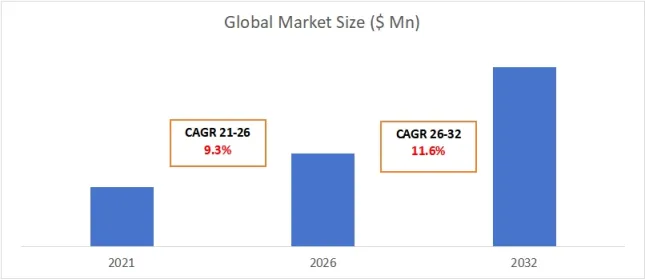
High-speed Machine Protection Door Research:CAGR of 4.9% during the forecast period

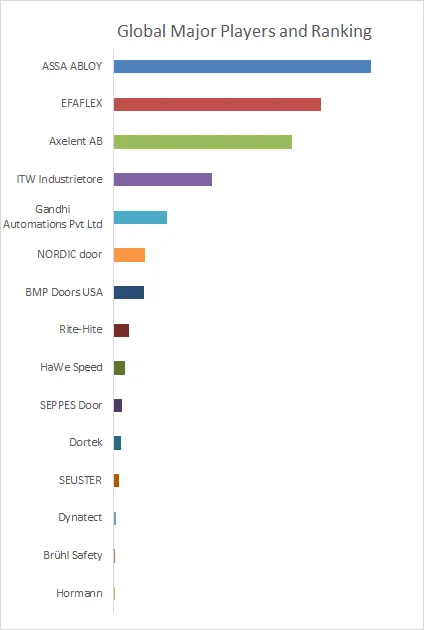
High-speed Machine Protection Door Product Introduction

High-speed Machine Protection Door is a specialized industrial safety door tailored for automated production workshops and equipment operation scenarios, featuring ultra-fast opening and closing performance to match the high-efficiency rhythm of mechanical equipment, while undertaking core functions of isolating dangerous machine operation zones from personnel activity areas, preventing operators from accidental contact with running equipment, chip splashing, and coolant leakage, and avoiding external debris entering the equipment to affect precision operation. It is made of high-strength, impact-resistant materials, equipped with high-sensitivity safety induction components (infrared obstacle detection, pressure-sensitive edges) and equipment linkage control modules, which can realize rapid response to equipment start-stop signals, automatically open when materials are transported or equipment is maintained, and quickly close after the operation is completed to restore the protection state, complying with industrial safety standards and balancing production efficiency and operation safety, widely applied in automated production lines, precision machining equipment and other high-risk, high-efficiency manufacturing scenarios.


According to the new market research report “Global High-speed Machine Protection Door Market Report 2026-2032”, published by QYResearch, the global High-speed Machine Protection Door market size is projected to reach USD 0.55 billion by 2032, at a CAGR of 4.9% during the forecast period.

Figure00001. Global High-speed Machine Protection Door Market Size (US$ Million), 2026 VS 2032

High-speed Machine Protection Door

Above data is based on report from QYResearch: Global High-speed Machine Protection Door Market Report 2026-2032 (published in 2026). If you need the latest data, plaese contact QYResearch.

Figure00002. Global High-speed Machine Protection Door Top 15 Players Ranking and Market Share (Ranking is based on the revenue of 2025, continually updated)

High-speed Machine Protection Door

Above data is based on report from QYResearch: Global High-speed Machine Protection Door Market Report 2026-2032 (published in 2026). If you need the latest data, plaese contact QYResearch.

According to QYResearch Top Players Research Center, the global key manufacturers of High-speed Machine Protection Door include ASSA ABLOY, EFAFLEX, Axelent AB, ITW Industrietore, Gandhi Automations Pvt Ltd, NORDIC door, BMP Doors USA, Rite-Hite, HaWe Speed, SEPPES Door, etc. High-speed machine protection door manufacturing is concentrated mainly in Central and Western Europe, where dense machine-tool and factory-automation clusters, strong safety and engineering standards, mature precision fabrication supply chains, and demanding end-users in automotive and general manufacturing drive continual product innovation and reliable large-scale production.

Table 1. High-speed Machine Protection Door Industry Chain Analysis

Item Description
Upstream Core Material Suppliers Suppliers of foundational materials that define the door’s performance and safety characteristics. This includes high-strength steel (for impact-resistant door panels and structural frames), lightweight aluminum alloys (for durable, low-maintenance frames), transparent polycarbonate/PMMA panels (for visibility while maintaining safety), and fire-resistant composite materials. These materials are selected for their ability to withstand high-speed impacts, temperature fluctuations, and industrial wear.
Component Suppliers Providers of critical functional components that enable the door’s high-speed operation and safety features. Key components include high-torque servo motors, PLC-based control systems, infrared/light curtain sensors, sealing strips, and precision tracks/hinges. These components are essential for meeting the door’s performance and safety requirements in industrial environments.
Production Equipment Suppliers Suppliers of specialized manufacturing and testing equipment used to fabricate and validate high-speed protection doors. This includes CNC cutting and bending machines, robotic welding systems, automated coating lines, and impact/speed testing equipment. These tools ensure consistent quality and performance in the final product.
Midstream Door Manufacturers Core players that design, fabricate, and assemble high-speed machine protection doors. Manufacturers integrate upstream materials and components to create custom solutions tailored to industrial applications, such as clean rooms, manufacturing lines, and logistics warehouses. They focus on optimizing door speed, impact resistance, and safety features while ensuring compliance with regional safety regulations, and often offer customization for specific environmental conditions.
Downstream Automated Production Lines Automated production lines rely on high-speed machine protection doors to create safe, enclosed work zones around continuous or semi-continuous manufacturing processes. These doors open and close in milliseconds to allow material transfer between stations while containing hazards like flying debris, noise, and chemical fumes. By integrating with line control systems, the doors automatically sync with production cycles, minimizing downtime and ensuring compliance with safety standards for workers and equipment.
CNC Machining Centers CNC machining centers use high-speed protection doors to shield operators from the high-velocity cutting tools, metal chips, and coolant spray generated during precision machining operations. The doors are designed to withstand impacts from flying debris and provide a clear view of the machining process through transparent panels, while interlock systems prevent door opening during active cycles to eliminate accidental contact with moving parts.

Source: Secondary Sources, Press Releases, Expert Interviews and QYResearch, 2026

Table 2. High-speed Machine Protection Door Industry Policy Analysis

Policy Description
1 EU Machinery Regulation (EU) 2023/1230 (Replaces 2006/42/EC, Transition Toward 2027 Applicability) In Europe, the new Machinery Regulation (EU) 2023/1230 is set to replace the Machinery Directive framework, reinforcing a more unified, directly applicable compliance regime that pushes machine builders to tighten risk assessment, technical documentation, safety integration, and CE conformity—which elevates demand for high-speed protection doors with demonstrable guarding performance and robust safety validation.
2 China: GB 15760-2025 “General Technical Specifications for Safety Protection of Metal Cutting Machine Tools” Released in August 2025 and set to take effect in August 2026, this mandatory national standard replaces 8 older standards. It specifies strict requirements for high-speed machine protection doors, including: interlock response time with power sources ≤0.1s, observation windows made of polycarbonate with thickness ≥8mm and impact resistance ≥3000J, and noise limits ≤83dB(A) during idling. The standard aims to enhance operator safety and push manufacturers to upgrade door design for better compliance.
3 US: OSHA Renewed National Emphasis Program on Amputations (2025) OSHA renewed its 5-year program targeting amputation hazards in manufacturing, with intensified inspections of machine guarding systems, including high-speed protection doors. The policy mandates reliable interlock mechanisms, impact-resistant panels, and anti-pinch designs to prevent accidental contact with moving machine parts, driving demand for safety-certified door solutions in the U.S. market.

Source: Secondary Sources, Press Releases, Expert Interviews and QYResearch, 2026

Table 3. High-speed Machine Protection Door Industry Development Trends

Development Trends Description
1 Intelligent & IoT-Enabled Safety Systems High-speed machine protection doors are evolving into smart, connected components of industrial automation ecosystems. Integrated with IoT sensors, PLC controllers, and factory MES systems, these doors can automatically sync with machine cycles, detect obstacles in real time, and trigger emergency stops. Predictive maintenance algorithms analyze door performance data to schedule repairs, reducing unplanned downtime and enhancing operator safety in smart factories.
2 Advanced Material & Lightweight Structural Innovation Manufacturers are shifting toward lightweight, high-strength materials like carbon fiber composites and impact-modified polycarbonates to replace traditional steel and aluminum. These materials reduce door inertia, enabling faster opening/closing cycles while maintaining superior impact resistance. Modular, snap-fit designs also simplify installation and replacement, lowering total cost of ownership for industrial end-users.
3 Compliance-Driven Safety Standardization Stricter global safety regulations (e.g., China’s GB 15760-2025, EU EN 12453:2024, US OSHA guidelines) are driving industry-wide standardization of protection door design. Manufacturers are prioritizing pre-certified, plug-and-play solutions that meet multiple regional safety standards, streamlining market entry and ensuring consistent safety performance across global manufacturing facilities.
4 Customized Integrated Solutions for Smart Manufacturing As production lines become more automated and flexible, high-speed protection doors are moving beyond generic designs to deliver tailored, application-specific solutions. For CNC machining centers, this means doors with precision interlocks and coolant-resistant seals; for automated assembly lines, it involves seamless integration with robotics and AGVs to enable safe, continuous material flow in Industry 4.0 environments.

Source: Secondary Sources, Press Releases, Expert Interviews and QYResearch, 2026

Table 4. High-speed Machine Protection Door Industry Development Opportunities

Development Opportunities Description
1 Smart Factory & Industry 4.0 Integration The global shift toward smart manufacturing and Industry 4.0 is creating strong demand for intelligent, IoT-enabled high-speed machine protection doors. These doors can sync with production line control systems, enable predictive maintenance, and provide real-time safety data, positioning them as critical components of automated, data-driven factories. Manufacturers that offer integrated, connected solutions can capture premium opportunities in automotive, electronics, and aerospace manufacturing.
2 Emerging Market Industrialization Rapid industrialization in Southeast Asia, Latin America, and Africa is driving growth in manufacturing sectors, creating untapped demand for machine safety equipment. As these regions adopt CNC machining centers and automated production lines, there is a growing need for high-speed protection doors that meet international safety standards (e.g., CE, OSHA). This presents a significant opportunity for manufacturers to expand into high-growth markets and establish regional partnerships.
3 Regulatory-Driven Replacement Cycles Stricter global safety standards (e.g., China’s GB 15760-2025, EU EN 12453:2024, US OSHA guidelines) are creating a large-scale replacement market for outdated, non-compliant protection doors. Many existing industrial facilities are upgrading their safety infrastructure to meet new regulations, driving demand for modern, certified door solutions that offer enhanced impact resistance, interlock reliability, and compliance with regional safety requirements.
4 Customized Industry-Specific Solutions The industrial sector’s diverse needs—from clean room environments in pharmaceuticals to heavy-duty machining in automotive—are creating opportunities for customized, application-specific protection doors. Manufacturers that develop tailored solutions (e.g., coolant-resistant seals for CNC centers, sterile, easy-to-clean designs for food processing) can differentiate themselves in the market, capture niche segments, and build long-term customer relationships based on specialized expertise.

Source: Secondary Sources, Press Releases, Expert Interviews and QYResearch, 2026

Table 5. High-speed Machine Protection Door Obstacles/Challenges to Industry Development

Obstacles/Challenges Description
1 Technical R&D Costs & Performance Balance Pressures The integration of IoT, smart sensors, and advanced materials (e.g., carbon fiber composites) requires significant R&D investment, while industrial clients remain cost-sensitive. Manufacturers face pressure to deliver high-performance, safety-compliant doors at competitive price points, creating a tension between innovation and affordability that can limit adoption of next-generation solutions.
2 Regulatory Fragmentation & Compliance Complexity Global safety standards (e.g., China’s GB 15760-2025, EU EN 12453:2024, US OSHA, Brazil’s NR12) vary widely across regions, forcing manufacturers to navigate multiple certification pathways. This increases product development timelines, raises operational costs, and complicates market entry for cross-border expansion, especially for small and medium-sized enterprises.
3 Market Saturation & Low-End Price Competition The industry has low barriers to entry, leading to a flood of low-cost, non-compliant protection doors from unqualified manufacturers. Intense price competition in the low-end segment compresses profit margins, discourages investment in R&D and quality improvement, and erodes trust in the overall market, making it harder for premium brands to differentiate themselves.
4 After-Sales Service & Maintenance Capacity Gaps High-speed protection doors require regular calibration, component replacement, and software updates to maintain safety and performance. However, many manufacturers lack a robust global service network, especially in emerging markets, leading to long repair times and operational downtime for industrial clients. This undermines customer loyalty and limits the perceived value of advanced, smart door solutions.

Source: Secondary Sources, Press Releases, Expert Interviews and QYResearch, 2026


About The Authors

Miao Yiren – Main analyst for this article

Email: miaoyiren@qyresearch.com

QYResearch is trusted by over 65,000 clients and has specialized in market research for over 17 years. As a new industry consulting analyst of QYResearch, she specializes in business data analysis, market trend analysis and corporate strategy consulting, and is good at using data analysis tools, such as Python, SPSS, etc., to conduct deep mining of massive business data and provide data support for management decision-making. He has keen market insights and rich project experience in various fields such as finance, manufacturing and agriculture.


About QYResearch

QYResearch founded in California, USA in 2007.It is a leading global market research and consulting company. With over 17 years’ experience and professional research team in various cities over the world QY Research focuses on management consulting, database and seminar services, IPO consulting (data is widely cited in prospectuses, annual reports and presentations), industry chain research and customized research to help our clients in providing non-linear revenue model and make them successful. We are globally recognized for our expansive portfolio of services, good corporate citizenship, and our strong commitment to sustainability. Up to now, we have cooperated with more than 60,000 clients across five continents. Let’s work closely with you and build a bold and better future.

QYResearch is a world-renowned large-scale consulting company. The industry covers various high-tech industry chain market segments, spanning the semiconductor industry chain (semiconductor equipment and parts, semiconductor materials, ICs, Foundry, packaging and testing, discrete devices, sensors, optoelectronic devices), photovoltaic industry chain (equipment, cells, modules, auxiliary material brackets, inverters, power station terminals), new energy automobile industry chain (batteries and materials, auto parts, batteries, motors, electronic control, automotive semiconductors, etc.), communication industry chain (communication system equipment, terminal equipment, electronic components, RF front-end, optical modules, 4G/5G/6G, broadband, IoT, digital economy, AI), advanced materials industry Chain (metal materials, polymer materials, ceramic materials, nano materials, etc.), machinery manufacturing industry chain (CNC machine tools, construction machinery, electrical machinery, 3C automation, industrial robots, lasers, industrial control, drones), food, beverages and pharmaceuticals, medical equipment, agriculture, etc.

About Us:
QYResearch founded in California, USA in 2007, which is a leading global market research and consulting company. Our primary business include market research reports, custom reports, commissioned research, IPO consultancy, business plans, etc. With over 18 years of experience and a dedicated research team, we are well placed to provide useful information and data for your business, and we have established offices in 7 countries (include United States, Germany, Switzerland, Japan, Korea, China and India) and business partners in over 30 countries. We have provided industrial information services to more than 60,000 companies in over the world.


Contact Us:
If you have any queries regarding this report or if you would like further information, please contact us:
QY Research Inc.
Add: 17890 Castleton Street Suite 369 City of Industry CA 91748 United States
EN: https://www.qyresearch.com
Email: global@qyresearch.com
Tel: 001-626-842-1666(US)
JP: https://www.qyresearch.co.jp
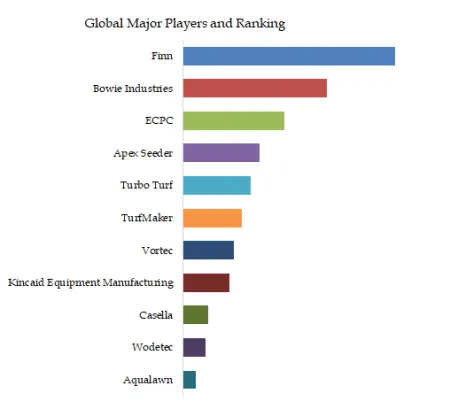
 

カテゴリー: 未分類 | 投稿者huangsisi 12:11 | コメントをどうぞ

Tamping Coke Oven Equipment Research:CAGR of 5.5% during the forecast period

Tamping Coke Oven Equipment Market Summary

The tamping coke oven equipment refers to a side-loading coke oven that uses the tamping method to charge coal for coking. Tamping coke generally refers to the coke produced in the special furnace type for tamping coke using the tamping coking technology.

According to the new market research report “Global Tamping Coke Oven Equipment Market Report 2026-2032″, published by QYResearch, the global Tamping Coke Oven Equipment market size is projected to grow from USD 6844.98 million in 2025 to USD 9957 million by 2032, at a CAGR of 5.5% during the forecast period.


Table. Global Tamping Coke Oven Equipment Main Manufacturers

Headquarter Company Business Introduction
German SMS Group SMS Group is a global metallurgical equipment and engineering technology company, a leading enterprise in the machinery and complete equipment sectors of the steel and non-ferrous metals industries. The company primarily engages in the design, manufacturing, EPC (Engineering, Procurement, and Construction) of complete metallurgical equipment and production lines, technology upgrades, digital solutions, and full lifecycle services, covering the entire process chain from ironmaking and steelmaking, continuous casting, rolling, forging, pipe manufacturing, and non-ferrous metal processing.
German VeCon VeCon is an engineering and metallurgical equipment supplier specializing in the design and supply of tamping coke oven technology and related machinery and automation systems. With over 30 years of experience in the coking and steel plant equipment sector, the company’s business covers tamping systems, coal charging/coke pushing equipment, hot coke cars, furnace pressure control systems, environmental protection equipment, and coking plant automation systems. VeCon provides services ranging from single-unit equipment design and manufacturing to complete coke oven system engineering (EPC) and technical consulting. In addition, the company also supplies continuous casting equipment, spraying equipment, and casting protection systems for the steel plant sector.
German Thyssenkrupp Uhde Thyssenkrupp Uhde is a chemical and process engineering company specializing in engineering technology and turnkey plant construction in the chemical, energy, and refining sectors. The company primarily provides process technology licensing, engineering design, equipment supply, and EPC turnkey services, covering ammonia and fertilizer, methanol, hydrogen energy, water electrolysis for hydrogen production, oil refining and petrochemical plants, coking and coal chemical technologies, and provides digitalization and operation and maintenance services for global energy and chemical projects.
German HuDe HuDe designs highly robust, precision-driven industrial systems—from coke oven batteries to stamping charge pushers—powering the backbone of modern metallurgy. HuDe combines sophisticated mechanical engineering with exceptional operational durability to create systems that withstand the demands of time, stress, and high performance.
Czech Republic Dalselv Design Dalselv Design is an engineering and technology company primarily engaged in the engineering design, technical upgrading, and project implementation services for equipment and coke oven systems in the coking industry. This includes the design and technical consulting of coke oven machinery, coke oven batteries, and related production equipment. The company has a long history of involvement in engineering design and upgrading of steel and coking projects.
Ukraine Azovintex Azovintex LLC is an industrial engineering and equipment manufacturing company that has long served the metallurgical and coking industries. The company primarily designs, manufactures, and maintains coke oven machinery, steel plant-specific equipment, and non-standard heavy machinery, and provides technical upgrades, equipment improvements, and engineering support to coking plants and steel companies. Its business has traditionally been closely tied to the production and equipment maintenance needs of large local steel companies.
China Beijing Sino-Steel Beijing Sino-Steel is an engineering company specializing in metallurgical engineering technology and equipment. Its main businesses include metallurgical engineering EPC general contracting, coking and coke oven engineering, mining engineering, energy conservation and environmental protection engineering, and industrial equipment and technical services. It provides engineering design, equipment integration, and project construction services to the steel and coal chemical industries.
China Taiyuan Heavy Machinery Group Taiyuan Heavy Machinery Group is one of China’s large-scale heavy equipment manufacturers and an important R&D and manufacturing base for heavy machinery and metallurgical equipment. The company is mainly engaged in the R&D, manufacturing, and engineering services of metallurgical equipment, mining equipment, lifting equipment, rail transit equipment, wind power and new energy equipment, and large castings and forgings. Its products are widely used in industries such as steel, energy, mining, and infrastructure.
China Dalian Huarui Heavy Industry Dalian Huarui Heavy Industry is one of China’s large-scale heavy equipment manufacturers. The company is mainly engaged in the research and development and manufacturing of metallurgical equipment, port loading and unloading equipment, lifting and transportation equipment, coking equipment, mining and bulk material conveying equipment, and new energy equipment. It also provides engineering, contracting and technical services. Its products are widely used in the steel, port, energy and infrastructure industries.
China Changli Machinery Changli Machinery is an equipment manufacturing enterprise primarily engaged in the production of metallurgical equipment, coking equipment, and heavy non-standard machinery. The company mainly designs, manufactures, and installs products such as coke oven machinery, coal charging cars, coke pushers, coke quenching cars, and environmental protection and conveying equipment, providing complete sets of equipment and technical support to coking plants and steel enterprises. Its business is concentrated in the fields of metallurgical and coal chemical equipment.
China ACRE ACRE is a leading technology and engineering company in China’s coking and refractory materials engineering field. The company primarily engages in engineering design, technology research and development, EPC general contracting, refractory materials engineering, and energy-saving and environmental protection engineering of coke ovens and coking plants, covering the entire coking production process and the construction of related coal chemical plants.

Above data is based on report from QYResearch: Global Tamping Coke Oven Equipment Market Report 2026-2032 (published in 2026). If you need the latest data, plaese contact QYResearch.


Analysis of the Coke Oven Tamping Equipment Supply Chain:

Upstream: Primarily includes structural steel and heat-resistant alloys, refractory materials (silicon bricks, clay bricks, castables), large castings and forgings, hydraulic systems, reducers and bearings, motors, electrical control and automation systems, etc. Refractory materials and heavy steel structural components account for a high proportion of costs and directly affect equipment lifespan and operational stability.

Midstream: Coke oven equipment manufacturers and metallurgical engineering general contractors are responsible for the design, manufacturing, and system integration of core equipment such as tamping machines, coal charging cars, coke pushers, coke quenching cars, coke quenching devices, furnace door mechanisms, and control systems. The industry is characterized by high technical barriers, strong customization, project-based and EPC general contracting, and long delivery cycles.

Downstream: Mainly serves coking enterprises, integrated steel enterprises, and coal chemical enterprises, used for coke production and blast furnace ironmaking. Investment in this sector is significantly influenced by the steel industry’s prosperity, environmental policies, and capacity replacement policies. The overall supply chain exhibits clear heavy industrial equipment attributes and cyclical characteristics.


Key Driving Factors:

The main driving forces behind the development of tamping coke oven equipment come from a combination of factors, including environmental policies, market demand, technological innovation, and resource adaptation. The core of this trend is to promote the transformation of the coking industry towards a greener, more efficient, and resource-saving direction. Stricter environmental policies directly drive equipment upgrades. For example, the “14th Five-Year Plan for the Development of the Coking Industry” explicitly requires reducing energy consumption and pollutant emissions, prompting enterprises to adopt tamping coke oven technology with higher sealing performance and better emission control to achieve emission reduction targets. Market demand for improved coke quality also boosts equipment development. The growing demand from the steel industry for high-strength, low-sulfur, high-quality coke makes tamping technology favored because it significantly increases coke density and calorific value.

Technological advancements provide support for equipment innovation. New hydraulically driven or linear motor-driven tamping machines achieve more precise hammer control and higher tamping density. Meanwhile, intelligent control systems (such as the SCP integrated machine) improve production efficiency and stability by optimizing feeding and tamping rhythms. Raw material adaptability is another key driving force. The tamping process can better utilize non-premium coal types such as high-volatile, weakly caking coal, helping companies maintain competitiveness amidst raw material cost fluctuations. Furthermore, the industry’s trend towards large-scale and intensive development, such as the construction of large coke ovens with an annual capacity of over one million tons, also requires tamping equipment to have higher single-furnace capacity and reliability.

These factors collectively drive the continuous iteration of tamping coke oven equipment in terms of energy consumption reduction, automation level improvement, and environmental performance enhancement to meet the long-term needs of sustainable development in the coking industry.

Main obstacles:

The development and application of tamping coke oven equipment mainly face obstacles related to equipment reliability, environmental compliance, production stability, and initial investment and maintenance costs. The equipment itself is complex and heavy. Taking the 6.25-meter tamping and charging coke pusher (SCP machine) as an example, its weight can reach 1350 tons. This leads to rapid wear and high failure rate of its mechanical components, such as the transmission system of the tamping machine, the eccentric friction wheel group, and the coal support plate. This not only results in a large amount of maintenance work but also directly affects the continuity of production and the quality of coke. About 60% of equipment accidents are related to problems caused by the automatic control software program. In terms of environmental protection, the tamping coke oven needs to open the oven door to push the coal cake during coal charging. The dust generated in this process is difficult to control. Some enterprises have unsatisfactory dust removal effects during coal charging due to factors such as deformed dust collection pipe interface valves, easily burned dust collection bags, or long-term heat deformation of the oven door sealing frame. It is estimated that about 40% of tamping coke ovens fail to consistently meet the dust emission standards in this stage. Production stability is also challenged. Compacted coking is highly sensitive to the moisture and particle size of the coal fed into the furnace. Moisture content typically requires strict control, and the coal fineness must be high. Fluctuations in moisture content or inadequate compaction of the coal cake can easily lead to collapse. Even during normal production, the collapse rate can be between 0.3% and 0.5%, and even higher during the rainy season. This not only results in raw material loss but also increases unplanned downtime for handling collapsed cakes, impacting the overall system efficiency. Furthermore, key components such as tamping hammers and friction plates wear out quickly and require frequent replacement. In addition, the automation control programs are not yet fully developed, with most units not yet fully automated and relying on manual intervention, further hindering improvements in production efficiency and stability. These factors collectively constitute the main obstacles to the promotion and application of compacted coking oven equipment.

Industry Development Opportunities:

The compacted coking oven equipment industry is facing multiple development opportunities, primarily driven by policy support, technological innovation, and changes in market demand.

Currently, stringent environmental policies are accelerating the elimination of outdated production capacity. For example, China requires the elimination of coke oven capacity of 4.3 meters and below by 2025, creating a huge market space for the upgrading of advanced tamping coke oven equipment. Technologically, larger and more intelligent equipment is a clear trend. The height of the carbonization chamber has been upgraded from the mainstream 4.3 meters to 6.25 meters or even higher, significantly improving single-furnace capacity and coke quality stability. Simultaneously, intelligent coke oven machinery is gradually achieving “unmanned operation,” reducing energy consumption and human operational risks through precise control. In terms of green transformation, the popularization of energy-saving and emission-reduction technologies such as dry quenching (CDQ), and the promotion of circular economy models such as coke oven gas to hydrogen production and deep processing of coal tar, not only help coking enterprises meet ultra-low emission requirements but also open up new paths for value-added chemical products. Market demand also supports the industry. Downstream steel industry demand for high-quality coke continues to grow, while overseas markets such as Southeast Asia, driven by infrastructure construction booms, are also showing strong growth in import demand for tamped coke. Furthermore, the trend of industrial synergy, such as the integration of coal, coke, and steel production and the concentration of production capacity in resource-rich areas like Shanxi, Shaanxi, and Inner Mongolia, helps optimize resource allocation and enhance overall competitiveness. These factors collectively provide a strong impetus for the tamping coke oven equipment industry to upgrade towards higher efficiency, cleaner manufacturing, and smarter processes.


About The Authors

Meng Yu Lead Author

Email: yumeng@qyresearch.com

QYResearch Nanning Research Center analyst, main research areas include semiconductors, chemical materials, electronics and other fields, some of the sub-research topics include Motor for semiconductor equipment, air bearing stage, low CTE ceramic material, high purity oleic acid, camera soc, intelligent energy management system, etc., also engaged in market segment report development, and participate in the writing of customized projects.


About QYResearch

QYResearch founded in California, USA in 2007.It is a leading global market research and consulting company. With over 17 years’ experience and professional research team in various cities over the world QY Research focuses on management consulting, database and seminar services, IPO consulting (data is widely cited in prospectuses, annual reports and presentations), industry chain research and customized research to help our clients in providing non-linear revenue model and make them successful. We are globally recognized for our expansive portfolio of services, good corporate citizenship, and our strong commitment to sustainability. Up to now, we have cooperated with more than 60,000 clients across five continents. Let’s work closely with you and build a bold and better future.

QYResearch is a world-renowned large-scale consulting company. The industry covers various high-tech industry chain market segments, spanning the semiconductor industry chain (semiconductor equipment and parts, semiconductor materials, ICs, Foundry, packaging and testing, discrete devices, sensors, optoelectronic devices), photovoltaic industry chain (equipment, cells, modules, auxiliary material brackets, inverters, power station terminals), new energy automobile industry chain (batteries and materials, auto parts, batteries, motors, electronic control, automotive semiconductors, etc.), communication industry chain (communication system equipment, terminal equipment, electronic components, RF front-end, optical modules, 4G/5G/6G, broadband, IoT, digital economy, AI), advanced materials industry Chain (metal materials, polymer materials, ceramic materials, nano materials, etc.), machinery manufacturing industry chain (CNC machine tools, construction machinery, electrical machinery, 3C automation, industrial robots, lasers, industrial control, drones), food, beverages and pharmaceuticals, medical equipment, agriculture, etc.

About Us:
QYResearch founded in California, USA in 2007, which is a leading global market research and consulting company. Our primary business include market research reports, custom reports, commissioned research, IPO consultancy, business plans, etc. With over 18 years of experience and a dedicated research team, we are well placed to provide useful information and data for your business, and we have established offices in 7 countries (include United States, Germany, Switzerland, Japan, Korea, China and India) and business partners in over 30 countries. We have provided industrial information services to more than 60,000 companies in over the world.

Contact Us:
If you have any queries regarding this report or if you would like further information, please contact us:
QY Research Inc.
Add: 17890 Castleton Street Suite 369 City of Industry CA 91748 United States
EN: https://www.qyresearch.com
Email: global@qyresearch.com
Tel: 001-626-842-1666(US)
JP: https://www.qyresearch.co.jp
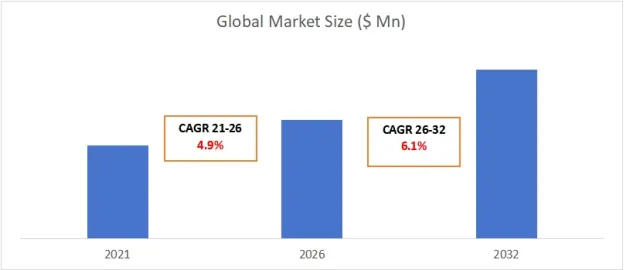
カテゴリー: 未分類 | 投稿者huangsisi 12:04 | コメントをどうぞ

Cloud-Connected Power Failure Alarms for Smart Homes: Real-Time Notifications, Battery Backup & Voice Assistant Integration

Global Leading Market Research Publisher Global Info Research announces the release of its latest report “Home Cloud Power Off Alarm – Global Market Share and Ranking, Overall Sales and Demand Forecast 2026-2032″. As homeowners increasingly rely on smart devices (security cameras, medical equipment, refrigerators, servers), sudden power outages can lead to spoiled food, interrupted home security, loss of critical medical device function (CPAP, oxygen concentrators), and data loss. Traditional UPS units provide backup power but do not notify users remotely. Home cloud power off alarms address these gaps by monitoring electrical status and sending real-time alerts via mobile apps, email, or smart home platforms when power fails, enabling remote response (calling a neighbor, checking cameras, activating generator). A home cloud power off alarm is a smart alert system that monitors the electrical power status of a home or specific connected devices and provides notifications when a power outage occurs. Integrated with cloud-based technology, it can send real-time alerts to users through mobile apps, email, or other connected platforms, enabling remote monitoring and quick response. These systems are designed to enhance safety, protect sensitive electronics, and maintain security in smart homes by ensuring users are immediately informed of any disruptions in power supply, even when they are away from the property. Modern cloud power alarms feature battery backup (12-48 hours), Wi-Fi/cellular connectivity, integration with Alexa/Google Assistant, and energy usage monitoring. Based on current situation and impact historical analysis (2021-2025) and forecast calculations (2026-2032), this report provides a comprehensive analysis of the global Home Cloud Power Off Alarm market, including market size, share, demand, industry development status, and forecasts for the next few years.

The global market for Home Cloud Power Off Alarm was estimated to be worth US$ 1,105 million in 2025 and is projected to reach US$ 1,820 million, growing at a CAGR of 7.5% from 2026 to 2032. In 2024, global home cloud power off alarm production reached approximately 12.6 million units, with an average global market price of around US$ 82 per unit.

【Get a free sample PDF of this report (Including Full TOC, List of Tables & Figures, Chart)】
https://www.qyresearch.com/reports/6094168/home-cloud-power-off-alarm


1. Market Drivers & Technological Trends

The home cloud power‑off alarm market is gaining momentum as homeowners seek smarter ways to monitor and protect their homes from unexpected power disruptions. These devices offer real‑time alerts via mobile apps, email, or integrated smart home platforms whenever there is a power failure impacting the household or specific connected equipment. Their rise is driven by increasing adoption of smart home technologies and rising concerns around home security, uninterrupted functionality of critical systems (like refrigerators, home medical devices, and security systems), and remote tenant or vacation property monitoring. Innovation in this market is characterized by integration with voice assistants, cloud analytics, IoT connectivity, and seamless compatibility with home automation systems. Vendors are incorporating features such as battery backup, energy usage monitoring, and customizable alert thresholds, making the solutions more versatile and user-friendly. While the primary appeal lies in enhanced convenience and peace of mind, adoption challenges include initial installation costs, subscription-based cloud services, and user concerns around data privacy. As smart home ecosystems mature and become more affordable, home cloud power‑off alarms are positioned as a valuable component for modern connected homes.


2. Technology Deep-Dive: Independent vs. Centralized Alarms

Independent Home Cloud Alarm (65% of 2025 revenue): Standalone device monitoring whole-home power (main breaker) or single outlet. Battery backup (12-24 hours), Wi-Fi (2.4/5GHz), mobile app (iOS/Android), push notifications, email alerts. Preferred for single-family homes, apartments, vacation properties. APC by Schneider’s 2026 “HomeAlert 200″ monitors 240V mains, 24-hour battery, Alexa integration (“Alexa, is power on?”). Largest segment.

Centralized Home Cloud Alarm (35% of revenue): Multi-zone system monitoring individual circuits (kitchen, medical equipment, server room, garage). 48-hour battery backup, cellular backup (4G LTE) for internet outage, energy monitoring (real-time power draw per circuit), historical data logging. Fastest-growing at 10% CAGR (high-end smart homes, home offices with critical equipment). Vertiv’s 2026 “SmartHome Central” monitors 12 circuits, 72-hour battery, cellular + Wi-Fi redundancy, integrates with Home Assistant/SmartThings.

Key features: Monitoring type (whole-home or per-circuit), battery backup (12-72 hours), connectivity (Wi-Fi, Ethernet, cellular), alert methods (push, SMS, email, voice assistant announcement), cloud platform (AWS, Azure, proprietary), and integration (Alexa, Google Home, HomeKit, IFTTT).

Technical breakthrough (2026): Eaton’s “Predictive Outage Alarm” uses cloud-based AI analyzing utility grid data (weather, equipment health, historical outage patterns) to predict power failures 15-30 minutes in advance. Alerts user before outage occurs (“Power expected to fail in 20 minutes, take action”). Integrated with smart plugs to automatically backup critical loads.

Ongoing challenges: Internet dependency (cloud alarm fails if router/ISP down). CyberPower’s 2026 “DualCom” alarm includes cellular backup (4G LTE) + Wi-Fi, switching automatically if home internet fails. Installation complexity (circuit-level monitoring requires electrician). TP-Link (not in segmentation but emerging) offers “Kasa Smart Plug with Power Monitoring” (US$ 25) for single-outlet monitoring (DIY installation, no electrician). False alerts (momentary flickers trigger notifications). Omron’s 2026 “SmartFilter” ignores outages <5 seconds (configurable), reducing nuisance alerts by 80%.


3. User Case & Regional Dynamics

User Case – Remote Vacation Home, Florida: In March 2026, homeowner (travels frequently) installed APC HomeAlert 200 cloud power alarm. During summer storm, power failed at 2 AM (hurricane-related outage). Alarm sent push notification (phone), SMS (backup number), and email. Homeowner notified property manager, who checked house next morning (no damage, refrigerator restarted). Without alarm, spoiled food (US$ 400) and potential security system offline (3 days) until return. Alarm cost: US$ 120 + US$ 4/month cloud subscription.

Exclusive Observation on Regional Dynamics:

  • North America (45% market revenue): US largest (smart home adoption 40%+ households). APC, Tripp Lite, CyberPower, Vertiv, Eaton, GE, Honeywell, Legrand, Omron, Delta strong. High demand for vacation property monitoring (Florida, Texas, California).
  • Europe (30%): Germany, UK, France, Nordic. Schneider, ABB, Siemens, Eaton, Legrand, Panasonic, Omron, Delta, Riello active. Growing home office/remote work awareness.
  • Asia-Pacific (18%): Japan, South Korea, China, Australia. Panasonic, Omron, Delta, APC, Riello strong. Urban apartments (battery backup for security).
  • Rest of World (7%): Latin America, Middle East.

Application Segmentation: Online (Connected – 85% of revenue) – cloud-connected alarms with mobile app, real-time monitoring, remote notifications. Offline (15%) – standalone local alarms (audible/visual) without cloud, declining.


4. Competitive Landscape

Key Players: Schneider Electric, ABB, Siemens, Eaton, Honeywell International, Legrand, General Electric (GE), Panasonic, APC by Schneider, Omron, Delta Electronics, Riello UPS, CyberPower Systems, Tripp Lite, Vertiv.

Segment by Type: Independent (65%), Centralized (35%, fastest-growing 10% CAGR).

Segment by Connectivity: Online (85%), Offline (15%).

Regional Market Share (2025 revenue): North America 45%, Europe 30%, Asia-Pacific 18%, Rest of World 7%.

Exclusive observation on competitive dynamics: APC by Schneider (US/France) holds 22% global home cloud power off alarm revenue share (strongest in consumer/DIY, retail channels). Eaton (US) holds 15% (centralized, high-end smart homes). CyberPower (US) holds 12% (value leader, Amazon bestseller). Tripp Lite (US) holds 10% (mid-range). Vertiv (US) holds 8% (circuit-level monitoring). Schneider Electric (France) holds 8% (brand licensing to APC). Others (25%): ABB, Siemens, Honeywell, Legrand, GE, Panasonic, Omron, Delta, Riello.


5. Strategic Outlook (2026-2032)

By 2032, home cloud power off alarm market projected to reach US$ 2.5-2.8 billion. Independent alarms will maintain 55-60% share (affordable, DIY). Centralized alarms grow to 40-45% share (high-end homes, critical equipment). Online/cloud-connected will capture 95%+ of market (offline alarms obsolete). Average selling prices: standalone Wi-Fi alarms (US$ 50-150), centralized (US$ 200-800), subscription (US$ 3-10/month or US$ 30-100/year). Cellular backup will be standard on mid/high-end models (80%+ by 2030).

For buyers (homeowners, property managers, renters): For whole-home monitoring (basic), choose independent cloud alarm with Wi-Fi, 12-24 hour battery, mobile app (APC, CyberPower). For critical loads (medical devices, servers, refrigerator), choose centralized alarm with circuit-level monitoring, 48+ hour battery, and cellular backup (Eaton, Vertiv). For vacation/rental properties, prioritize cellular backup (ISP outages common) and SMS alerts (no app required). For smart home integration (Alexa, Google Home, HomeKit), verify compatibility before purchase. For budget (<US$ 50), smart plugs with power monitoring (no battery backup, but sends alert when power fails) as entry-level solution.

For suppliers: Next frontier is AI-predictive cloud alarms (forecast outages using weather/grid data) and zero-subscription alarms (free cloud tier for basic alerts, paid for advanced analytics). Additionally, development of integrated cloud alarm + UPS (single device with battery backup for router/modem, ensures alarm connectivity during outage) and energy-harvesting alarms (supercapacitor powered by mains, no battery replacement) will capture eco-conscious homeowners.

Global Info Research’s full report includes granular 10-year forecasts by country (20 major markets), technology readiness levels of emerging home cloud alarm features (AI prediction, zero-subscription, integrated UPS), and a proprietary “Smart Home Alarm Score” benchmarking 60 commercial home cloud power off alarm products across 12 performance metrics (battery duration, alert latency, connectivity redundancy, integration, subscription cost).


Contact Us:
If you have any queries regarding this report or if you would like further information, please contact us:
Global Info Research
Add: 17890 Castleton Street Suite 369 City of Industry CA 91748 United States
EN: https://www.qyresearch.com
E-mail: global@qyresearch.com
Tel: 001-626-842-1666(US)
JP: https://www.qyresearch.co.jp
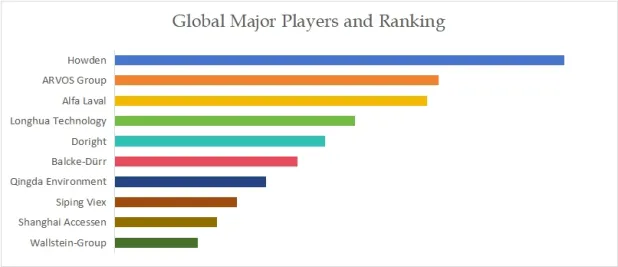
カテゴリー: 未分類 | 投稿者huangsisi 11:35 | コメントをどうぞ

Water Environment Power Failure Detectors: Standby Alarms for Pumps, Aerators & Filtration Systems – Smart Connectivity & Safety Compliance

Global Leading Market Research Publisher Global Info Research announces the release of its latest report “Aquatic Power Off Alarm – Global Market Share and Ranking, Overall Sales and Demand Forecast 2026-2032″. As commercial aquaculture farms, swimming pool operators, and water treatment facilities face critical risks from sudden power loss (oxygen depletion kills fish within 2-4 hours; stagnant pool water becomes unsafe for swimmers; pumps/filters stop, causing equipment damage), traditional manual monitoring is unreliable, and basic UPS systems lack remote notification. Aquatic power off alarms address these challenges by continuously monitoring electrical supply and triggering audible, visual, or wireless alerts (SMS, app notification) when power fails, enabling rapid intervention. An aquatic power-off alarm is a safety device designed to monitor electrical power supply in water-related environments and provide an alert when a power outage or disconnection occurs. It is commonly used in facilities such as swimming pools, aquaculture farms, water treatment systems, and marine installations to ensure critical equipment like pumps, filtration systems, and aerators continue functioning or to notify operators immediately when power is lost. This helps prevent risks such as water contamination, oxygen depletion, and equipment failure, ensuring safety and operational reliability in aquatic systems. Modern power failure alarms feature battery backup (12-72 hours), cellular/Wi-Fi connectivity, and integration with building management systems (BMS). Based on current situation and impact historical analysis (2021-2025) and forecast calculations (2026-2032), this report provides a comprehensive analysis of the global Aquatic Power Off Alarm market, including market size, share, demand, industry development status, and forecasts for the next few years.

The global market for Aquatic Power Off Alarm was estimated to be worth US$ 251 million in 2025 and is projected to reach US$ 414 million, growing at a CAGR of 7.5% from 2026 to 2032. In 2024, global aquatic power off alarm production reached approximately 3.6 million units, with an average global market price of around US$ 63 per unit.

【Get a free sample PDF of this report (Including Full TOC, List of Tables & Figures, Chart)】
https://www.qyresearch.com/reports/6094163/aquatic-power-off-alarm


1. Market Drivers & Technological Trends

The aquatic power-off alarm market is driven by the growing need for safety and operational reliability in environments where water-related activities depend on a consistent power supply. These alarms are designed to alert users when there is a power outage in facilities such as swimming pools, aquaculture farms, water treatment plants, and marine operations. Their primary function is to prevent accidents, equipment damage, and risks associated with sudden power failures, which could lead to water circulation issues, oxygen depletion, or compromised safety systems. Increased focus on maintaining safety standards in recreational and industrial water systems has fueled demand for these devices. The market is also benefiting from technological advancements that integrate features like wireless connectivity, remote monitoring, and smart notifications via mobile applications. This makes power-off alarms more efficient and user-friendly, particularly for commercial aquaculture farms and pool management services. Growing awareness about equipment safety and government regulations aimed at preventing water-related hazards further support market growth. However, challenges such as high installation costs and limited adoption in small-scale facilities may slow penetration. As smart monitoring solutions become more affordable and widely adopted, the aquatic power-off alarm market is expected to experience steady expansion in both residential and commercial applications.


2. Technology Deep-Dive: Independent vs. Centralized Alarms

Independent Aquatic Power Off Alarm (60% of 2025 revenue): Standalone unit monitoring a single piece of equipment (pool pump, aerator, filter). Battery backup (12-24 hours), audible alarm (85-100dB), optional SMS/Wi-Fi. Preferred for small pools, residential aquariums, small aquaculture tanks. APC by Schneider’s 2026 “AquaAlert 100″ features 24-hour battery, 100dB siren, and optional cellular module (4G LTE). Largest segment.

Centralized Aquatic Power Off Alarm (40% of revenue): Multi-zone system monitoring multiple circuits/pumps from central panel. Integration with BMS, SCADA, remote notification (email, SMS, app), historical logging. Preferred for commercial aquaculture (100+ tanks), water treatment plants, large pool complexes. Fastest-growing at 10% CAGR. Eaton’s 2026 “Power Xpert Aqua” central alarm monitors 32 zones, 72-hour battery backup, Modbus TCP/IP output, and redundant cellular/Wi-Fi.

Key features: Power monitoring (120-480V AC, single/three-phase), battery backup duration (12-72 hours), alert types (audible, visual, SMS, push notification, email), connectivity (dry contact, Wi-Fi, cellular, Ethernet, RS-485), and integration (BMS, SCADA, PLC).

Technical breakthrough (2026): Vertiv’s “SmartAqua IoT Alarm” integrates AI-based anomaly detection (distinguishes power outage from brownout, phase loss, frequency deviation). Sends diagnostic data (voltage before failure, duration) to cloud, enabling predictive maintenance. Adopted by Norwegian salmon farms.

Ongoing challenges: Cellular dependency (remote aquaculture farms with poor coverage). CyberPower’s 2026 “Satellite Alarm” uses L-band satellite connectivity (Iridium) for off-grid installations. Battery maintenance (lead-acid requires replacement every 3-5 years). Tripp Lite’s 2026 “LithiumAlert” uses LiFePO4 battery (10-year life, -20°C to +60°C operation). False alarms (momentary power flickers). Omron’s 2026 “DelayTimer” adjustable 0-60 seconds ignores brief outages (<5 sec), reducing nuisance alerts.


3. User Case & Regional Dynamics

User Case – Commercial Salmon Farm, Norway: In March 2026, Grieg Seafood (40 cages, 2M fish) installed Eaton’s centralized aquatic power off alarm system (32 zones). Requirements: immediate SMS alert (4G backup), 72-hour battery backup, integration with existing SCADA. Results: power outage detected within 2 seconds (utility line failure), generators started automatically (50 seconds), oxygen levels maintained (6mg/L), zero fish loss. Annual prevented loss: US$ 2.5 million. System cost: US$ 18,000 (one-time) + US$ 200/month cellular.

Exclusive Observation on Regional Dynamics:

  • Europe (40% market revenue): Norway (salmon farming), Spain/Italy/Greece (aquaculture). Schneider, ABB, Siemens, Eaton, Omron, Legrand, Panasonic strong. Strict environmental regulations (aquaculture waste discharge).
  • North America (30%): US (commercial pools, water treatment), Canada (aquaculture). APC, Tripp Lite, CyberPower, GE, Honeywell, Vertiv, Eaton, Omron, Delta active.
  • Asia-Pacific (20%): China (aquaculture largest), Japan, South Korea. Panasonic, Omron, Delta, Riello strong. Growing pool safety awareness.
  • Rest of World (10%): Latin America, Middle East.

Application Segmentation: Online (Connected – 70% of revenue) – cloud-connected alarms with remote notification (SMS, app, email), real-time monitoring. Offline (30%) – standalone audible/visual alarms, no remote connectivity.


4. Competitive Landscape

Key Players: Schneider Electric, ABB, Siemens, Eaton, Honeywell International, Legrand, General Electric (GE), Panasonic, APC by Schneider, Omron, Delta Electronics, Riello UPS, CyberPower Systems, Tripp Lite, Vertiv.

Segment by Type: Independent (60%), Centralized (40%, fastest-growing 10% CAGR).

Segment by Connectivity: Online (70%), Offline (30%).

Regional Market Share (2025 revenue): Europe 40%, North America 30%, Asia-Pacific 20%, Rest of World 10%.

Exclusive observation on competitive dynamics: Schneider Electric (France) holds 18% global aquatic power off alarm revenue share (broadest portfolio, centralized systems). Eaton (US) holds 15% (aquaculture specialist). ABB (Switzerland) holds 12% (industrial water treatment). Siemens (Germany) holds 10% (BMS integration). APC (Schneider) holds 8% (pool/residential). Tripp Lite (US) holds 6% (standalone). CyberPower (US) holds 5%. Vertiv (US) holds 4% (IoT alarms). Others (22%): Honeywell, Legrand, GE, Panasonic, Omron, Delta, Riello.


5. Strategic Outlook (2026-2032)

By 2032, aquatic power off alarm market projected to reach US$ 600-650 million. Centralized alarms will capture 55-60% share (up from 40%) as commercial aquaculture expands (global aquaculture production 100M+ tons by 2030). Independent alarms maintain 40-45% share (residential pools, small facilities). Average selling prices: independent alarms (US$ 50-150), centralized systems (US$ 500-5,000 per zone). Cellular/Satellite connectivity (remote notification) will become standard (90%+ penetration by 2030).

For buyers (aquaculture farms, pool operators, water treatment plants): For critical operations (salmon, shrimp farms), choose centralized power off alarms with 48-72 hour battery backup, dual communication (cellular + Ethernet), and BMS/SCADA integration. For commercial pools (hotels, municipalities), independent alarms per pump with SMS/app notification (24-hour battery). For residential pools, basic audible alarms (no remote) or Wi-Fi connected. For off-grid locations (remote aquaculture), satellite-connected alarms essential (Iridium, Inmarsat). Always require automatic generator start interface (dry contact relay) for critical infrastructure.

For suppliers: Next frontier is AI-predictive power failure alarms (analyzes grid quality, predicts outages 5-10 minutes before failure, triggers generator start). Additionally, development of solar-powered alarms (off-grid, indefinite operation) and self-diagnostic alarms (detects battery degradation, cellular signal loss) will reduce maintenance costs.

Global Info Research’s full report includes granular 10-year forecasts by country (20 major markets), technology readiness levels of emerging aquatic alarm features (AI prediction, satellite IoT, solar power), and a proprietary “Aquatic Alarm Score” benchmarking 55 commercial aquatic power off alarm products across 12 performance metrics (battery duration, alert latency, connectivity redundancy, false alarm rate, integration capability).


Contact Us:
If you have any queries regarding this report or if you would like further information, please contact us:
Global Info Research
Add: 17890 Castleton Street Suite 369 City of Industry CA 91748 United States
EN: https://www.qyresearch.com
E-mail: global@qyresearch.com
Tel: 001-626-842-1666(US)
JP: https://www.qyresearch.co.jp
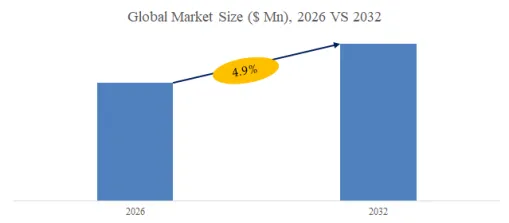
カテゴリー: 未分類 | 投稿者huangsisi 11:26 | コメントをどうぞ