

Home Textiles Market Summary
Home textiles (commonly referred to as “hometex”) are a broad category of textile products made primarily from textile fibers for use in household living and residential spaces. Their main functions include comfort and warmth, decoration and beautification, hygiene and cleaning, and protection, making them an important end-use category that connects the textile industry with consumer demand. Compared with apparel textiles, home textiles are centered on at-home scenarios and place greater emphasis on durability, ease of care, and decorative coordination. They are predominantly non-wearable products, yet they frequently come into contact with the human body and are closely tied to living quality.
In terms of product composition, home textiles mainly include bedding (bed sheets, duvet covers, pillowcases, quilts/comforters, pillows, mattress protectors, etc.), curtains and window furnishings (fabric curtains, blackout curtains, sheer curtains, etc.), decorative textiles (upholstery fabrics, cushions, tablecloths, decorative throws/blankets, etc.), floor textiles (carpets and mats), as well as bathroom and kitchen textiles (towels, bath towels, bathrobes, shower curtains, kitchen wiping cloths, and heat-insulation items, etc.). In terms of materials, home textile products can use natural fibers, man-made fibers, and regenerated fibers, and are manufactured through processes such as weaving, knitting, and nonwoven technologies
Market Overview
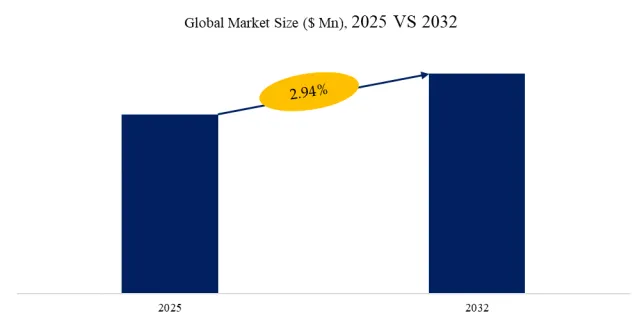
In 2025, Global home textiles market size was USD 180.46 billion, and the market CAGR for 2026–2032 was 2.94%. The core growth drivers come from replacement demand and new move-in demand driven by urbanization and improving housing conditions, the penetration of premiumization, coordinated sets, and functional attributes driven by consumption upgrading (skin-friendly, easy-care, antibacterial and anti-mite, cooling or warming, etc.), and the improvement in reach efficiency and conversion efficiency as online channels and content-driven e-commerce deepen penetration.
From a competitive landscape perspective, the industry overall exhibits a highly fragmented market structure. There are numerous brands and regional suppliers, with relatively high product homogeneity; competition is more a comprehensive contest of channel coverage, new-product launch cadence, value-for-money, and product capabilities. This fragmentation means that increases in industry concentration tend to occur through gradual evolution. Leading brands’ advantages mainly lie in brand awareness, channel resources, and supply-chain coordination efficiency, while the industry as a whole is still characterized by the coexistence of multiple tiers and multiple players.
From a demand structure perspective, home textiles consumption is evolving from single-item purchases toward scenario-based, set-based, and style-oriented consumption. Consumer decision-making is shifting from a single emphasis on price to a broader evaluation of comfort experience, design aesthetics, functional selling points, and quality consistency. Bedding sets and core essentials such as quilts/comforters and pillows remain the primary demand base; under improvement-led demand, mid-to-high-end materials and process upgrades, functional finishing, and categories that coordinate with overall home décor are more likely to generate structural incremental growth.
From a channel structure perspective, the industry has entered a normalized stage of online–offline integration and omnichannel operations. Online channels strengthen customer acquisition and rapid iteration, but price transparency and promotional rhythms impose higher requirements on product-mix design and gross margin management; companies need sustained investment in tiered assortments, content operations, and fulfillment services. Offline channels still carry experience and brand display functions, placing greater emphasis on sell-through execution, store productivity, and service capabilities. Meanwhile, project and group-purchase channels (hotels, apartments, fully-furnished/fit-out packages, etc.) prioritize batch consistency, durability and easy care, and delivery reliability, offering relatively stable volume shipments, while also imposing higher requirements on supply-chain organization and receivables management.
From the supply and cost side, home textiles companies have long faced raw-material volatility driven by the combined effects of cotton’s agricultural commodity nature and man-made fibers’ petrochemical-chain nature. Cost pass-through and gross margin stability management have become key differentiators in operating capability. Industry competitiveness is shifting from pure capacity scale to system-level capabilities, including R&D and sampling efficiency, fast-response scheduling, quality consistency control, compliance and traceability systems, and cross-channel assortment and pricing architecture management. Companies that can link raw-material strategy, product structure, and channel rhythm tend to demonstrate stronger operational resilience.
Overall, the future industry theme will be structural upgrading and efficiency competition under a highly fragmented landscape. Short-term fluctuations are more influenced by promotional cycles, raw-material prices, and changes in the external environment. Over the medium to long term, branding and product upgrading remain the key levers to raise value per customer and repurchase, while supply-chain fast response and omnichannel coordination will define the efficiency boundary and profit quality in a mature, stock-based competitive environment. For companies, clear positioning, stable quality, set-based and functional product portfolios, and refined channel operations will be the core path to navigate cycles and steadily strengthen competitiveness.
Figure00001. Global Home Textiles Market Size (US$ Million), 2025 vs 2032
Above data is based on report from QYResearch: Global Home Textiles Market Report 2026-2032 (published in 2026). If you need the latest data, plaese contact QYResearch.
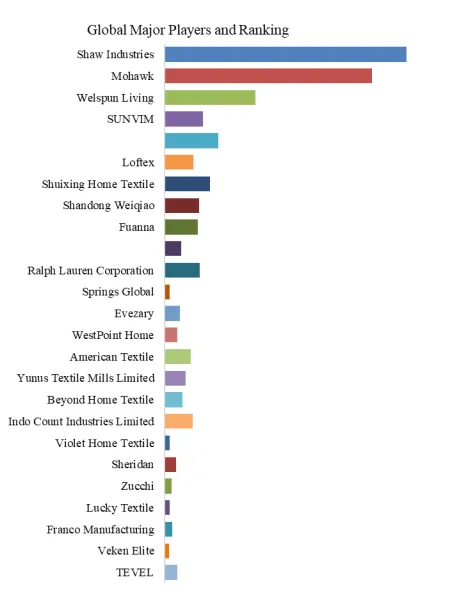
Figure00002. Global Home Textiles Top 25 Players Ranking and Market Share (Ranking is based on the revenue of 2025, continually updated)
Above data is based on report from QYResearch: Global Home Textiles Market Report 2026-2032 (published in 2026). If you need the latest data, plaese contact QYResearch.
According to QYResearch Top Players Research Center, the global key manufacturers of Home Textiles include Shaw Industries, Mohawk, Welspun Living, SUNVIM, Luolai Home Textile, Loftex, Shuixing Home Textile, Shandong Weiqiao, Mendale Home Textile, Ralph Lauren Corporation, etc. In 2025, the global top 10 players had a share approximately 6.0% in terms of revenue.
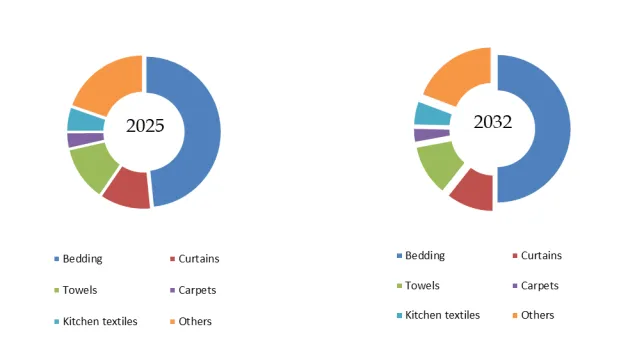
Figure00003. Home Textiles, Global Market Size, Split by Product Segment
Based on or includes research from QYResearch: Global Home Textiles Market Report 2026-2032.
In terms of product type, currently Bedding is the largest segment, hold a share of 48.42%.
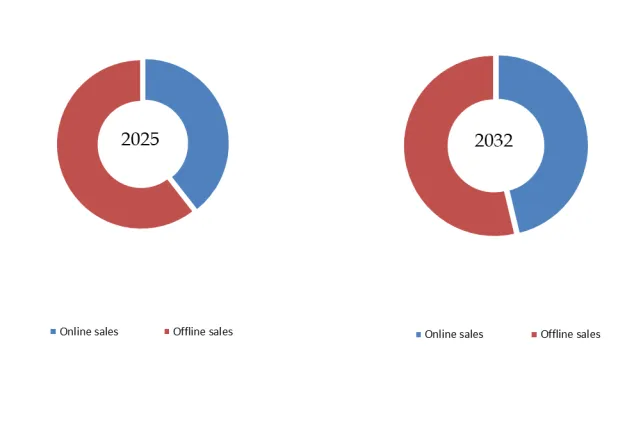
Figure00004. Home Textiles, Global Market Size, Split by Sales Channel Segment
Based on or includes research from QYResearch: Global Home Textiles Market Report 2026-2032.
In terms of product sales channel, currently Offline sales are the largest segment, hold a share of 60.55%.
Figure00005. Home Textiles, Global Market Size, Split by Region
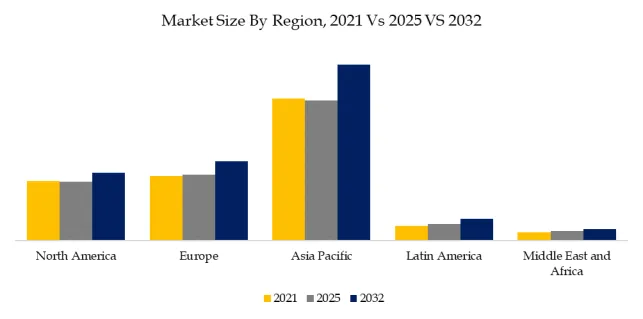
Based on or includes research from QYResearch: Global Home Textiles Market Report 2026-2032.
About QYResearch
QYResearch founded in California, USA in 2007.It is a leading global market research and consulting company. With over 17 years’ experience and professional research team in various cities over the world QY Research focuses on management consulting, database and seminar services, IPO consulting (data is widely cited in prospectuses, annual reports and presentations), industry chain research and customized research to help our clients in providing non-linear revenue model and make them successful. We are globally recognized for our expansive portfolio of services, good corporate citizenship, and our strong commitment to sustainability. Up to now, we have cooperated with more than 60,000 clients across five continents. Let’s work closely with you and build a bold and better future.
QYResearch is a world-renowned large-scale consulting company. The industry covers various high-tech industry chain market segments, spanning the semiconductor industry chain (semiconductor equipment and parts, semiconductor materials, ICs, Foundry, packaging and testing, discrete devices, sensors, optoelectronic devices), photovoltaic industry chain (equipment, cells, modules, auxiliary material brackets, inverters, power station terminals), new energy automobile industry chain (batteries and materials, auto parts, batteries, motors, electronic control, automotive semiconductors, etc.), communication industry chain (communication system equipment, terminal equipment, electronic components, RF front-end, optical modules, 4G/5G/6G, broadband, IoT, digital economy, AI), advanced materials industry Chain (metal materials, polymer materials, ceramic materials, nano materials, etc.), machinery manufacturing industry chain (CNC machine tools, construction machinery, electrical machinery, 3C automation, industrial robots, lasers, industrial control, drones), food, beverages and pharmaceuticals, medical equipment, agriculture, etc.
Contact Us:
If you have any queries regarding this report or if you would like further information, please contact us:
QY Research Inc.
Add: 17890 Castleton Street Suite 369 City of Industry CA 91748 United States
EN: https://www.qyresearch.com
Email: global@qyresearch.com
Tel: 001-626-842-1666(US)
JP: https://www.qyresearch.co.jp










