

Market Size
The global K-12 Robotics Kit market size is estimated to reach US$ 179.2 million by 2026 and is anticipated to reach US$ 353.7 million by 2032, witnessing a CAGR of 12% during the forecast period 2026-2032.
Figure00001. Global K-12 Robotics Kit Market Size (US$ Million), 2021-2032
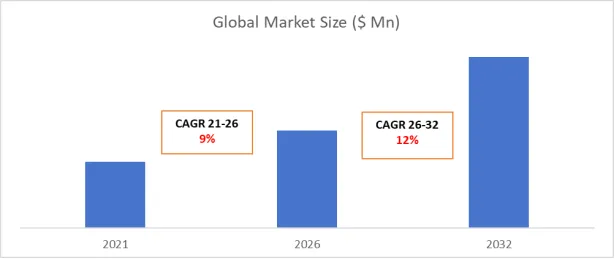
Above data is based on report from QYResearch: Global K-12 Robotics Kit Market Report 2025-2031 (published in 2025). If you need the latest data, please contact QYResearch.
Figure00002. Global K-12 Robotics Kit Top 15 Players Ranking and Market Share (Ranking is based on the revenue of 2025, continually updated)
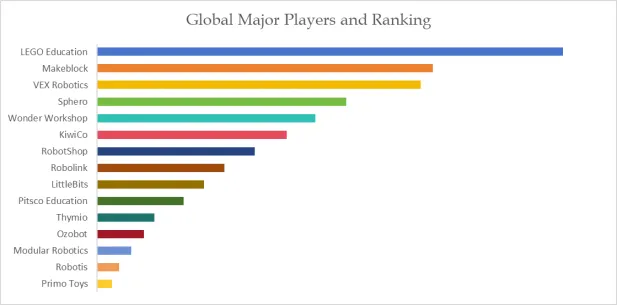
Above data is based on report from QYResearch: Global K-12 Robotics Kit Market Report 2025-2031 (published in 2025). If you need the latest data, plaese contact QYResearch.
K-12 Robotics Kit Market Summary
A K–12 Robotics Kit refers to a structured educational product package designed to teach students in kindergarten through 12th grade the fundamentals of robotics, programming, electronics, and engineering design. These kits typically combine mechanical components (such as frames, gears, wheels, and motors), electronic modules (controllers, sensors, actuators), and software programming platforms. The goal is to provide a hands-on, project-based learning experience that integrates science, technology, engineering, and mathematics (STEM) concepts into practical applications. Unlike industrial robotics systems, K–12 kits emphasize modularity, safety, and ease of assembly to suit different age groups and skill levels.
Most K–12 robotics kits are organized into tiered learning systems. Entry-level kits for elementary students focus on visual programming interfaces, such as block-based coding, and simple sensor interactions like light, sound, or distance detection. Middle school kits introduce more advanced concepts including logic control, algorithm design, and mechanical transmission principles. High school-level kits often support text-based programming languages (such as Python or C++) and may integrate artificial intelligence (AI), Internet of Things (IoT), and machine vision modules. This progressive structure allows students to build competencies over time while maintaining engagement.
Industry Chain
The upstream segment of the K–12 robotics kit industry primarily consists of component suppliers and technology providers. Key inputs include microcontrollers, sensors (infrared, ultrasonic, gyroscope, vision modules), servo motors, lithium batteries, plastic injection-molded structural parts, and printed circuit boards (PCBs). Semiconductor suppliers and contract electronics manufacturers play a critical role in cost control and performance stability. Additionally, software development tools and embedded operating systems are essential upstream resources that support the programming environment and firmware design.
The midstream segment involves robotics kit manufacturers and system integrators. These companies are responsible for product design, mechanical structure optimization, embedded software development, and curriculum alignment. They also manage quality control, branding, and certification compliance (such as CE, FCC, or regional education standards). Many leading firms operate a platform-based model, combining hardware kits, proprietary programming software, cloud learning systems, and teacher support materials into integrated educational solutions.
The downstream segment includes educational institutions, training centers, after-school programs, and robotics competition organizers. Primary and secondary schools represent the largest institutional buyers, often purchasing through government procurement or district-level tenders. Private STEM training centers and extracurricular education providers form a significant commercial market. In addition, international competitions and events create recurring demand for standardized robotics platforms, further driving sales and ecosystem stickiness.
Industry Trends
One major trend in the K–12 robotics kit market is the integration of artificial intelligence and smart sensing technologies. Advanced kits now include AI vision modules, speech recognition, and machine learning capabilities, allowing students to experiment with real-world intelligent systems. This trend reflects the broader digital transformation of education and aligns robotics learning with emerging workforce skills in AI and automation.
QYResearch founded in California, USA in 2007.It is a leading global market research and consulting company. With over 17 years’ experience and professional research team in various cities over the world QY Research focuses on management consulting, database and seminar services, IPO consulting, industry chain research and customized research to help our clients in providing non-linear revenue model and make them successful. We are globally recognized for our expansive portfolio of services, good corporate citizenship, and our strong commitment to sustainability. Up to now, we have cooperated with more than 60,000 clients across five continents. Let’s work closely with you and build a bold and better future.
QYResearch is a world-renowned large-scale consulting company. The industry covers various high-tech industry chain market segments, spanning the semiconductor industry chain (semiconductor equipment and parts, semiconductor materials, ICs, Foundry, packaging and testing, discrete devices, sensors, optoelectronic devices), photovoltaic industry chain (equipment, cells, modules, auxiliary material brackets, inverters, power station terminals), new energy automobile industry chain (batteries and materials, auto parts, batteries, motors, electronic control, automotive semiconductors, etc.), communication industry chain (communication system equipment, terminal equipment, electronic components, RF front-end, optical modules, 4G/5G/6G, broadband, IoT, digital economy, AI), advanced materials industry Chain (metal materials, polymer materials, ceramic materials, nano materials, etc.), machinery manufacturing industry chain (CNC machine tools, construction machinery, electrical machinery, 3C automation, industrial robots, lasers, industrial control, drones), food, beverages and pharmaceuticals, medical equipment, agriculture, etc.
Contact Us:
If you have any queries regarding this report or if you would like further information, please contact us:
QY Research Inc.
Add: 17890 Castleton Street Suite 369 City of Industry CA 91748 United States
EN: https://www.qyresearch.com
Email: global@qyresearch.com
Tel: 001-626-842-1666(US)
JP: https://www.qyresearch.co.jp










