

Polyolefin-based Adhesive Resins Market Summary
Polyolefin-based adhesive resins are a class of thermoplastic adhesive materials based on polyethylene (PE), polypropylene (PP), or their copolymers. They typically feature relatively low molecular weight, high melt flow, and good flexibility, allowing them to melt at comparatively low temperatures and form a strong bonding layer with other materials. Because polyolefins are inherently non-polar, they generally exhibit good adhesion to other non-polar plastics, metal foils, and certain coating materials.
These resins are hot-melt in nature: they soften and flow when heated, then solidify rapidly upon cooling to create a stable adhesive layer. They also have good chemical inertness, with resistance to water, acids, and alkalis, and are not easily attacked by most chemicals. With good flexibility and toughness, they can accommodate thermal expansion and contraction of bonded substrates, reducing the risk of cracking or delamination. In addition, polyolefin-based adhesive resins are easy to process and can be applied through extrusion, coating, and hot pressing, making them well suited for web lamination, film coatings, and multilayer packaging structures.
They are widely used in multilayer composites and packaging applications, especially in food, pharmaceutical, and personal care/home care industries. Typical uses include plastic/metal composite films (such as aluminum foil/PE laminates) for food packaging; plastic/plastic composite films (such as PE/PP multilayer structures) as internal bonding layers; hot-melt coatings and heat-seal layers for heat sealing of pouches, tubes, and trays; as well as bonding of composite sheets or films used in thermoformed packaging and waterproofing layers for construction materials. With increasingly stringent environmental requirements, development priorities include improving environmental performance, enhancing low-temperature adhesion to reduce processing energy consumption, and meeting lamination needs for high-barrier materials such as oxygen- and water-vapor-barrier films.
Table 1. Polyolefin-based Adhesive Resins Market Trends
| Key Trends | Description |
| Recyclable / mono-material packaging push | Brand owners and regulators are accelerating the shift toward recyclable structures (e.g., all-PE or all-PP laminates). Tie-layer/adhesive resins are increasingly engineered to enable strong bonding within mono-material designs while maintaining processability and package performance. |
| Compatibilizers for PCR and mixed polyolefins | Higher use of post-consumer recycled (PCR) content brings variability (odor, gels, contaminants, MFI drift) and mixed-polyolefin streams. Adhesive resins are being positioned as compatibilizers to improve interfacial adhesion, toughness, and melt stability in recycled-content films, sheets, and molded parts. |
| Higher-barrier multilayer structures (EVOH/PA/PET) | Food, pharma, and personal care demand longer shelf life and robust barrier performance. Adhesive resins are being optimized for reliable bonding to polar layers (e.g., EVOH, PA, PET) under thinner gauges, higher line speeds, and wider processing windows. |
| Low-temperature sealing & energy-saving processing | Converters and brand owners are targeting lower sealing/lamination temperatures to reduce energy consumption and improve throughput. This drives development of grades with improved low-temperature adhesion, faster set, and broader seal windows without sacrificing heat resistance in distribution. |
| Shift to solvent-free/low-emission converting | Packaging conversion continues moving away from solvent-based systems toward extrusion lamination/coating and other low-emission processes. Polyolefin-based adhesive resins benefit from this shift, but must deliver consistent adhesion, reduced odor, and stable performance across diverse substrates. |
| Faster product iteration and application-specific grades | Customers increasingly want “fit-for-use” solutions: specific grades for retort packaging, stand-up pouches, thermoforming, pipe multilayers, or metal-foil laminates. Suppliers respond with more segmented portfolios and quicker formulation/sampling cycles to match converter needs. |
| Automotive lightweighting & low-permeation systems | In automotive applications (fuel lines, multilayer tanks, under-hood components), demand focuses on low permeation, durability, and resistance to heat and chemicals. Adhesive resins are evolving to improve long-term bonding reliability under thermal cycling and aggressive media exposure. |
| Digitalization / smart manufacturing adoption | Producers and converters are adopting online monitoring, data collection, and predictive maintenance to reduce downtime and stabilize quality. This trend supports tighter specification control (MFI, graft level, gel count) and more consistent adhesive performance across batches and sites. |
| Bio-attributed and mass-balance materials | To meet sustainability targets without sacrificing performance, suppliers are introducing bio-attributed / mass-balance options and improving traceability documentation. Adoption is strongest where customers require “drop-in” materials compatible with existing extrusion and lamination lines. |
| Performance under thinner gauges and high-speed lines | Packaging downgauging and high-speed extrusion/lamination increase sensitivity to interfacial failure and process instability. Adhesive resins are being enhanced for higher hot-tack, better melt strength, and stable adhesion under thinner tie-layer thicknesses. |
Source: Secondary Sources, Expert Interviews and QYResearch, 2026
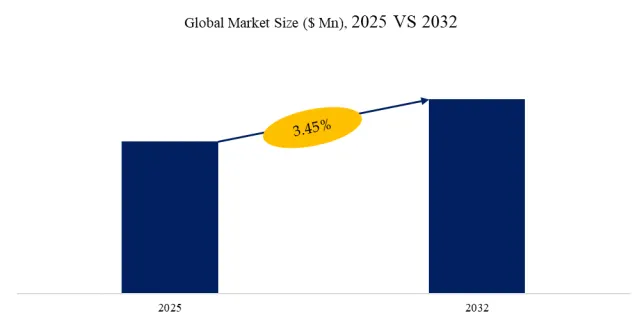
Figure00001. Global Polyolefin-based Adhesive Resins Market Size (US$ Million), 2025 vs 2032
Above data is based on report from QYResearch: Global Polyolefin-based Adhesive Resins Market Report 2026-2032 (published in 2026). If you need the latest data, plaese contact QYResearch.
According to the new market research report Global Polyolefin-based Adhesive Resins Market Report 2026-2032, published by QYResearch, the global Polyolefin-based Adhesive Resins market size is projected to reach USD 1.96 billion by 2032, at a CAGR of 3.45% during the forecast period.
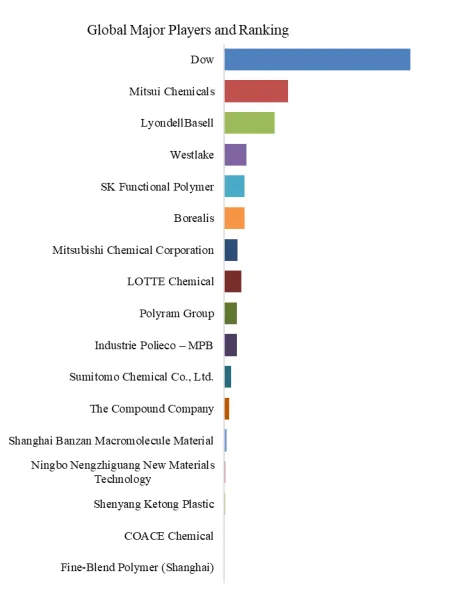
Figure00002. Global Polyolefin-based Adhesive Resins Top 17 Players Ranking and Market Share (Ranking is based on the revenue of 2025, continually updated)
Above data is based on report from QYResearch: Global Polyolefin-based Adhesive Resins Market Report 2026-2032 (published in 2026). If you need the latest data, plaese contact QYResearch.
According to QYResearch Top Players Research Center, the global key manufacturers of Polyolefin-based Adhesive Resins include Dow, Mitsui Chemicals, LyondellBasell, Westlake, SK Functional Polymer, Borealis, Mitsubishi Chemical Corporation, LOTTE Chemical, Industrie Polieco – MPB, Sumitomo Chemical Co., Ltd., etc. In 2025, the global top 10 players had a share approximately 85.0% in terms of revenue.
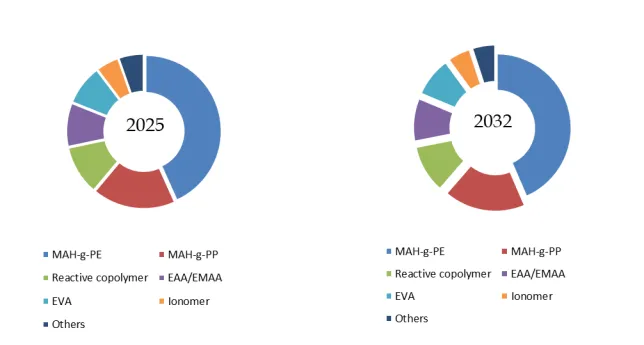
Figure00003. Polyolefin-based Adhesive Resins, Global Market Size, Split by Product Segment
Based on or includes research from QYResearch: Global Polyolefin-based Adhesive Resins Market Report 2026-2032.
In terms of product type, currently MAH-g-PE is the largest segment, hold a share of 43.27%.
About QYResearch
QYResearch founded in California, USA in 2007.It is a leading global market research and consulting company. With over 17 years’ experience and professional research team in various cities over the world QY Research focuses on management consulting, database and seminar services, IPO consulting (data is widely cited in prospectuses, annual reports and presentations), industry chain research and customized research to help our clients in providing non-linear revenue model and make them successful. We are globally recognized for our expansive portfolio of services, good corporate citizenship, and our strong commitment to sustainability. Up to now, we have cooperated with more than 60,000 clients across five continents. Let’s work closely with you and build a bold and better future.
QYResearch is a world-renowned large-scale consulting company. The industry covers various high-tech industry chain market segments, spanning the semiconductor industry chain (semiconductor equipment and parts, semiconductor materials, ICs, Foundry, packaging and testing, discrete devices, sensors, optoelectronic devices), photovoltaic industry chain (equipment, cells, modules, auxiliary material brackets, inverters, power station terminals), new energy automobile industry chain (batteries and materials, auto parts, batteries, motors, electronic control, automotive semiconductors, etc.), communication industry chain (communication system equipment, terminal equipment, electronic components, RF front-end, optical modules, 4G/5G/6G, broadband, IoT, digital economy, AI), advanced materials industry Chain (metal materials, polymer materials, ceramic materials, nano materials, etc.), machinery manufacturing industry chain (CNC machine tools, construction machinery, electrical machinery, 3C automation, industrial robots, lasers, industrial control, drones), food, beverages and pharmaceuticals, medical equipment, agriculture, etc.
Contact Us:
If you have any queries regarding this report or if you would like further information, please contact us:
QY Research Inc.
Add: 17890 Castleton Street Suite 369 City of Industry CA 91748 United States
EN: https://www.qyresearch.com
Email: global@qyresearch.com
Tel: 001-626-842-1666(US)
JP: https://www.qyresearch.co.jp










