

Belt Rip Detection System Market Summary
To address the problems of low efficiency, high missed detection rate, and potential equipment downtime and safety accidents associated with manual belt tear detection in mining, port, and power industries, belt tear detection systems have been developed. Since its industrial-scale application in the early 21st century, the system has evolved into an industrial safety equipment that encompasses multiple detection principles, enabling real-time monitoring, automatic alarms, precise positioning, and linkage control. It is widely used in scenarios such as main conveyor belts in mines, bulk cargo conveyor belts in ports, and coal conveyor belts in power plants, effectively reducing the incidence of tearing accidents and economic losses. It is widely used in main conveyor belts in mines, bulk cargo conveyor belts in ports, and coal conveyor belts in power plants, effectively reducing the incidence of tear accidents and economic losses.
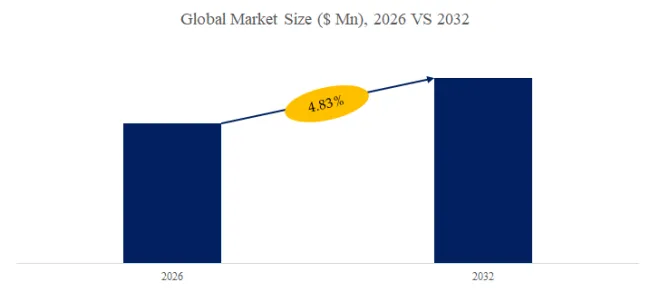
According to the new market research report “Global Belt Rip Detection System Market Report 2021-2032”, published by QYResearch, the global Belt Rip Detection System market size is projected to reach USD 1.34 billion by 2032, at a CAGR of 4.8% during the forecast period.
Figure00001. Global Belt Rip Detection System Market Size (US$ Million), 2026-2032
Above data is based on report from QYResearch: Global Belt Rip Detection System Market Report 2021-2032 (published in 2025). If you need the latest data, plaese contact QYResearch.
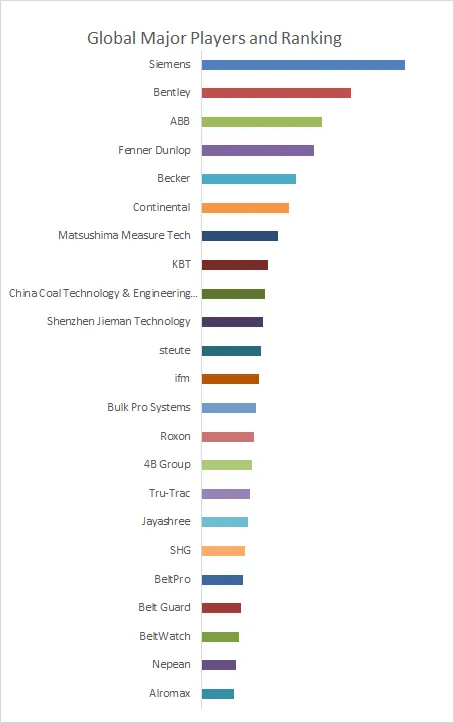
Figure00002. Global Belt Rip Detection System Top 23 Players Ranking and Market Share (Ranking is based on the revenue of 2025, continually updated)
Above data is based on report from QYResearch: Global Belt Rip Detection System Market Report 2021-2032 (published in 2025). If you need the latest data, plaese contact QYResearch.
Table 1. Belt Rip Detection System Industry Chain Analysis
| Item | Description | |
| Upstream | Industrial Camera | The industrial camera is the core component of the belt tear detection system for visual image acquisition. It acquires real-time images of the belt’s running surface, joints, edges, and surface condition through high-speed, high-resolution imaging, providing the system with raw visual data. It features high frame rate, anti-interference, strong stability, and adaptability to dusty and vibrating environments, making it a key input unit for identifying belt scratches, damage, tears, and foreign object blockages. |
| Infrared Detector | The infrared detector is the core component for detecting potential belt hazards through infrared thermal imaging. It can non-contactly acquire the temperature distribution on the belt surface, identifying temperature anomalies caused by abnormal friction, localized jamming, tearing and overheating, and roller/idler malfunctions in real time. It can operate stably even in low-light, dusty, and smoky environments, providing early warnings of major risks such as belt tears and fires. | |
| Data Acquisition and Transmission Module | The data acquisition and transmission module is the system’s signal processing and communication unit. It is responsible for analog-to-digital conversion, preprocessing, buffering, and high-speed uploading of images, temperature, speed, and alarm signals collected by industrial cameras, infrared detectors, and sensors. Data is transmitted in real-time to the main control computer and backend platform via Ethernet, fiber optics, or wireless methods, ensuring low-latency and high-reliability data transmission for remote monitoring and coordinated control. | |
| Downstream | Mining | Mining conveyor belts are subjected to long-term impact, abrasion, and sharp material scratches, making them highly susceptible to longitudinal tearing. The belt tear detection system uses visual and infrared fusion detection to identify potential hazards such as belt scratches, tears, joint abnormalities, foreign object blockages, and overheating in real time. It provides early warnings and triggers automatic shutdowns, preventing complete belt breakage, material spillage, and equipment damage, ensuring continuous transportation safety in mines and significantly reducing downtime losses and maintenance costs. |
| Ports | Port conveyor belts handle the high-speed, continuous transfer of bulk cargo such as coal, ore, and containerized bulk materials, operating under complex conditions and experiencing large load fluctuations. The system provides 24/7 online monitoring of the conveyor belt’s operating status, quickly identifying faults such as tears, damage, misalignment, and foreign object jamming. It implements automatic alarms and interlocking protection, improving the safety and efficiency of port loading and unloading operations and preventing operational interruptions, cargo spillage, and safety accidents caused by belt malfunctions. | |
| Power | Coal conveyor belts in thermal power plants are the core channel for fuel supply; tears directly impact the unit’s power generation safety. The belt tear detection system provides full-process non-contact intelligent monitoring of the coal conveyor belt, promptly detecting potential hazards such as belt tears, scratches, foreign objects, and localized overheating. This prevents accidents such as belt breakage, coal blockage, and fires, ensuring stable and reliable fuel delivery and improving the unit’s operational safety and economy. | |
| Metallurgy | In metallurgical environments, high temperatures, high dust levels, and high material hardness make conveyor belts susceptible to tearing from impacts by high-temperature materials, sharp slag, and metal blocks. The system reliably identifies dangerous conditions such as belt surface damage, abnormal temperatures, and foreign object impacts in high-temperature, dusty, and highly interfering environments, providing early warnings and automatic protection to prevent major equipment accidents and ensure the continuous and reliable operation of key processes such as metallurgical raw material transportation, sintering, and blast furnace charging. |
Source: Secondary Sources, Press Releases, Expert Interviews and QYResearch, 2025
Table 2. Belt Rip Detection System Industry Policy Analysis
| Policy | Description | |
| 1 | “14th Five-Year Plan for Intelligent Manufacturing Development” | The policy mandates that high-risk industries be equipped with intelligent safety monitoring devices, promoting the widespread adoption of belt tear detection systems in mines, ports, and other scenarios. |
| 2 | “Industrial Safety Directive” | The directive mandates that high-risk industries in member countries adopt high-precision detection systems, prompting Chinese companies such as Siemens and China Coal Technology & Engineering Group to improve their product explosion-proof certification (e.g., Ex d I) and system integration capabilities. |
| 3 | “Technical Specification for Condition Monitoring System of Mining Belt Conveyors” | The China Small and Medium-sized Commercial Enterprises Association initiated this standard project to standardize system structure, data acquisition modules, and alarm logic, promoting the industry’s transformation from “mechanical sensors” to “AI vision + multi-sensor fusion.” The standard requires the system to support PLC-linked shutdown, with a three-level alarm response time ≤2 seconds and data storage ≥3 months. |
Source: Secondary Sources, Press Releases, Expert Interviews and QYResearch, 2025
Table 3. Belt Rip Detection System Industry Development Trends
| Development Trends | Description | |
| 1 | Multimodal technology fusion and precision detection upgrade | Deep integration of laser vision, infrared thermal imaging, 3D machine vision, and AI algorithms drives breakthroughs in detection accuracy and response speed, and can output quantitative data such as tear length, width, and depth. This technology combination ensures stable operation even under harsh conditions such as high dust levels in mines, high salt spray in ports, and high temperatures in power plants. For example, after its application to sintering conveyor belts in a steel plant in Liaoning, the accident rate decreased by 90%. |
| 2 | Intelligent early warning and full-process automation | AI algorithms enable a leap from “passive alarm” to “proactive prevention.” By analyzing abnormal heat distribution in the conveyor belt through deep learning, potential damage (such as internal fiber breakage) can be predicted 3-7 days in advance. After integration with PLC/DCS, the system supports full-process automation, including three-level alarm-linked shutdown, automatic image capture and archiving, and maintenance dispatch. |
| 3 | Application areas expand to emerging industries | Demand is steadily increasing in traditional sectors (mining, ports, and power) and is also penetrating emerging fields such as logistics, food processing, and metallurgy. In port automation, long-distance conveyor belts (over 1000 meters) achieve full-link early warning through “multi-point distributed monitoring + centralized control”; the power industry uses it for high-temperature monitoring of coal conveyor belts; and food production ensures the hygiene and safety of conveyor belts. |
Source: Secondary Sources, Press Releases, Expert Interviews and QYResearch, 2025
About QYResearch
QYResearch founded in California, USA in 2007.It is a leading global market research and consulting company. With over 17 years’ experience and professional research team in various cities over the world QY Research focuses on management consulting, database and seminar services, IPO consulting (data is widely cited in prospectuses, annual reports and presentations), industry chain research and customized research to help our clients in providing non-linear revenue model and make them successful. We are globally recognized for our expansive portfolio of services, good corporate citizenship, and our strong commitment to sustainability. Up to now, we have cooperated with more than 60,000 clients across five continents. Let’s work closely with you and build a bold and better future.
QYResearch is a world-renowned large-scale consulting company. The industry covers various high-tech industry chain market segments, spanning the semiconductor industry chain (semiconductor equipment and parts, semiconductor materials, ICs, Foundry, packaging and testing, discrete devices, sensors, optoelectronic devices), photovoltaic industry chain (equipment, cells, modules, auxiliary material brackets, inverters, power station terminals), new energy automobile industry chain (batteries and materials, auto parts, batteries, motors, electronic control, automotive semiconductors, etc.), communication industry chain (communication system equipment, terminal equipment, electronic components, RF front-end, optical modules, 4G/5G/6G, broadband, IoT, digital economy, AI), advanced materials industry Chain (metal materials, polymer materials, ceramic materials, nano materials, etc.), machinery manufacturing industry chain (CNC machine tools, construction machinery, electrical machinery, 3C automation, industrial robots, lasers, industrial control, drones), food, beverages and pharmaceuticals, medical equipment, agriculture, etc.
Contact Us:
If you have any queries regarding this report or if you would like further information, please contact us:
QY Research Inc.
Add: 17890 Castleton Street Suite 369 City of Industry CA 91748 United States
EN: https://www.qyresearch.com
Email: global@qyresearch.com
Tel: 001-626-842-1666(US)
JP: https://www.qyresearch.co.jp










