

QY Research Inc. (Global Market Report Research Publisher) announces the release of 2025 latest report “Electronic Glass Cloth for CCL- Global Market Share and Ranking, Overall Sales and Demand Forecast 2026-2032”. Based on current situation and impact historical analysis (2020-2024) and forecast calculations (2026-2032), this report provides a comprehensive analysis of the global Electronic Glass Cloth for CCL market, including market size, share, demand, industry development status, and forecasts for the next few years.
Over the past half century, chip technology and circuit integration has continued to improve, while consumer upgrades have driven the explosive growth of smart phones and wearable devices, smart consumer electronics products are gradually moving towards miniaturisation, thin and light, intelligent and portable direction, prompting the printed circuit board as the carrier of the circuit needs to meet the demand for high-density interconnections. Its upstream copper cladding boards need to achieve substrate thin and light and high performance to meet the needs of multilayer boards or HDI boards, the thickness of the electronic cloth puts forward higher requirements, high-end very thin cloth, ultra-thin cloth will be more favoured.
【Get a free sample PDF of this report (Including Full TOC, List of Tables & Figures, Chart)】
https://www.qyresearch.com/reports/3309385/electronic-glass-cloth-for-ccl
Electronic Glass Cloth for CCL Market Summary
Electronic glass cloth for CCL is woven from electronic-grade glass fiber yarn, which is typically drawn from E-glass (alkali-free glass) with individual filament diameters generally below 9 µm. This glass cloth provides bidirectional or multidirectional reinforcement for composite materials. In electronics manufacturing, electronic glass cloth is combined with various resin-based adhesives or impregnating resins to produce copper-clad laminates (CCL), which serve as the core substrate for printed circuit boards (PCB). As a fundamental raw material for CCL, electronic glass cloth is widely used in high-end applications such as smartphones, servers, and automotive electronics.
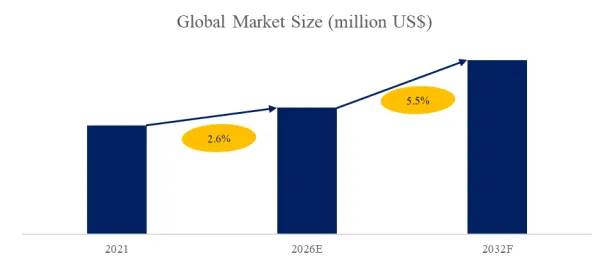
According to the new market research report “Global Electronic Glass Cloth for CCL Market Report 2026-2032”, published by QYResearch, the global Electronic Glass Cloth for CCL market size is projected to reach USD 4.47 billion by 2032, at a CAGR of 5.5% during the forecast period.
Figure00001. Global Electronic Glass Cloth for CCL Market Size (US$ Million), 2021-2032
Above data is based on report from QYResearch: Global Electronic Glass Cloth for CCL Market Report 2026-2032 (published in 2025). If you need the latest data, plaese contact QYResearch.
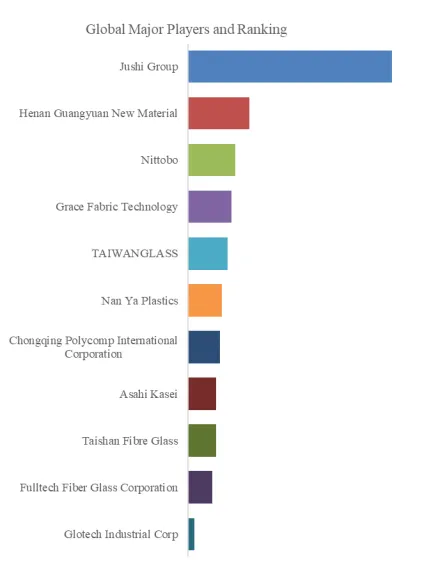
Figure00002. Global Electronic Glass Cloth for CCL Top 11 Players Ranking and Market Share (Ranking is based on the revenue of 2025, continually updated)
Above data is based on report from QYResearch: Global Electronic Glass Cloth for CCL Market Report 2026-2032 (published in 2025). If you need the latest data, plaese contact QYResearch.
According to QYResearch Top Players Research Center, the global key manufacturers of Electronic Glass Cloth for CCL include Jushi Group, Henan Guangyuan New Material, Nittobo, etc. In 2025, the global top three players had a share approximately 45.2% in terms of revenue.
Industrial Chain
Upstream
Electronic-grade glass fiber yarn is the key raw material for producing electronic glass cloth, accounting for approximately 60%–70% of its total cost. Its production process is highly complex and technically demanding. Raw materials such as silica sand, cullet, limestone, soda ash, and kaolin are mixed in precise proportions and pulverized, then fed into high-temperature furnaces (typically above 1,400°C) to form a homogeneous molten glass. This process requires not only high-energy equipment but also precise control of the glass formulation. By adjusting the proportions of components like SiO₂, Al₂O₃, CaO, and B₂O₃, manufacturers control the viscosity, surface tension, and thermal stability of the molten glass. During the fiber-drawing stage, the molten glass is continuously extruded through platinum–rhodium alloy bushings at extremely high speed to form filaments only 5–9 µm in diameter. These filaments must remain continuous, uniform, and are immediately coated with special sizing agents to enhance bundling and downstream processing before being twisted into glass fiber yarn.
Midstream
Electronic glass cloth for CCL occupies the midstream of the industry chain and serves as the core substrate for copper-clad laminates (CCL) and printed circuit boards (PCB). Global production capacity is highly concentrated in Japan, Taiwan, and mainland China, forming a clear tiered structure. Japanese companies such as Nitto Boseki and Asahi Kasei dominate the high-end market, particularly in ultra-thin fabrics, low-dielectric (Low-Dk), and low-thermal-expansion (Low-CTE) products, leveraging decades of technological experience. Taiwan-based producers like Taiwan Glass Group focus on mid-to-high-end products with stable mass production and international customer certifications. Mainland Chinese companies including Honghe Technology, Sinoma Science & Technology, and Guangyuan New Materials have accelerated technological breakthroughs in ultra-thin and extremely thin fabrics, rapidly closing the gap with leading global players.
Downstream
Electronic glass cloth for CCL is primarily consumed in high-end PCB manufacturing that demands high frequency, high speed, and high reliability. The downstream market is concentrated in four main sectors: consumer electronics, automotive electronics, communication equipment, and servers. Driven by both technological evolution and market expansion, these sectors are increasingly demanding higher performance specifications and optimized usage structures for electronic-grade glass fiber cloth.
Influencing Factors
Drivers:
The development of AI chips is pushing demand for Electronic glass cloth for CCL toward higher-frequency, high-speed, and high-reliability applications. As AI training and inference chips continue to evolve, packaging and board-level interconnects require higher bandwidth and lower latency. This places stricter demands on CCL substrates and related high-speed PCBs for stable dielectric constants, low dielectric loss, and dimensional stability. Consequently, Electronic glass cloth for CCL must improve in yarn fineness, weaving uniformity, defect control, and surface treatment consistency. At the same time, rising power consumption in AI chips increases thermal stress and introduces more complex reliability scenarios, accelerating the adoption of high-Tg systems, low-CTE matching, and enhanced moisture/thermal-resistant materials. Suppliers with high yield, batch stability, and rapid qualification capabilities therefore face structural growth opportunities.
Challenges:
Intense industry competition and falling product prices remain long-term challenges that compress margins and increase market differentiation. Low- and mid-end electronic glass fiber cloth products are highly standardized, with relatively low expansion barriers, making temporary oversupply common and leading to aggressive price competition that depresses ASP and squeezes gross margins. Even in high-end segments, as domestic and international manufacturers invest heavily and downstream CCL customers consolidate, bargaining power increasingly shifts toward buyers, intensifying price negotiations. Companies with more homogeneous product portfolios and limited differentiation—such as ultra-thin fine yarns, high-strength low-defect fabrics, or automotive-grade CAF-resistant materials—are particularly at risk of “volume growth without profit growth.” Therefore, navigating price decline cycles demands tight cost control, yield improvement, and rapid scaling of high-end product share.
Trend:
Leading companies increasingly adopt vertically integrated production models that combine electronic yarn and glass fiber cloth manufacturing, creating a strong competitive moat. Full-chain integration mitigates operational risks from upstream raw material price fluctuations and enables precise cost control through internal resource coordination. Deep integration of yarn R&D with cloth weaving allows customized development for specific applications, enhancing product consistency and yield control. This vertical advantage is especially pronounced at production scales exceeding tens of millions of square meters, significantly boosting market premium potential. Vertical integration also improves supply chain responsiveness and self-controllability, ensuring stable delivery and cost leadership under changing market conditions, providing a foundation for sustainable, large-scale growth.
The report provides a detailed analysis of the market size, growth potential, and key trends for each segment. Through detailed analysis, industry players can identify profit opportunities, develop strategies for specific customer segments, and allocate resources effectively.
The Electronic Glass Cloth for CCL market is segmented as below:
By Company
Nittobo
Nan Ya Plastics
Asahi Kasei
TAIWANGLASS
AGY
PFG Fiber Glass
Fulltech
Grace Fabric Technology
Henan Guangyuan New Material
Taishan Fibre Glass
Segment by Type
E-Glass
L-Glass
NE-Glass
Segment by Application
Consumer Electronic
Automotive
Aerospace
Others
Each chapter of the report provides detailed information for readers to further understand the Electronic Glass Cloth for CCL market:
Chapter 1: Introduces the report scope of the Electronic Glass Cloth for CCL report, global total market size (valve, volume and price). This chapter also provides the market dynamics, latest developments of the market, the driving factors and restrictive factors of the market, the challenges and risks faced by manufacturers in the industry, and the analysis of relevant policies in the industry. (2021-2032)
Chapter 2: Detailed analysis of Electronic Glass Cloth for CCL manufacturers competitive landscape, price, sales and revenue market share, latest development plan, merger, and acquisition information, etc. (2021-2026)
Chapter 3: Provides the analysis of various Electronic Glass Cloth for CCL market segments by Type, covering the market size and development potential of each market segment, to help readers find the blue ocean market in different market segments. (2021-2032)
Chapter 4: Provides the analysis of various market segments by Application, covering the market size and development potential of each market segment, to help readers find the blue ocean market in different downstream markets.(2021-2032)
Chapter 5: Sales, revenue of Electronic Glass Cloth for CCL in regional level. It provides a quantitative analysis of the market size and development potential of each region and introduces the market development, future development prospects, market space, and market size of each country in the world..(2021-2032)
Chapter 6: Sales, revenue of Electronic Glass Cloth for CCL in country level. It provides sigmate data by Type, and by Application for each country/region.(2021-2032)
Chapter 7: Provides profiles of key players, introducing the basic situation of the main companies in the market in detail, including product sales, revenue, price, gross margin, product introduction, recent development, etc. (2021-2026)
Chapter 8: Analysis of industrial chain, including the upstream and downstream of the industry.
Chapter 9: Conclusion.
Benefits of purchasing QYResearch report:
Competitive Analysis: QYResearch provides in-depth Electronic Glass Cloth for CCL competitive analysis, including information on key company profiles, new entrants, acquisitions, mergers, large market shear, opportunities, and challenges. These analyses provide clients with a comprehensive understanding of market conditions and competitive dynamics, enabling them to develop effective market strategies and maintain their competitive edge.
Industry Analysis: QYResearch provides Electronic Glass Cloth for CCL comprehensive industry data and trend analysis, including raw material analysis, market application analysis, product type analysis, market demand analysis, market supply analysis, downstream market analysis, and supply chain analysis.
and trend analysis. These analyses help clients understand the direction of industry development and make informed business decisions.
Market Size: QYResearch provides Electronic Glass Cloth for CCL market size analysis, including capacity, production, sales, production value, price, cost, and profit analysis. This data helps clients understand market size and development potential, and is an important reference for business development.
Other relevant reports of QYResearch:
Global Electronic Glass Cloth for CCL Market Insights, Forecast to 2030
Global and United States Electronic Glass Cloth for CCL Market Report & Forecast 2024-2030
Global Electronic Glass Cloth for CCL Market Research Report 2024
About Us:
QYResearch founded in California, USA in 2007, which is a leading global market research and consulting company. Our primary business include market research reports, custom reports, commissioned research, IPO consultancy, business plans, etc. With over 19 years of experience and a dedicated research team, we are well placed to provide useful information and data for your business, and we have established offices in 7 countries (include United States, Germany, Switzerland, Japan, Korea, China and India) and business partners in over 30 countries. We have provided industrial information services to more than 60,000 companies in over the world.
Contact Us:
If you have any queries regarding this report or if you would like further information, please contact us:
QY Research Inc.
Add: 17890 Castleton Street Suite 369 City of Industry CA 91748 United States
EN: https://www.qyresearch.com
Email: global@qyresearch.com
Tel: 001-626-842-1666(US)
JP: https://www.qyresearch.co.jp










