

QY Research Inc. (Global Market Report Research Publisher) announces the release of 2025 latest report “Fluid Dispensing Consumables- Global Market Share and Ranking, Overall Sales and Demand Forecast 2026-2032”. Based on current situation and impact historical analysis (2020-2024) and forecast calculations (2026-2032), this report provides a comprehensive analysis of the global Fluid Dispensing Consumables market, including market size, share, demand, industry development status, and forecasts for the next few years.
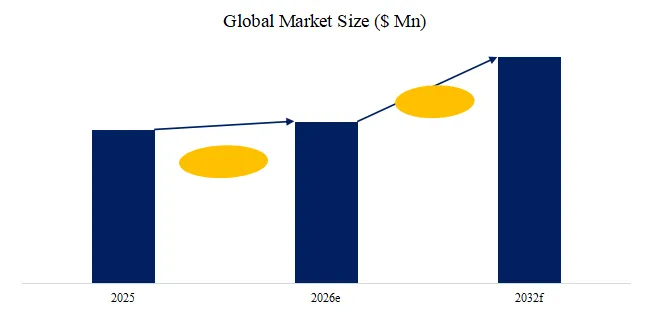
The global market for Fluid Dispensing Consumables was estimated to be worth US$ 1122 million in 2025 and is projected to reach US$ 1652 million, growing at a CAGR of 5.7% from 2026 to 2032.
【Get a free sample PDF of this report (Including Full TOC, List of Tables & Figures, Chart)】
https://www.qyresearch.com/reports/5546527/fluid-dispensing-consumables
Fluid Dispensing Consumables Product Definition
Fluid Dispensing Consumables are the replaceable components and accessories that interface directly with process fluids in automated or manual dispensing systems and that are designed to be used up or regularly replaced during normal production. They include items such as dispensing needles, metal and ceramic nozzles, plastic tapered tips, syringes and barrels, pistons and wipers, cartridges and dual cartridges, static mixing elements, valves seats and seals, filters and ancillary items like caps and adapters that ensure safe handling and controlled delivery of adhesives, sealants, coatings, lubricants, inks and reagents. These consumables form the immediate pathway between the bulk fluid package and the workpiece, and their design, material selection and cleanliness strongly influence deposit size, placement accuracy, stringing behaviour, void formation and overall process stability. In practice, Fluid Dispensing Consumables are treated as critical yet relatively low ticket elements within qualified production recipes, and they create a recurring revenue stream that is closely tied to equipment utilisation and material consumption.
Figure00001. Global Fluid Dispensing Consumables Market Size (US$ Million), 2021-2032
According to the new market research report “Global Fluid Dispensing Consumables Market Report 2026-2032″, published by QYResearch, the global Fluid Dispensing Consumables market size is reached to USD 1121.94 million in 2025, at a CAGR of 5.74% during the forecast period.
Above data is based on report from QYResearch: Global Fluid Dispensing Consumables Market Report 2025-2031 (published in 2025). If you need the latest data, plaese contact QYResearch.
Fluid Dispensing Consumables Market Summary
Research Background:
The core process of the global manufacturing industry’s accelerated evolution towards precision and automation constitutes the fundamental driving force for the development of the Fluid Dispensing Consumables market. Against the backdrop of miniaturization in consumer electronics, high integration of electronic control systems in new energy vehicles, and continuous breakthroughs in advanced semiconductor packaging technologies, fluid dispensing processes have evolved from traditional auxiliary bonding steps into critical manufacturing steps that ensure the reliability of electronic products, enhance energy system security, and determine chip performance. This profound transformation has elevated the precision, consistency, and zero-contamination requirements of the dispensing process to an unprecedented strategic level. This has propelled Fluid Dispensing Consumables, which directly participate in and decisively influence the performance of these processes, from marginalized consumables to a core position concerning overall manufacturing yield and cost efficiency. Its technological evolution and market demand are closely synchronized with the innovative pulse of high-end manufacturing.
Development Status:
The current Fluid Dispensing Consumables market exhibits a significant dual-track structure and a trend towards specialization. In the mature, low-to-mid-range general-purpose consumables sector, market competition is fierce, product homogeneity is high, price is the core competitive factor, and the market structure is relatively fragmented. In contrast, in the specialized consumables sector serving high-precision manufacturing, technological barriers have created a strong competitive advantage, and the market is dominated by a few leading companies with deep expertise in materials science, precision machining, and fluid dynamics. These companies have established close partnerships with top downstream manufacturers by providing customized solutions that perfectly match specific adhesives and meet micron- to nanometer-level dispensing accuracy requirements. Overall, the market is shifting from providing standardized parts to providing consumable-centric “process assurance services,” with the value focus continuously shifting towards the high-end market.
Future Trends:
First, technological integration and intelligentization will become the core upgrade path. Future Fluid Dispensing Consumables will transcend the role of passively performing mechanical functions. Through integration with sensors, microchips, and digital interfaces, they will evolve into intelligent terminals capable of real-time monitoring of their own status, fluid characteristics, and dispensing quality. For example, needles integrating pressure and temperature sensors, or cartridges embedded with RFID chips to record usage history, will enable automatic calibration of process parameters, accurate prediction of wear life, and full-process data traceability, thereby significantly improving the stability and controllability of the production process.
Second, material innovation and adaptability to extreme working conditions are key breakthroughs. With the continuous emergence of new conductive adhesives, thermally conductive materials, biocompatible adhesives, and high-performance structural adhesives, and the expansion of application scenarios to extreme environments such as high temperatures and high corrosion, the market is placing higher demands on the cutting-edge materials science capabilities of consumables. Developing special consumables that can withstand harsh chemical properties, possess ultra-low surface energy to prevent adhesive residue, or meet extremely high cleanliness standards will become the technological high ground for enterprises to conquer emerging high-value markets.
Third, the service model will shift from product sales to integrated solutions of “consumables + data + services.” Leading consumable suppliers will no longer simply sell physical products, but will deeply integrate them with professional fluid application analysis, process databases, regular maintenance recommendations, and failure analysis services. By building process optimization models based on consumable usage data, suppliers will evolve into co-responsible parties and partners in improving customer manufacturing yields, thereby establishing deeper customer lock-in and the ability to continuously capture value.
Supply Chain Analysis:
l Upstream
The upstream of the Fluid Dispensing Consumables industry chain is the source of technology-intensive and material innovation, its core consisting of high-performance specialty material suppliers and high-precision core component manufacturers. Firstly, the upstream includes chemical and materials companies providing medical-grade stainless steel, high-performance engineering plastics, specialty ceramics, and surface treatment materials; their products determine the chemical compatibility, wear resistance, and dimensional stability of the consumables. Secondly, core component manufacturers with micron-level precision machining, complex mold development, and ultra-high cleanliness assembly capabilities are responsible for transforming specialty materials into key functional parts such as needle tips, valve cores, and seals; their process level directly defines the performance ceiling of the consumables. The upstream segment possesses significant capital and technological barriers, and its iteration pace closely follows the downstream high-end manufacturing industry’s extreme requirements for precision and reliability, forming the fundamental support for the industry chain’s value and technological competitiveness.
l Downstream
The downstream of the Fluid Dispensing Consumables industry chain is key to demand-driven growth and value realization, its form shaped by a highly fragmented end-user manufacturing market with vastly different demands. Downstream, consumables directly serve automated production lines in numerous industries, including consumer electronics, semiconductor packaging, new energy vehicles, and medical devices. The production cycle time, fluid materials used, and stringent yield requirements of these end customers ultimately define the performance standards for consumables. A deeper downstream driving force stems from the integrated process solutions needs of dispensing equipment manufacturers and large manufacturers. Leading consumable companies collaborate deeply with these companies, embedding consumables into standardized dispensing work units or overall solutions for sale. The logic behind the expansion of the downstream market lies in the fact that consumable suppliers must shift from passively providing standardized parts to proactively understanding and solving the core pain points of different industries in specific processes such as micro-connection, sealing, potting, and coating. This transforms them from basic suppliers into key partners ensuring customer manufacturing efficiency and product reliability.
Nordson Fluid Dispensing Consumables Product Introduction:
l Dispense Tips & Needles
Single-use or reusable fluid outlets that define how material exits the dispenser, controlling bead size, placement precision, and cutoff behavior. Includes straight, tapered, angled, coated, and specialty tips for different viscosities and access constraints.
l Syringe Barrels & Cartridges
Primary fluid containers used in dispensing systems to hold adhesives, sealants, coatings, pastes, or other fluids. Designed to maintain cleanliness, prevent air entrapment, and deliver consistent feed into valves or dispense tips, with formats ranging from small syringes to larger cartridges.
l Two-Component (2K) Mixers
Static mixing elements that blend two-part materials in-line during dispensing to achieve uniform mixing ratios and consistent output. Typically, disposable to avoid curing-related clogging, with designs optimized for mix quality and low material waste.
l Two-Component (2K) Fluid Dispensing Consumables
The packaging and delivery components that keep A and B parts separated until use and enable on-ratio dispensing, such as dual cartridges, pistons, adapters, and related interfaces. These are the “plumbing” between bulk packaging and the mixer/nozzle.
The report provides a detailed analysis of the market size, growth potential, and key trends for each segment. Through detailed analysis, industry players can identify profit opportunities, develop strategies for specific customer segments, and allocate resources effectively.
The Fluid Dispensing Consumables market is segmented as below:
By Company
Henkel
Nordson
Musashi Engineering
Orbray
Dymax
FUTA-Q
PVA
Naka Liquid Control
Tecdia
Jensen Global
Fisnar
Techcon (OK International)
GPD Global
DL Technology
Fishman
Crafts Technology
Banseok Precision
Fluid Research
Shenzhen Axxon Automation
Shanghai Shengpu Fluid Equipment
Dongguan Jaten Instrument
PROCISS (Suzhou) Intelligent Equipment
Flumatic Liquid Control Equipment
Suntech Advanced Ceramics
Segment by Type
Dispensing Cartridge
Dispensing Valve
Dispensing Needle
Others
Segment by Application
Electronics
Automotive
Medical
Others
Each chapter of the report provides detailed information for readers to further understand the Fluid Dispensing Consumables market:
Chapter 1: Introduces the report scope of the Fluid Dispensing Consumables report, global total market size (valve, volume and price). This chapter also provides the market dynamics, latest developments of the market, the driving factors and restrictive factors of the market, the challenges and risks faced by manufacturers in the industry, and the analysis of relevant policies in the industry. (2021-2032)
Chapter 2: Detailed analysis of Fluid Dispensing Consumables manufacturers competitive landscape, price, sales and revenue market share, latest development plan, merger, and acquisition information, etc. (2021-2026)
Chapter 3: Provides the analysis of various Fluid Dispensing Consumables market segments by Type, covering the market size and development potential of each market segment, to help readers find the blue ocean market in different market segments. (2021-2032)
Chapter 4: Provides the analysis of various market segments by Application, covering the market size and development potential of each market segment, to help readers find the blue ocean market in different downstream markets.(2021-2032)
Chapter 5: Sales, revenue of Fluid Dispensing Consumables in regional level. It provides a quantitative analysis of the market size and development potential of each region and introduces the market development, future development prospects, market space, and market size of each country in the world..(2021-2032)
Chapter 6: Sales, revenue of Fluid Dispensing Consumables in country level. It provides sigmate data by Type, and by Application for each country/region.(2021-2032)
Chapter 7: Provides profiles of key players, introducing the basic situation of the main companies in the market in detail, including product sales, revenue, price, gross margin, product introduction, recent development, etc. (2021-2026)
Chapter 8: Analysis of industrial chain, including the upstream and downstream of the industry.
Chapter 9: Conclusion.
Benefits of purchasing QYResearch report:
Competitive Analysis: QYResearch provides in-depth Fluid Dispensing Consumables competitive analysis, including information on key company profiles, new entrants, acquisitions, mergers, large market shear, opportunities, and challenges. These analyses provide clients with a comprehensive understanding of market conditions and competitive dynamics, enabling them to develop effective market strategies and maintain their competitive edge.
Industry Analysis: QYResearch provides Fluid Dispensing Consumables comprehensive industry data and trend analysis, including raw material analysis, market application analysis, product type analysis, market demand analysis, market supply analysis, downstream market analysis, and supply chain analysis.
and trend analysis. These analyses help clients understand the direction of industry development and make informed business decisions.
Market Size: QYResearch provides Fluid Dispensing Consumables market size analysis, including capacity, production, sales, production value, price, cost, and profit analysis. This data helps clients understand market size and development potential, and is an important reference for business development.
Other relevant reports of QYResearch:
Global Fluid Dispensing Consumables Market Outlook, In‑Depth Analysis & Forecast to 2032
Global Fluid Dispensing Consumables Sales Market Report, Competitive Analysis and Regional Opportunities 2026-2032
Global Fluid Dispensing Consumables Market Research Report 2026
About Us:
QYResearch founded in California, USA in 2007, which is a leading global market research and consulting company. Our primary business include market research reports, custom reports, commissioned research, IPO consultancy, business plans, etc. With over 19 years of experience and a dedicated research team, we are well placed to provide useful information and data for your business, and we have established offices in 7 countries (include United States, Germany, Switzerland, Japan, Korea, China and India) and business partners in over 30 countries. We have provided industrial information services to more than 60,000 companies in over the world.
Contact Us:
If you have any queries regarding this report or if you would like further information, please contact us:
QY Research Inc.
Add: 17890 Castleton Street Suite 369 City of Industry CA 91748 United States
EN: https://www.qyresearch.com
Email: global@qyresearch.com
Tel: 001-626-842-1666(US)
JP: https://www.qyresearch.co.jp










