

QY Research Inc. (Global Market Report Research Publisher) announces the release of 2025 latest report “Robot 6-axis Force Torque Sensor- Global Market Share and Ranking, Overall Sales and Demand Forecast 2026-2032”. Based on current situation and impact historical analysis (2020-2024) and forecast calculations (2026-2032), this report provides a comprehensive analysis of the global Robot 6-axis Force Torque Sensor market, including market size, share, demand, industry development status, and forecasts for the next few years.
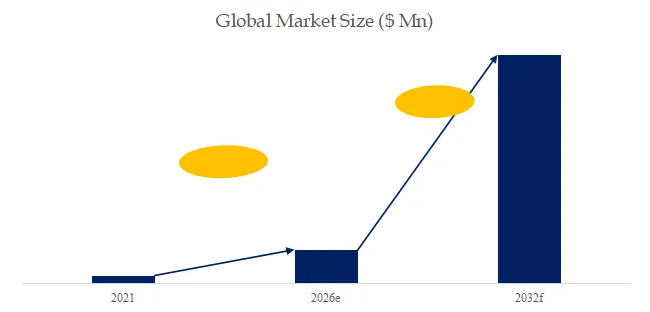
The global market for Robot 6-axis Force Torque Sensor was estimated to be worth US$ 311 million in 2025 and is projected to reach US$ 2779 million, growing at a CAGR of 37.9% from 2026 to 2032.
【Get a free sample PDF of this report (Including Full TOC, List of Tables & Figures, Chart)】
https://www.qyresearch.com/reports/5889824/robot-6-axis-force-torque-sensor
Robot 6-axis Force Torque Sensor Product Definition
Robot 6-axis Force Torque Sensor, full name Six Axis F/T Sensor, is a sensor that measures force and torque in the three directions of X, Y, and Z. Robot 6-axis Force Torque Sensor is currently mainly mounted on robotic arms. It detects all the information about the force acting in space, namely the three component forces and three torques Fx, Fy, Fz, Mx, My, and Mz formed in the spatial coordinate system, so as to accurately measure and control the force of the robotic arm. At present, the Robot 6-axis Force Torque Sensor market is in a rapid growth stage, mainly benefiting from the widespread application of robot technology and the improvement of intelligent demand. The statistical scope of this report is Robot 6-axis Force Torque Sensor for robots used in precision grinding, precision assembly, collaborative robots, humanoid robots and other fields.
Robot 6-axis Force Torque Sensor Market Summary
Research Background:
Robot 6-axis force torque sensors sit at the intersection of precision metrology and robot control, and they matter because many high-value automation tasks are not position-limited but contact-limited. As robots move from fenced, repetitive motion into collaborative work and unstructured processes, manufacturers need reliable real-time feedback on forces and moments at the wrist to enable compliant motion, safe hand-guiding, and stable tool pressure. This demand is reinforced by the spread of cobots and the push to automate finishing and assembly operations where consistent contact force is the primary determinant of quality, making wrist force sensing a foundational component in the “robot sense of touch” stack.
Development Status:
The market has evolved from niche, high-end sensors used mainly in research and specialized industrial cells into a more standardized ecosystem shaped by cobot adoption and easier integration paths. Leading suppliers increasingly package sensors with common industrial communications and ready-to-use integration kits, while cobot-oriented vendors emphasize plug-and-play deployment and robustness for shop-floor environments, reflecting a shift from “component purchase” to “application enablement.” At the same time, the competitive bar is rising around signal quality, overload survivability, environmental protection, and software compatibility, because end users evaluate the sensor by the stability of force-controlled outcomes, not just a spec sheet.
Future Trends:
Deeper software and controller integration: Force torque sensors will increasingly be sold as part of a control workflow, with tighter coupling to robot controllers, calibration routines, and force modes, lowering deployment friction and making force control accessible to non-experts.
Smaller, tougher, and more “production-ready” hardware: Expect continued progress in compact packaging, better overload protection, and improved ingress protection to support higher duty cycles and harsher environments, widening adoption beyond clean assembly to finishing and industrial machining-adjacent applications.
Expansion from cobots into new robot form factors and safety-driven use cases: As the broader robotic sensors market grows alongside collaborative and emerging platforms, wrist force sensing will expand into more safety-aware interaction and higher-level autonomy features, especially where robots must adapt to variability through compliant behavior rather than rigid motion replay.
SWOT Analysis:
l Strengths
Robot 6-axis force torque sensors deliver a clear, measurable value proposition because they convert “contact uncertainty” into controllable process variables, enabling force control, compliant motion, and safer human–robot interaction. They directly improve yield and consistency in tasks where position repeatability is not enough, such as insertion, tightening, polishing, deburring, and delicate handling. The technology also benefits from strong ecosystem pull, since once an end user validates a force-controlled process on one line, it tends to replicate across similar lines and sites, creating sticky demand anchored in process know-how rather than one-off hardware specs.
l Weaknesses
Adoption is still constrained by integration complexity and application engineering effort, because real-world performance depends on calibration, mounting stiffness, signal filtering, robot controller compatibility, and force-control tuning. In many factories, the limiting factor is not sensor availability but the expertise required to translate force data into stable, cycle-time-safe control logic, which makes deployment costs non-trivial and can slow scaling. In addition, buyers can be highly price-sensitive when the sensor is treated as a component rather than a capability, and the market includes a wide performance spread that makes specification comparison difficult and increases procurement friction.
l Opportunities
The largest upside is the broad expansion of robots into contact-rich processes and semi-structured environments, where force sensing becomes a default “enabling module” rather than an optional add-on. Growth can come from packaged solutions that bundle sensor hardware with application templates, compliance libraries, and validated end-effector/tooling recipes, lowering the threshold for non-expert deployment. There is also room for differentiation through better robustness, smaller form factors, higher overload tolerance, and improved environmental sealing, which would open more use cases in harsh industrial settings and increase retrofit potential across large installed robot bases.
l Threats
Competitive pressure is rising from commoditization and alternative architectures, including robot arms with built-in joint torque sensing, integrated wrist sensing, or software-based force estimation that can be “good enough” for some applications. Platform owners and robot OEM ecosystems may also reshape value capture by bundling sensing into the robot controller stack, squeezing standalone sensor margins or favoring preferred partners. Finally, macro cycles in industrial capex, plus reliability and support expectations in production environments, can punish suppliers that cannot provide stable lead times, field service, and long-term calibration/repair support at scale.
According to the new market research report “Global Robot 6-axis Force Torque Sensor Market Report 2026-2032″, published by QYResearch, the global Robot 6-axis Force Torque Sensor market size is projected to grow from USD 310.65 million in 2025 to USD 2,779.03 million by 2032, at a CAGR of 37.90% during the forecast period.
Figure00001. Global Robot 6-axis Force Torque Sensor Market Size (US$ Million), 2021-2032
Above data is based on report from QYResearch: Global Robot 6-axis Force Torque Sensor Market Report 2025-2031 (published in 2025). If you need the latest data, plaese contact QYResearch.
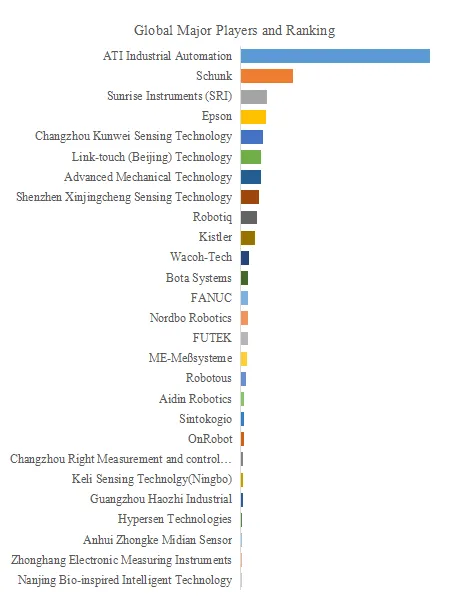
Figure00002. Global Robot 6-axis Force Torque Sensor Top 27 Players Ranking and Market Share (Ranking is based on the revenue of 2025, continually updated)
Above data is based on report from QYResearch: Global Robot 6-axis Force Torque Sensor Market Report 2026-2032 (published in 2026). If you need the latest data, plaese contact QYResearch.
This report profiles key players of Robot 6-axis Force Torque Sensor such as ATI Industrial Automation, Schunk, Sunrise Instruments (SRI), Epson, Changzhou Kunwei Sensing Technology, etc.
In 2025, the global top five Robot 6-axis Force Torque Sensor players account for 58.39% of market share in terms of revenue. Above figure shows the key players ranked by revenue in Robot 6-axis Force Torque Sensor.
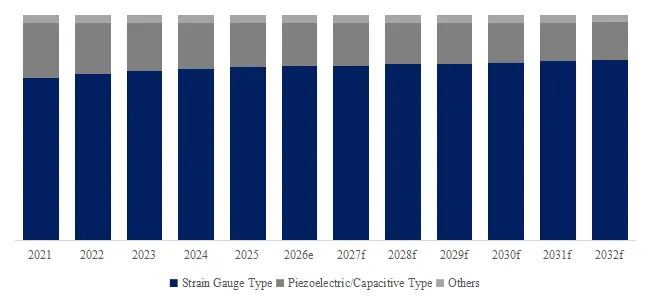
Figure00003. Robot 6-axis Force Torque Sensor, Global Market Size, Split by Product Segment
Based on or includes research from QYResearch: Global Robot 6-axis Force Torque Sensor Market Report 2026-2032.
In terms of product type, currently Strain Gauge Type is the largest segment, hold a share of 76.95%. Strain-gauge-based robot six-axis force torque sensors typically use silicon strain gauges or metal foil strain gauges bonded to an elastic structure at the robot wrist or end effector, where applied forces and torques cause micro-scale deformation that is converted into resistance changes and resolved into six-axis torque signals through calibration and signal conditioning; this technology offers high accuracy, strong static and quasi-static measurement capability, a wide load range, mature manufacturing processes, relatively low cost, and stable frequency response, but also involves complex mechanical design and manufacturing and requires high-quality amplification due to weak output signals in metal foil strain gauges, and overall remains the most mature and widely adopted solution among mainstream robot torque sensor manufacturers.
The report provides a detailed analysis of the market size, growth potential, and key trends for each segment. Through detailed analysis, industry players can identify profit opportunities, develop strategies for specific customer segments, and allocate resources effectively.
The Robot 6-axis Force Torque Sensor market is segmented as below:
By Company
ATI Industrial Automation
Schunk
Sunrise Instruments (SRI)
Epson
Changzhou Kunwei Sensing Technology
Link-touch (Beijing) Technology
Advanced Mechanical Technology
Shenzhen Xinjingcheng Sensing Technology
Robotiq
Kistler
Wacoh-Tech
Bota Systems
FANUC
Nordbo Robotics
FUTEK
ME-Meßsysteme
Robotous
Aidin Robotics
Sintokogio
OnRobot
Changzhou Right Measurement and control system
Keli Sensing Technolgy(Ningbo)
Guangzhou Haozhi Industrial
Hypersen Technologies
Anhui Zhongke Midian Sensor
Zhonghang Electronic Measuring Instruments
Nanjing Bio-inspired Intelligent Technology
Segment by Type
Strain Gauge Type
Piezoelectric/Capacitive Type
Others
Segment by Application
Industrial Robots
Collaborative Robots
Medical Robots
Humanoid Robots
Others
Each chapter of the report provides detailed information for readers to further understand the Robot 6-axis Force Torque Sensor market:
Chapter 1: Introduces the report scope of the Robot 6-axis Force Torque Sensor report, global total market size (valve, volume and price). This chapter also provides the market dynamics, latest developments of the market, the driving factors and restrictive factors of the market, the challenges and risks faced by manufacturers in the industry, and the analysis of relevant policies in the industry. (2021-2032)
Chapter 2: Detailed analysis of Robot 6-axis Force Torque Sensor manufacturers competitive landscape, price, sales and revenue market share, latest development plan, merger, and acquisition information, etc. (2021-2026)
Chapter 3: Provides the analysis of various Robot 6-axis Force Torque Sensor market segments by Type, covering the market size and development potential of each market segment, to help readers find the blue ocean market in different market segments. (2021-2032)
Chapter 4: Provides the analysis of various market segments by Application, covering the market size and development potential of each market segment, to help readers find the blue ocean market in different downstream markets.(2021-2032)
Chapter 5: Sales, revenue of Robot 6-axis Force Torque Sensor in regional level. It provides a quantitative analysis of the market size and development potential of each region and introduces the market development, future development prospects, market space, and market size of each country in the world..(2021-2032)
Chapter 6: Sales, revenue of Robot 6-axis Force Torque Sensor in country level. It provides sigmate data by Type, and by Application for each country/region.(2021-2032)
Chapter 7: Provides profiles of key players, introducing the basic situation of the main companies in the market in detail, including product sales, revenue, price, gross margin, product introduction, recent development, etc. (2021-2026)
Chapter 8: Analysis of industrial chain, including the upstream and downstream of the industry.
Chapter 9: Conclusion.
Benefits of purchasing QYResearch report:
Competitive Analysis: QYResearch provides in-depth Robot 6-axis Force Torque Sensor competitive analysis, including information on key company profiles, new entrants, acquisitions, mergers, large market shear, opportunities, and challenges. These analyses provide clients with a comprehensive understanding of market conditions and competitive dynamics, enabling them to develop effective market strategies and maintain their competitive edge.
Industry Analysis: QYResearch provides Robot 6-axis Force Torque Sensor comprehensive industry data and trend analysis, including raw material analysis, market application analysis, product type analysis, market demand analysis, market supply analysis, downstream market analysis, and supply chain analysis.
and trend analysis. These analyses help clients understand the direction of industry development and make informed business decisions.
Market Size: QYResearch provides Robot 6-axis Force Torque Sensor market size analysis, including capacity, production, sales, production value, price, cost, and profit analysis. This data helps clients understand market size and development potential, and is an important reference for business development.
Other relevant reports of QYResearch:
Global Robot 6-axis Force Torque Sensor Market Outlook, In‑Depth Analysis & Forecast to 2032
Global Robot 6-axis Force Torque Sensor Sales Market Report, Competitive Analysis and Regional Opportunities 2026-2032
Global Robot 6-axis Force Torque Sensor Market Research Report 2026
About Us:
QYResearch founded in California, USA in 2007, which is a leading global market research and consulting company. Our primary business include market research reports, custom reports, commissioned research, IPO consultancy, business plans, etc. With over 19 years of experience and a dedicated research team, we are well placed to provide useful information and data for your business, and we have established offices in 7 countries (include United States, Germany, Switzerland, Japan, Korea, China and India) and business partners in over 30 countries. We have provided industrial information services to more than 60,000 companies in over the world.
Contact Us:
If you have any queries regarding this report or if you would like further information, please contact us:
QY Research Inc.
Add: 17890 Castleton Street Suite 369 City of Industry CA 91748 United States
EN: https://www.qyresearch.com
Email: global@qyresearch.com
Tel: 001-626-842-1666(US)
JP: https://www.qyresearch.co.jp










