

QY Research Inc. (Global Market Report Research Publisher) announces the release of 2025 latest report “Battery Fuel Gauge ICs- Global Market Share and Ranking, Overall Sales and Demand Forecast 2026-2032”. Based on current situation and impact historical analysis (2020-2024) and forecast calculations (2026-2032), this report provides a comprehensive analysis of the global Battery Fuel Gauge ICs market, including market size, share, demand, industry development status, and forecasts for the next few years.
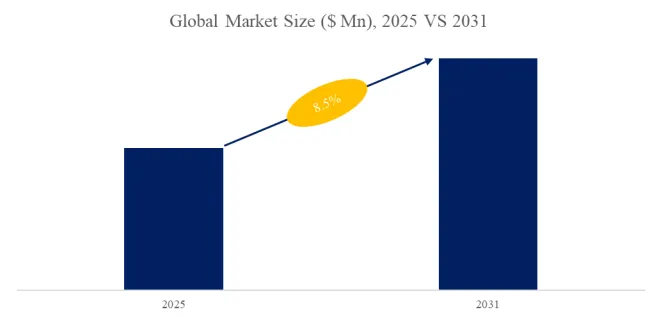
The global market for Battery Fuel Gauge ICs was estimated to be worth US$ 1447 million in 2025 and is projected to reach US$ 2538 million, growing at a CAGR of 8.5% from 2026 to 2032.
【Get a free sample PDF of this report (Including Full TOC, List of Tables & Figures, Chart)】
https://www.qyresearch.com/reports/5503427/battery-fuel-gauge-ics
Battery Fuel Gauge ICs Market Summary
Since 2025, Texas Instruments (TI) has introduced a new generation of battery fuel gauge ICs, BQ41Z90/BQ41Z50, featuring its Dynamic Z-Track™ predictive algorithm. These devices significantly extend run time in battery-powered systems such as notebooks and e-bikes, compress state-of-charge (SoC) and state-of-health (SoH) errors to around the 1% level, and enhance thermal modeling and cell-fault diagnostics. In parallel, the EU Battery Regulation (Regulation (EU) 2023/1542) has come into force, requiring automotive and industrial batteries to provide continuously updated SoH, expected lifetime and other parameters, and to enable full life-cycle traceability through a “battery passport.” The question “how much life is left in the battery” is no longer just a user-experience topic, but a hard compliance metric written into law. Under the dual forces of tougher regulation and rapid innovation from leading vendors, the seemingly small Battery Fuel Gauge IC is becoming the “micro brain” that defines both user experience and compliance boundaries across the battery value chain.
From smartphones and AI PCs to wearables and IoT endpoints, and further to power tools, home energy storage, e-bikes and light EVs, batteries are being embedded into more and more devices, and dependence on precise fuel gauging and remaining-life prediction is rising day by day. According to QYResearch’s latest study, “Global Battery Fuel Gauge ICs Market Report 2025–2031,” the global battery fuel gauge IC market is expected to reach 2.36 billion USD by 2031, with a compound annual growth rate (CAGR) of 8.5% in the coming years. Behind this growth curve, fuel gauge ICs built around high-accuracy prediction algorithms are widely regarded as one of the most valuable sub-segments within the broader battery management IC space. In their fuel-gauge portfolios, TI and other vendors have already extended application coverage from smartphones and laptops to power tools, vacuum cleaners and even energy storage systems (ESS), clearly outlining the technology trajectory and application space of battery fuel gauge ICs as they spill over from consumer electronics into industrial and energy markets.
Against this backdrop, QYResearch’s newly released “Battery Fuel Gauge ICs Industry Research Report” examines the market “from algorithm to ecosystem,” systematically mapping global and Chinese market size evolution, price bands and profit models. The report focuses on the penetration paths of standalone versus integrated fuel gauges, and of key end applications such as smartphones/wearables/PCs versus industrial & energy storage and e-mobility, while also providing a side-by-side comparison of the product portfolios and technology roadmaps of major suppliers including TI, Analog Devices, Renesas, ST and NXP. For OEM brands, battery pack manufacturers and chip design houses seeking to take the initiative in the waves of “smart batteries” and “digitalized battery compliance,” this is not just another market data book, but a strategic roadmap for understanding shifting demand structures and capturing the next inflection point in fuel-gauge technology.
Market Development Opportunities & Main Driving Factors
Under the combined push of carbon-neutrality goals, new battery regulations and emerging “battery passport” schemes, batteries are shifting from opaque hardware to measurable, traceable “data assets,” and OEMs and cell makers are demanding much higher accuracy in SoC/SoH estimation and dynamic prediction. The continued proliferation of smartphones, AI PCs, wearables, IoT endpoints, power tools, home energy storage, e-bikes and light EVs keeps global lithium-battery shipments on a strong growth trajectory and elevates full life-cycle battery management to a core lever for differentiation and safety compliance. Against the backdrop of rising AI workloads, widespread fast charging and tightening safety and regulatory thresholds, fuel gauge ICs built around high-precision algorithms and cross-scenario adaptability are rapidly evolving from secondary chips into the “standard brain” of modern battery systems.
Market Challenges, Risks, & Restraints
Despite its attractive outlook, the battery fuel gauge IC segment faces a triple set of challenges: cost pressure, technical complexity and structural shifts. On the one hand, fierce price competition in smartphones and other consumer devices keeps OEMs extremely sensitive to BOM costs, driving a strong trend toward integrating fuel-gauge functions into PMICs and charger ICs and compressing both pricing and bargaining power for standalone gauges. On the other hand, battery chemistries are evolving from NCM to LFP, high-nickel and even solid-state, while pack architectures move toward multi-series/multi-parallel designs; maintaining around 1% SoC/SoH accuracy over long lifetimes under such diverse conditions raises the bar for modeling algorithms, calibration flows and in-field data feedback. In addition, long design-in cycles, shorter platform life cycles and uncertainties around geopolitics and supply-chain security are encouraging key customers to deepen partnerships with a small group of leading IDMs and analog giants, making customer acquisition and sustained R&D investment more demanding for new entrants and smaller design houses.
Downstream Demand Trends
On the application side, smartphones and wearables remain the volume backbone of the fuel gauge IC market, and the higher peak power of 5G, advanced imaging and on-device AI makes OEMs increasingly reliant on fine-grained fuel gauging to optimize user-perceived battery life and health management. AI PCs, tablets and gaming laptops, often built around multi-cell packs, are driving steady demand for high-end gauges that support series configurations, accurate thermal management and remaining-life estimation. In parallel, fast-growing segments such as power tools, e-bikes, light EVs and distributed energy-storage systems feature larger packs and far more complex charge/discharge profiles, with stricter requirements for safety margins, fault diagnostics and cloud connectivity. This is pushing fuel gauge ICs to evolve from stand-alone components into “hardware + software + cloud” system-level solutions, unlocking incremental demand across a much broader application landscape.
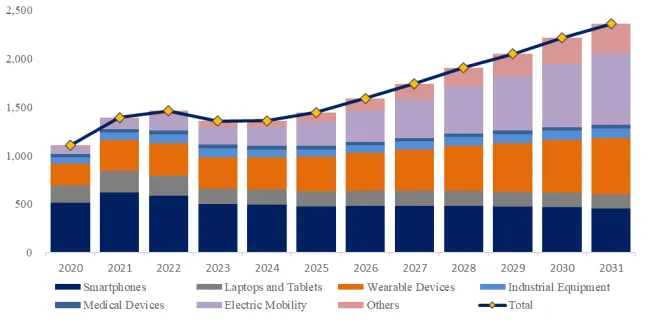
Figure00001. Global Battery Fuel Gauge ICs Market Size (US$ Million), 2020-2031
Above data is based on report from QYResearch: Global Battery Fuel Gauge ICs Market Report 2025-2031 (published in 2024). If you need the latest data, plaese contact QYResearch.
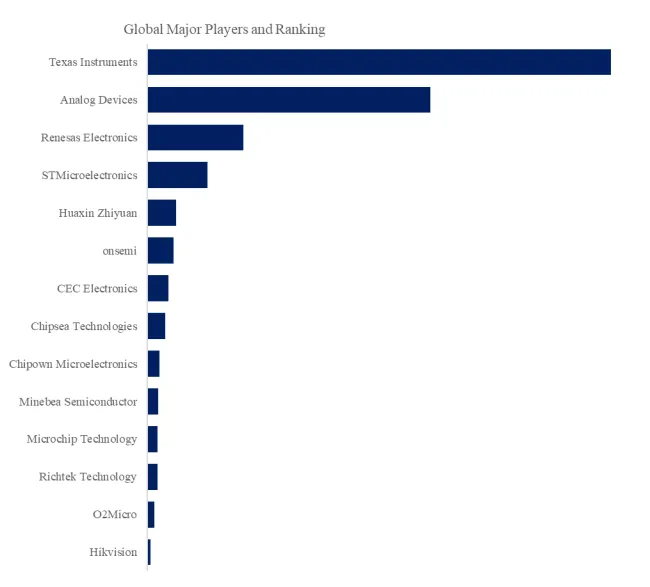
Figure00002. Global Battery Fuel Gauge ICs Top 14 Players Ranking and Market Share (Ranking is based on the revenue of 2024, continually updated)
Above data is based on report from QYResearch: Global Battery Fuel Gauge ICs Market Report 2025-2031 (published in 2024). If you need the latest data, plaese contact QYResearch.
According to QYResearch Top Players Research Center, the global key manufacturers of Battery Fuel Gauge ICs include Texas Instruments, Analog Devices, Renesas Electronics, STMicroelectronics, Huaxin Zhiyuan, onsemi, CEC Electronics, Chipsea Technologies, Chipown Microelectronics, Minebea Semiconductor, etc. In 2024, the global top five players had a share approximately 67.0% in terms of revenue.
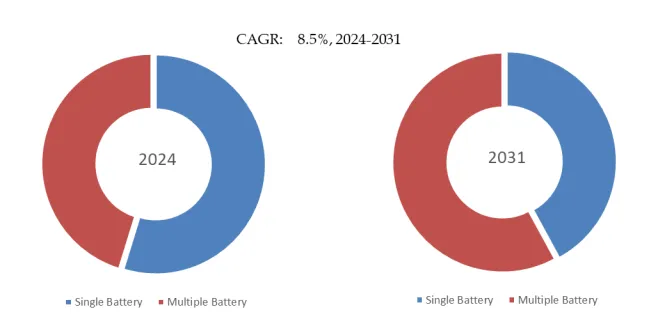
Figure00003. Battery Fuel Gauge ICs, Global Market Size, Split by Product Segment
Based on or includes research from QYResearch: Global Battery Fuel Gauge ICs Market Report 2025-2031.
In terms of product type, currently Single Battery is the largest segment, hold a share of 54.8%.
Figure00004. Battery Fuel Gauge ICs, Global Market Size, Split by Application Segment
Based on or includes research from QYResearch: Global Battery Fuel Gauge ICs Market Report 2025-2031.
In terms of product application, currently Smartphones is the largest segment, hold a share of 36.6%.
Figure00005. Battery Fuel Gauge ICs, Global Market Size, Split by Region
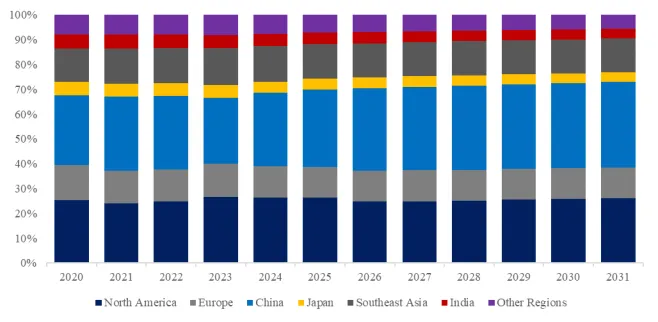
Based on or includes research from QYResearch: Global Battery Fuel Gauge ICs Market Report 2025-2031
The report provides a detailed analysis of the market size, growth potential, and key trends for each segment. Through detailed analysis, industry players can identify profit opportunities, develop strategies for specific customer segments, and allocate resources effectively.
The Battery Fuel Gauge ICs market is segmented as below:
By Company
Texas Instruments
Analog Devices
Renesas Electronics
STMicroelectronics
MicroPowerChip
ON Semiconductor
CellWise
Chipsea Technologies
SinoWealth
MinebeaMitsumi
Microchip Technology
Richtek Technology
O2Micro
Hycon Technology
Segment by Type
Single Battery
Multiple Battery
Segment by Application
Smartphones
Laptops and Tablets
Wearable Devices
Industrial Equipment
Medical Devices
Electric Mobility
Others
Each chapter of the report provides detailed information for readers to further understand the Battery Fuel Gauge ICs market:
Chapter 1: Introduces the report scope of the Battery Fuel Gauge ICs report, global total market size (valve, volume and price). This chapter also provides the market dynamics, latest developments of the market, the driving factors and restrictive factors of the market, the challenges and risks faced by manufacturers in the industry, and the analysis of relevant policies in the industry. (2021-2032)
Chapter 2: Detailed analysis of Battery Fuel Gauge ICs manufacturers competitive landscape, price, sales and revenue market share, latest development plan, merger, and acquisition information, etc. (2021-2026)
Chapter 3: Provides the analysis of various Battery Fuel Gauge ICs market segments by Type, covering the market size and development potential of each market segment, to help readers find the blue ocean market in different market segments. (2021-2032)
Chapter 4: Provides the analysis of various market segments by Application, covering the market size and development potential of each market segment, to help readers find the blue ocean market in different downstream markets.(2021-2032)
Chapter 5: Sales, revenue of Battery Fuel Gauge ICs in regional level. It provides a quantitative analysis of the market size and development potential of each region and introduces the market development, future development prospects, market space, and market size of each country in the world..(2021-2032)
Chapter 6: Sales, revenue of Battery Fuel Gauge ICs in country level. It provides sigmate data by Type, and by Application for each country/region.(2021-2032)
Chapter 7: Provides profiles of key players, introducing the basic situation of the main companies in the market in detail, including product sales, revenue, price, gross margin, product introduction, recent development, etc. (2021-2026)
Chapter 8: Analysis of industrial chain, including the upstream and downstream of the industry.
Chapter 9: Conclusion.
Benefits of purchasing QYResearch report:
Competitive Analysis: QYResearch provides in-depth Battery Fuel Gauge ICs competitive analysis, including information on key company profiles, new entrants, acquisitions, mergers, large market shear, opportunities, and challenges. These analyses provide clients with a comprehensive understanding of market conditions and competitive dynamics, enabling them to develop effective market strategies and maintain their competitive edge.
Industry Analysis: QYResearch provides Battery Fuel Gauge ICs comprehensive industry data and trend analysis, including raw material analysis, market application analysis, product type analysis, market demand analysis, market supply analysis, downstream market analysis, and supply chain analysis.
and trend analysis. These analyses help clients understand the direction of industry development and make informed business decisions.
Market Size: QYResearch provides Battery Fuel Gauge ICs market size analysis, including capacity, production, sales, production value, price, cost, and profit analysis. This data helps clients understand market size and development potential, and is an important reference for business development.
Other relevant reports of QYResearch:
Global Battery Fuel Gauge ICs Sales Market Report, Competitive Analysis and Regional Opportunities 2026-2032
Global Battery Fuel Gauge ICs Market Research Report 2026
Global Lithium Battery Fuel Gauge IC Market Outlook, In‑Depth Analysis & Forecast to 2032
Global Lithium Battery Fuel Gauge IC Sales Market Report, Competitive Analysis and Regional Opportunities 2026-2032
Lithium Battery Fuel Gauge IC- Global Market Share and Ranking, Overall Sales and Demand Forecast 2026-2032
Global Lithium Battery Fuel Gauge IC Market Research Report 2026
About Us:
QYResearch founded in California, USA in 2007, which is a leading global market research and consulting company. Our primary business include market research reports, custom reports, commissioned research, IPO consultancy, business plans, etc. With over 19 years of experience and a dedicated research team, we are well placed to provide useful information and data for your business, and we have established offices in 7 countries (include United States, Germany, Switzerland, Japan, Korea, China and India) and business partners in over 30 countries. We have provided industrial information services to more than 60,000 companies in over the world.
Contact Us:
If you have any queries regarding this report or if you would like further information, please contact us:
QY Research Inc.
Add: 17890 Castleton Street Suite 369 City of Industry CA 91748 United States
EN: https://www.qyresearch.com
Email: global@qyresearch.com
Tel: 001-626-842-1666(US)
JP: https://www.qyresearch.co.jp










