

QY Research Inc. (Global Market Report Research Publisher) announces the release of 2025 latest report “Automobile Brake Pad- Global Market Share and Ranking, Overall Sales and Demand Forecast 2026-2032”. Based on current situation and impact historical analysis (2020-2024) and forecast calculations (2026-2032), this report provides a comprehensive analysis of the global Automobile Brake Pad market, including market size, share, demand, industry development status, and forecasts for the next few years.
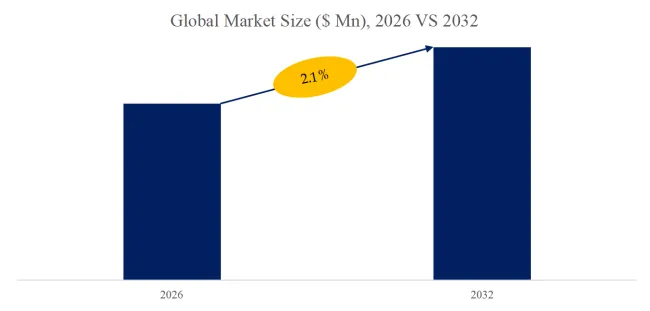
The global market for Automobile Brake Pad was estimated to be worth US$ 16980 million in 2025 and is projected to reach US$ 19580 million, growing at a CAGR of 2.1% from 2026 to 2032.
【Get a free sample PDF of this report (Including Full TOC, List of Tables & Figures, Chart)】
https://www.qyresearch.com/reports/6010554/automobile-brake-pad
Automobile Brake Pad Market Summary
Brake Pads are components of brake systems used in automotive and other applications. Brake pads are friction materials which bound to the surface that faces the brake rotor and take the brunt of the frictional force necessary to stop the car. In a disc brake system, the brake pedal activates a hydraulic line which squeezes the calipers against the rotors of the car’s tires. Pads are positioned between the calipers and the rotors to absorb the energy and heat, and then provide enough grips to stop the car.
In this report, we only count brake pads, not brake shoes. The main difference between brake pads and brake shoes is: The brake shoes are a component of the drum brake system in a vehicle. They are made of a tough, heat-resistant material and are attached to the brake drum. Brake pads are a component of the disc brake system. They are the part that comes into contact with the brake rotor to slow or stop a vehicle.
Note: In the report, one unit Brake Pad represents Four pieces of Brake Pads.
According to the new market research report “Global Automobile Brake Pad Market Report 2026-2032″, published by QYResearch, the global Automobile Brake Pad market size is projected to grow from USD 17.30 billion in 2026 to USD 19.58 billion by 2032, at a CAGR of 2.1% during the forecast period.
Figure00001. Global Automobile Brake Pad Market Size (US$ Million), 2026-2032
Above data is based on report from QYResearch: Global Automobile Brake Pad Market Report 2026-2032 (published in 2026). If you need the latest data, plaese contact QYResearch.
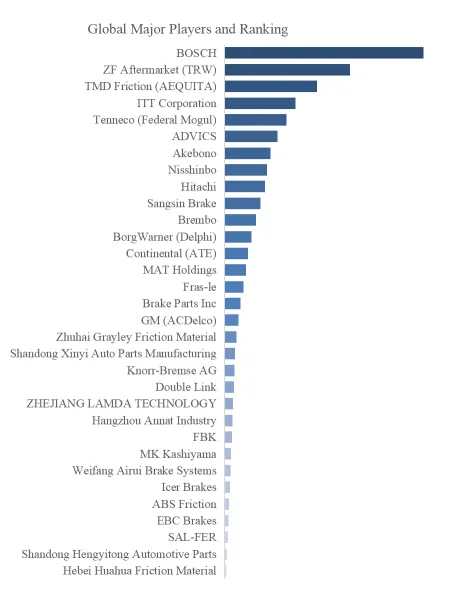
Figure00002. Global Automobile Brake Pad Top 33 Players Ranking and Market Share (Ranking is based on the revenue of 2025, continually updated)
Above data is based on report from QYResearch: Global Automobile Brake Pad Market Report 2026-2032 (published in 2025). If you need the latest data, plaese contact QYResearch.
Table 1. Automobile Brake Pad Industry Chain Analysis
| Item | Description | |
| Upstream | Raw Material Supply
(Foundation of the Industry Chain) |
Friction Materials (60-80% of product cost)
Backing Plates Auxiliary Materials |
| Midstream | Manufacturing & Processing
(Core Value-Adding Link) |
The midstream segment involves converting raw materials into finished brake pads through standardized production processes. It is divided into original equipment (OE) production (supplied to automakers) and aftermarket (AM) production (supplied to repair/maintenance channels), with strict quality control requirements. |
| Downstream | Passenger Cars | Lightweight, low-noise, and long-life pads are preferred (replacement cycle: 30,000-80,000 km). |
| NEV-specific demand | Brake pads for electric vehicles (EVs) require higher heat resistance (due to regenerative braking’s auxiliary effect) and lower dust emissions (aligning with NEV environmental positioning). | |
| Commercial Vehicles
(Trucks, Buses) |
Demand high wear resistance and load-bearing capacity (replacement cycle: 10,000-30,000 km). Steel fiber-based pads are mainstream. | |
| Special Vehicles
(Construction Vehicles, Racing Cars) |
Customized high-performance pads (e.g., carbon-ceramic pads for racing cars, with friction coefficient stable at 0.4-0.6). |
Source: Secondary Sources, Press Releases, Expert Interviews and QYResearch, 2026
Table 2. Automobile Brake Pad Industry Policy Analysis
| Policy | Description | |
| 1 | EU | ECE R90, REACH, Euro VI
Performance testing (cold/high-speed/fade), heavy metal limits, low-dust Mandatory approval for replacement pads; pushes NAO/ceramic blends |
| 2 | North America | EPA Copper-Free Initiative, WA Better Brakes Law
<0.5% Cu (2026); limits asbestos/Cr(VI)/Hg/Cd/Pb OEM/aftermarket rapid shift to low-copper/copper-free formulas |
| 3 | China | GB 5763-2018, NEV Development Plan
Safety performance, green manufacturing, localization of key parts Accelerates domestic R&D of eco-friendly/lightweight pads |
| 4 | Japan | Emission Control Regulations
Strict heavy metal cuts, nano/composite materials Drives high-performance, low-abrasion formulations |
Source: Secondary Sources, Press Releases, Expert Interviews and QYResearch, 2026
Table 3. Automobile Brake Pad Industry Development Trends
| Development Trends | Description | |
| 1 | Material transition | From semi-metallic/NAO to ceramic, low-copper/copper-free, and composite materials to cut dust, noise, and heavy metal emissions. |
| 2 | EV/HEV specialization | Heavier vehicle weight, regenerative braking (low steady wear but high emergency load) demand pads with high thermal stability, low NVH, and long service life. |
| 3 | Smart & connected | Wear sensors, temperature/pressure monitoring, and integration with ADAS/ brake-by-wire enable predictive maintenance and safety alerts. |
| 4 | Channel mix | Aftermarket remains a steady growth driver (fleet maintenance, consumer replacement); OEM focuses on high-performance and system-level integration. |
| 5 | Lightweight & system integration | Brake pads are designed alongside rotors, calipers, and regenerative systems to optimize overall braking efficiency and vehicle weight. |
Source: Secondary Sources, Press Releases, Expert Interviews and QYResearch, 2026
Table 4. Automobile Brake Pad Industry Development Opportunities
| Development Opportunities | Description | |
| 1 | Eco-friendly formulations | Copper-free, low-dust, and biodegradable friction materials gain regulatory and consumer preference; R&D into alternative fibers/resins is a high-margin path. |
| 2 | EV/HEV niche | Dedicated pads for passenger EVs, commercial EVs, and high-performance EVs (track/day use) offer premium pricing and long-term OEM partnerships. |
| 3 | Smart brake pads | Sensor integration, data analytics, and fleet maintenance platforms create recurring revenue from service and data subscriptions. |
| 4 | Aftermarket expansion | Emerging markets (India, Southeast Asia, Africa) have growing vehicle fleets; building local distribution, brand certification, and quick-fit networks drives volume. |
| 5 | Commercial vehicle & fleet solutions | Long-life, high-load pads for trucks, buses, and delivery fleets (with bulk supply contracts) ensure stable cash flow. |
| 6 | System-level collaboration | Partnering with brake system suppliers for brake-by-wire and autonomous vehicle braking systems to secure high-value OEM business. |
Source: Secondary Sources, Press Releases, Expert Interviews and QYResearch, 2026
Table 5. Automobile Brake Pad Obstacles/Challenges to Industry Development
| Obstacles/Challenges | Description | |
| 1 | Regulatory burden | Regional standards (ECE R90, US copper limits, China GB) require multi-market certification, R&D investment, and production line upgrades; non-compliance leads to market exclusion. |
| 2 | Raw material volatility | Steel, copper, resin, and friction additives have price fluctuations due to geopolitics and supply chain disruptions, squeezing margins. |
| 3 | Regenerative braking impact | In high EV adoption regions, reduced friction brake wear lowers replacement frequency, pressuring aftermarket volume; requires product differentiation and service diversification. |
| 4 | Intense competition & pricing pressure | A fragmented market with numerous regional and global players leads to price wars; small manufacturers struggle with R&D and certification costs. |
| 5 | Counterfeit & low-quality products | Aftermarket counterfeits pose safety risks, damage brand reputation, and undercut genuine product sales, especially in emerging markets. |
| 6 | Supply chain & logistics | Global logistics constraints, regional production localization requirements, and raw material shortages disrupt production and delivery schedules. |
Source: Secondary Sources, Press Releases, Expert Interviews and QYResearch, 2026
The report provides a detailed analysis of the market size, growth potential, and key trends for each segment. Through detailed analysis, industry players can identify profit opportunities, develop strategies for specific customer segments, and allocate resources effectively.
The Automobile Brake Pad market is segmented as below:
By Company
BOSCH
ZF Aftermarket (TRW)
TMD Friction (AEQUITA)
ITT Corporation
Tenneco (Federal Mogul)
ADVICS
Akebono
Nisshinbo
Hitachi
Sangsin Brake
Brembo
BorgWarner (Delphi)
Continental (ATE)
MAT Holdings
Fras-le
Brake Parts Inc
GM (ACDelco)
Zhuhai Grayley Friction Material
Shandong Xinyi Auto Parts Manufacturing
Knorr-Bremse AG
Double Link
ZHEJIANG LAMDA TECHNOLOGY
Hangzhou Annat Industry
FBK
MK Kashiyama
Weifang Airui Brake Systems
Icer Brakes
ABS Friction
EBC Brakes
SAL-FER
Shandong Hengyitong Automotive Parts
Hebei Huahua Friction Material
Shandong Gold Phoenix
Segment by Type
Non-asbestos Organic Brake Pads
Low Metallic NAO Brake Pads
Semi Metallic Brake Pads
Ceramic Brake Pads
Segment by Application
Passenger Vehicles
Commercial Vehicles
Each chapter of the report provides detailed information for readers to further understand the Automobile Brake Pad market:
Chapter 1: Introduces the report scope of the Automobile Brake Pad report, global total market size (valve, volume and price). This chapter also provides the market dynamics, latest developments of the market, the driving factors and restrictive factors of the market, the challenges and risks faced by manufacturers in the industry, and the analysis of relevant policies in the industry. (2021-2032)
Chapter 2: Detailed analysis of Automobile Brake Pad manufacturers competitive landscape, price, sales and revenue market share, latest development plan, merger, and acquisition information, etc. (2021-2026)
Chapter 3: Provides the analysis of various Automobile Brake Pad market segments by Type, covering the market size and development potential of each market segment, to help readers find the blue ocean market in different market segments. (2021-2032)
Chapter 4: Provides the analysis of various market segments by Application, covering the market size and development potential of each market segment, to help readers find the blue ocean market in different downstream markets.(2021-2032)
Chapter 5: Sales, revenue of Automobile Brake Pad in regional level. It provides a quantitative analysis of the market size and development potential of each region and introduces the market development, future development prospects, market space, and market size of each country in the world..(2021-2032)
Chapter 6: Sales, revenue of Automobile Brake Pad in country level. It provides sigmate data by Type, and by Application for each country/region.(2021-2032)
Chapter 7: Provides profiles of key players, introducing the basic situation of the main companies in the market in detail, including product sales, revenue, price, gross margin, product introduction, recent development, etc. (2021-2026)
Chapter 8: Analysis of industrial chain, including the upstream and downstream of the industry.
Chapter 9: Conclusion.
Benefits of purchasing QYResearch report:
Competitive Analysis: QYResearch provides in-depth Automobile Brake Pad competitive analysis, including information on key company profiles, new entrants, acquisitions, mergers, large market shear, opportunities, and challenges. These analyses provide clients with a comprehensive understanding of market conditions and competitive dynamics, enabling them to develop effective market strategies and maintain their competitive edge.
Industry Analysis: QYResearch provides Automobile Brake Pad comprehensive industry data and trend analysis, including raw material analysis, market application analysis, product type analysis, market demand analysis, market supply analysis, downstream market analysis, and supply chain analysis.
and trend analysis. These analyses help clients understand the direction of industry development and make informed business decisions.
Market Size: QYResearch provides Automobile Brake Pad market size analysis, including capacity, production, sales, production value, price, cost, and profit analysis. This data helps clients understand market size and development potential, and is an important reference for business development.
Other relevant reports of QYResearch:
Global Automobile Brake Pad Sales Market Report, Competitive Analysis and Regional Opportunities 2026-2032
Global Automobile Brake Pad Market Outlook, In‑Depth Analysis & Forecast to 2032
Global Automobile Brake Pad Market Research Report 2026
Global Automobile Brake Pad Silencer Coating Market Outlook, In‑Depth Analysis & Forecast to 2032
Global Automobile Brake Pad Silencer Coating Sales Market Report, Competitive Analysis and Regional Opportunities 2026-2032
Automobile Brake Pad Silencer Coating- Global Market Share and Ranking, Overall Sales and Demand Forecast 2026-2032
Global Automobile Brake Pad Silencer Coating Market Research Report 2026
About Us:
QYResearch founded in California, USA in 2007, which is a leading global market research and consulting company. Our primary business include market research reports, custom reports, commissioned research, IPO consultancy, business plans, etc. With over 19 years of experience and a dedicated research team, we are well placed to provide useful information and data for your business, and we have established offices in 7 countries (include United States, Germany, Switzerland, Japan, Korea, China and India) and business partners in over 30 countries. We have provided industrial information services to more than 60,000 companies in over the world.
Contact Us:
If you have any queries regarding this report or if you would like further information, please contact us:
QY Research Inc.
Add: 17890 Castleton Street Suite 369 City of Industry CA 91748 United States
EN: https://www.qyresearch.com
Email: global@qyresearch.com
Tel: 001-626-842-1666(US)
JP: https://www.qyresearch.co.jp










